Historian Greg Jenner traces the origins of that mythical beardy man who turns up in December with gifts. And I ensure my permanent removal from everybody's Christmas card lists.
Read moreAllusionist 25: Toki Pona
iTUNES • RSS • MP3
There’s a language which is said to be the smallest language in the world. It has around 123 words, five vowels, nine consonants, and apparently you can become fluent in it with around 30 hours’ study. It was invented by linguist Sonja Lang in 2001, and it’s called Toki Pona.
And Nate DiMeo, from the Memory Palace, decided we should learn it together.
FURTHER READING:
tokipona.org is your first stop for Toki Pona information, such as Sonja Lang's book and the Facebook group.
This is the article that first piqued Nate's and my interest in Toki Pona. I also enjoyed reading about this two-day Toki Pona learning binge.
A Finnish psychiatrist experimented with getting his patients to record their thoughts in Toki Pona every day.
Hey, linguistic size queens: here's a piece comparing number of words in different languages, and here are some stats for you.
I need to read In the Land of Invented Languages by Arika Okrent, who appeared in this early episode of 99% Invisible about Esperanto.
There are a lot more invented languages; here are a few mentioned in this episode: Kēlen, Ithkuil, Blissymbols, Lojban, Klingon, Elvish, Na'vi...
RANDOMLY SELECTED WORD FROM THE DICTIONARY:
kobold

CREDITS:
Nate DiMeo makes the beautiful podcast The Memory Palace thememorypalace.us.
This episode was produced by me, Helen Zaltzman. Thanks to Eleanor McDowall.
Martin Austwick provided all the music apart from the instrumental version of Survivor's 'Eye of the Tiger'.
Communicate with me minimalistically at facebook.com/allusionistshow, twitter.com/allusionistshow and twitter.com/helenzaltzman.
- HZ
Allusionist 24: Spill Your Guts
iTUNES • RSS • MP3
It's cathartic; it's useful historical records; and it might help you behave better on public transport. Neil Katcher and Dave Nadelberg from Mortified discuss the art and practice of keeping a diary.
ADDITIONAL MATERIALS:
This website has a fair amount of information about Samuel Pepys, including his diary entries describing the Plague and the Great Fire of London - and some of the entries he wrote in code because they're a bit saucy.
Pepys wrote his diary in shorthand, so snoopers couldn't understand it. Read a translation at Project Gutenberg.
Anne Frank, meanwhile, edited a version of her diary for possible public consumption, which was the one published in 1947. The longer, private version was recently published.
Mortification comes in many forms. All of which are funnier when they happened to someone else.
My friend Jo Neary has been keeping an illustrated diary for decades. Occasionally, she shares some pages online, to my delight.
Which of these medical acronyms will follow in LOL's footsteps and be in common use in textspeak within the next 30 years?
Having trouble translating DAMHIKT, UDS or POTF? Acronym Finder is here to help.
RANDOMLY SELECTED WORD FROM THE DICTIONARY:
horst
CREDITS:
Dave Nadelberg and Neil Katcher run Mortified. It's a weekly podcast, a stage show in many cities around the world, a documentary, a TV series, and books; find all these Mortified things at getmortified.com.
This episode was produced by me, Helen Zaltzman. Thanks for the advice, Eleanor McDowall and Martin Austwick (who also provided all the music).
Communicate with me publicly at facebook.com/allusionistshow, twitter.com/allusionistshow and twitter.com/helenzaltzman.
- HZ
Allusionist 23: Criminallusionist
iTUNES • RSS • MP3
Today, Phoebe Judge and Lauren Spohrer from the Radiotopian podcast Criminal stop by to talk about the linguistic challenges of crime reporting.
They also share their episode 'Pants on Fire', about lying. It's an extremely useful handbook if you fancy becoming either a human polygraph, or an excellent liar.
READING MATTER:
Lauren Spohrer wrote a very smart piece for Catapult about the ethics of cutting and editing information when constructing stories for Criminal.
Here's one version of the history of the term 'serial killer', courtesy of NPR, though apparently its origins are contested.
Body language often gives away a lie, but here are some tips for spotting lies over the phone.
Here's the transcript of this episode.
RANDOMLY SELECTED WORD FROM THE DICTIONARY:
Welsh onion
CREDITS:
Phoebe Judge and Lauren Spohrer make Criminal, which you can find at thisiscriminal.com. Amongst my favourite episodes are 'Triassic Park', 'Gil from London', and 'Angie'. You can see and hear Phoebe fending off attack dogs here.
'Pants on Fire' was produced by Phoebe Judge, Lauren Spohrer and Eric Mennel. The rest of this episode was produced by me, Helen Zaltzman. Thanks to Russ Henry for production help, and Martin Austwick for the music.
Communicate with me at facebook.com/allusionistshow, twitter.com/allusionistshow and twitter.com/helenzaltzman. No fibbing, please.
- HZ
Allusionist 22: Vocables
iTUNES • RSS • MP3
La la la, dum di di dum, a wop bop a loo bop a wop bom bom - why are songs riddled with non-words masquerading as words?
Hrishikesh Hirway from Song Exploder and songwriter Tony Hazzard explain.
WOAH WOAH WAH-OH, DO BE DOO DOO, HERE'S SOME READING MATTER:
How to write the perfect pop song. (TL;DR: just get Carly Rae Jepsen to do it.)
Indie singers become pop songwriters. Are we supposed to feel sorry for them? Because I do not.
This is an old but good long profile of songwriter Ester 'Wrote Nicki Minaj's Superbass and Rihanna's What's My Name, also stars in Pitch Perfect' Dean, whose writing process seems intriguingly vocable-led.
Here's a little history of the BBC's The Old Grey Whistle Test, and here's a documentary about it, which contains all the fashion inspiration you need for the next six months.
Here's the transcript of this episode, though not including the relevant lyrics of 'Agadoo', because there are limits.
Listener Timothy requested a downloadable MP3 of the special version of the theme tune in this episode. Who am I to deprive you?
RANDOMLY SELECTED WORD FROM THE DICTIONARY:
occiput

CREDITS:
Hrishikesh Hirway makes the excellent podcast Song Exploder, which you'll find at songexploder.net. Here's that Tune-Yards episode I mentioned. He tweets as @songexploder and @hrishihirway.
Tony Hazzard's extensive career and discography can be found at tonyhazzard.com. His new album The Hallicombe Sessions will arrive in the next few weeks. He tweets as @tonyhazzard.
This episode was produced by me, Helen Zaltzman. Communicate with me at facebook.com/allusionistshow, twitter.com/allusionistshow and twitter.com/helenzaltzman.
Thanks to Martin Austwick for providing the Allusionist theme, and the special vocable version thereof. The other music from the show was, in chronological order:
Ella Fitzgerald - ‘One Note Samba’
The Spice Girls - ‘Spice Up Your Life’
Theme from The Old Grey Whistle Test - ‘Stone Fox Chase’
Little Richard - 'Tutti Frutti'
The Crystals - ‘Da Do Ron Ron’
Black Lace - ‘Agadoo’
JLS - 'She Make Me Wanna'
Betty Wright - ‘Shoorah Shoorah’
Brokeback - ‘In the Reeds’
Come back in a week's time for the next special edition of the Allusionist. I promise not to sing.
- HZ
Allusionist 21: Eponyms I: The Ballad of Bic and Biro

iTUNES • RSS • MP3
Naming something after yourself: a grand display of egomania, or the humble willingness to be overshadowed by your own product?
Stationery expert James Ward tells the tale of the people who begat the eponymous ballpoint pens Bic and Biro, because, according to 99% Invisible's Roman Mars, "When it comes to word origins, an eponym is the shortest bet you’re going to get a good story out of it."
ADDITIONAL READING:
Eponyms are swarming all over the place! Particularly when it comes to medical terms, about which there are lots of good little stories about the latter at Whonamedit? Looks like some of those eponymizers are very high achievers.
You can read James Ward's delightful book Adventures in Stationery (AKA The Perfection of the Paperclip in some territories), and/or you can read about James Ward and his book to whet your appetite.
Learn more about Thomas 'Bowdlerization' Bowdler. Also listener Mededitor shared this post about bowdlerized Shakespeare.
Here's a brief history of pens; here's a slightly longer history of pens; and here's the picture dictionary version of the corporate history of Bic.
Here's a transcript of this episode.
Here's Roman's tweet that started this whole thing.
If you were creating an eponymous product, what would it be? Mine would be something which doesn't work until the very last minute, just before you throw it away in frustration.
RANDOMLY SELECTED WORD FROM THE DICTIONARY:
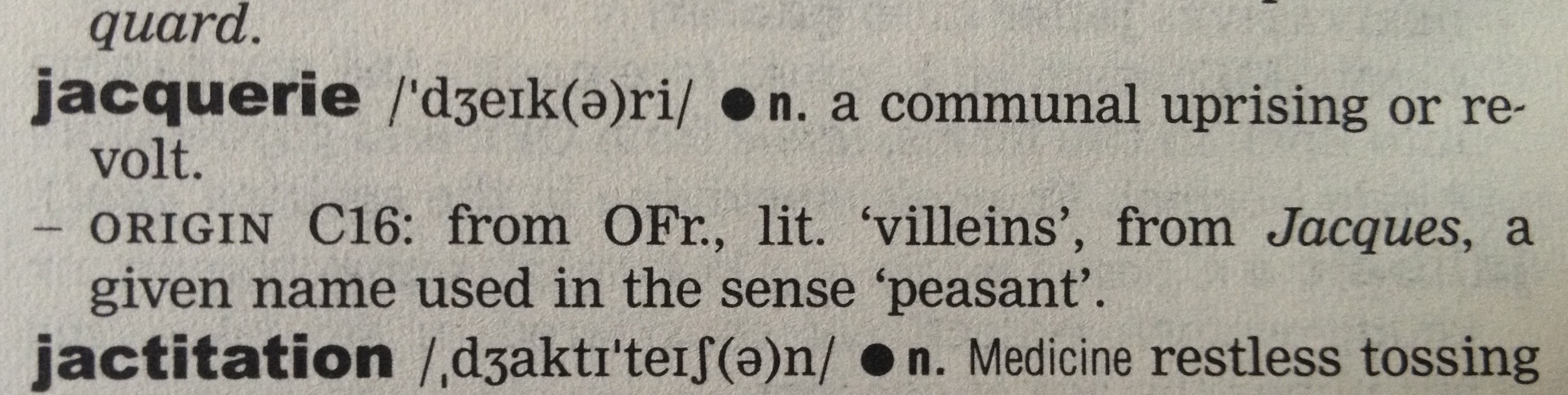
jacquerie
CREDITS:
Roman Mars is El Groso of 99% Invisible. Find him at twitter.com/romanmars, and 99% Invisible at 99pi.org.
James Ward is El Groso of Boring Conference. Find him at twitter.com/iamjamesward.com and at iamjamesward.com. And in case you've already forgotten from where I linked to it above, you can buy his book Adventures in Stationery.
This episode was produced by me, Helen Zaltzman. Thanks to Martin Austwick for the music and editorial help, and to Seth and Alison for letting me and Roman record in their Wendy House.
Communicate with me at facebook.com/allusionistshow, twitter.com/allusionistshow and twitter.com/helenzaltzman.
Come back in a week's time for the next special edition of The Allusionist. If you don't, I'll borrow your pen and not return it.
- HZ
Allusionist 20: Baby Talk

iTUNES • RSS • MP3
Why do we all sound like idiots when we talk to babies? Don't be embarrassed, we're helping them acquire language. Child psychologist Ben Jeffes explains.
Caution: may cause flashbacks to the time you were trapped in the Why? Loop for six years.
WHO WANTS A WICKLE READ? YES YOU DO! YES YOU DO!
Here's a comprehensive piece about how politeness sent 'thou' packing in favour of 'you'.
What we refer to as 'baby talk' in the episode is also known as 'parentese', apparently.
Here's a whopper of a New Yorker article about talking to children, and the differences arising from economics/class.
Read a quick overview of bilingual babies, and then more of the science.
There's a transcript of this episode here.
Allusionist T-shirts exist! Treat your torso at teepublic.com/stores/the-allusionist.
RANDOMLY SELECTED WORD FROM THE DICTIONARY:
decrepitate

CREDITS:
Ben Jeffes is a child psychologist. He must hear a lot of 'Why?' in his working day. Find him at childprofiles.co.uk.
This episode was produced by me, Helen Zaltzman. The music is by Martin Austwick. Hear and/or download more - WITH LYRICS! - at thesoundoftheladies.bandcamp.com.
Talk to me like we're both adults at facebook.com/allusionistshow, twitter.com/allusionistshow and twitter.com/helenzaltzman.
For the next month, The Allusionist will be WEEKLY. So you'd better remember to join me again next week.
- HZ
Allusionist 19: Architecting About Dance

iTUNES • RSS • MP3
“Talking about music is like dancing about architecture” is a problematic statement: not just because nobody can agree on who came up with it, but because dancing about architecture doesn’t seem particularly far-fetched. Talking about dance, however - that's really difficult. How do you put a wordless form of communication into words?
Audio describer Alice Sanders and choreographer Steven Hoggett take the issue for a twirl.
READING ABOUT DANCE IS LIKE READING ABOUT ARCHITECTURE:
If you want to find out more about "[doing a thing] about [a thing] is like [doing a different thing] about [another thing]" adages, take a look here and here.
Further werewolf reading-matter: find out about Old English wolf-words; read this plea for feminist werewolves/wifwolves; and this, apparently, is The Problem with Female Werewolves (too hairy for this bikini-waxed world?).
You want to learn Labanotation? Don't let me stop you.
You want to learn about the Step Up series of films? Don't let me stop you.
Steven Hoggett talks more about how he goes about his work, here and here.
Here is the transcript of this episode.
RANDOMLY SELECTED WORD FROM THE DICTIONARY:
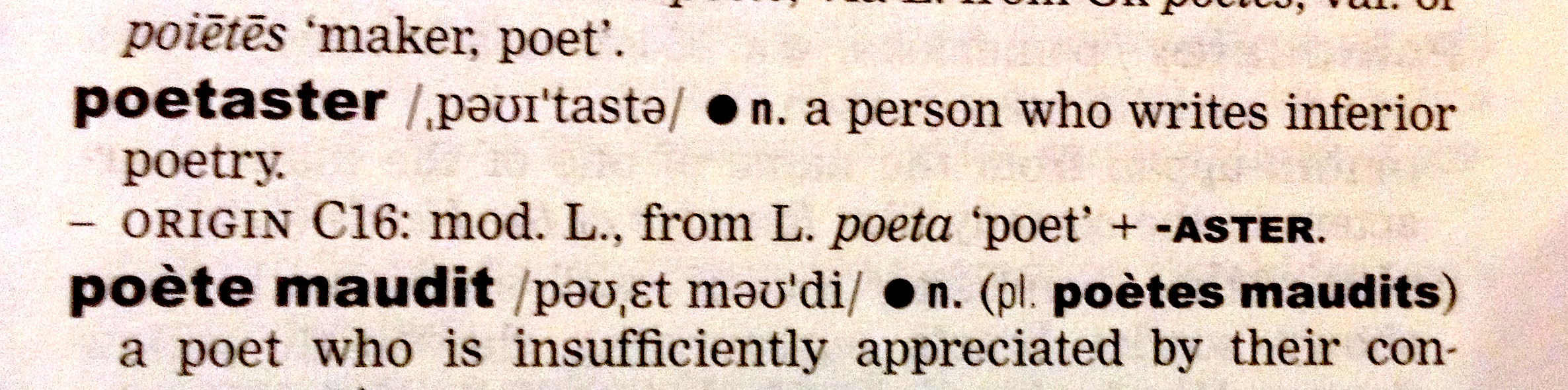
poetaster
CREDITS:
Alice Sanders writes very funny articles and blogs. Find her at twitter.com/wernerspenguin.
Steven Hoggett is working on exciting forthcoming projects including the stage adaptation of Disney's Pinocchio, AND the Harry Potter play. You'll have to wait a little while for those; but his Burt Bacharach show, Close To You, is about to open at London's Criterion Theatre. The Curious Incident of the Dog In The Night-Time is on in the UK and on Broadway, and Once seems to be all over the place.
The non-speech noises in this episode were:
Allusionist Theme by Martin Austwick
The Nutcracker, Swan Lake and Sleeping Beauty by Tchaikovsky
A snippet of the film version of A Chorus Line
Cinderella by Prokofiev
This episode was produced by me, Helen Zaltzman. Thanks to Eleanor McDowall and Miranda Sawyer.
Dance along to facebook.com/allusionistshow, twitter.com/allusionistshow and twitter.com/helenzaltzman.
- HZ
Allusionist 18: Fix part II

iTUNES • RSS • MP3
The messiness of English is the price of its success. It is the most widely spoken language in the world, geographically, being an official language in 88 different countries, and there are countless different versions of it all over the world. With so many speakers in so many places, it would be impossible to establish a single 'correct' form of English; and, as became evident in Fix part I, to try to do so is a losing game.
In Europe, a new strain of English is emerging. It's not spoken very widely, but it is used by some of the most powerful people in the world. Hampton and Michael Catlin, founders of the collaborative online dictionary Wordset, lead us into this linguistic netherworld.
Beware: excessive suffixes.
READING MATTER:
Who WOULDN'T want to read the European Court of Auditors' 66-page 2013 report Misused Words and Expressions in EU Publications? Curl up on the sofa and prepare to discover bold new uses for 'homogenise', 'mission' and 'jury'.
The history of musical notation, do re mi - née ut re mi - is interesting; read more about it here.
If you're infuriated by someone who muddles up words like 'gamut' and 'gamete', you could direct them to diffen.com or the-difference-between.com.
The transcript of today's show is here.
The Guardian interviewed me about the Allusionist and Answer Me This; take a look here (if just for the accompanying photo).
RANDOMLY SELECTED WORD FROM THE DICTIONARY:
gleet

CREDITS:
Hampton and Michael Catlin founded Wordset, the online collaborative dictionary that aims to collect every different form of English. You can help out at wordset.org. You can also hear the Catlins on their podcast, We Have A Microphone.
This episode was produced by me, Helen Zaltzman. Thanks to Matthew Crosby for his vocal contributions. The music is by Martin Austwick. Hear and/or download more - WITH LYRICS! - at thesoundoftheladies.bandcamp.com.
Say hello to me at facebook.com/allusionistshow, twitter.com/allusionistshow and twitter.com/helenzaltzman.
The next episode will appear in a fortnight. Thank you for your actorness in listening.
- HZ
Allusionist 17: Fix part I

iTUNES • RSS • MP3
The English language is a mess. And if you don't like it, what are you going to do about it - fix it? Good luck with that.
In the early 18th century, a movement of grammarians and authors wanted to set up an official authority to regulate English, like French had in the Academie Francaise. But is trying to fix a language a good move? Linguists Liv Walsh and Thomas Godard weigh up the evidence.
Apologies in advance, pedants: this episode may contain some truths you* don't want to hear.
*we.
READING MATTER:
Some of the audio is a bit unclear, so here's a transcript of the show.
Find out about the Academie Francaise, including what you'll need to do if you want to become one of Les Immortels. (You'll probably have to kill one of the current ones.)
Here is Jonathan Swift’s language proposal and here is his Modest Proposal.
This article summarises how most linguistic rules are just busking it; it also links to a 1909 paper about the subject that doesn't mess around.
Thomas Godard recommends reading Fixing English by Anne Curzan and The Bishop's Grammar by Ingrid Tieken-Boon van Ostade, and listening to PRI's The World in Words.
The purists among you may wish to seek refuge with the Queen's English Society.
RANDOMLY SELECTED WORD FROM THE DICTIONARY:
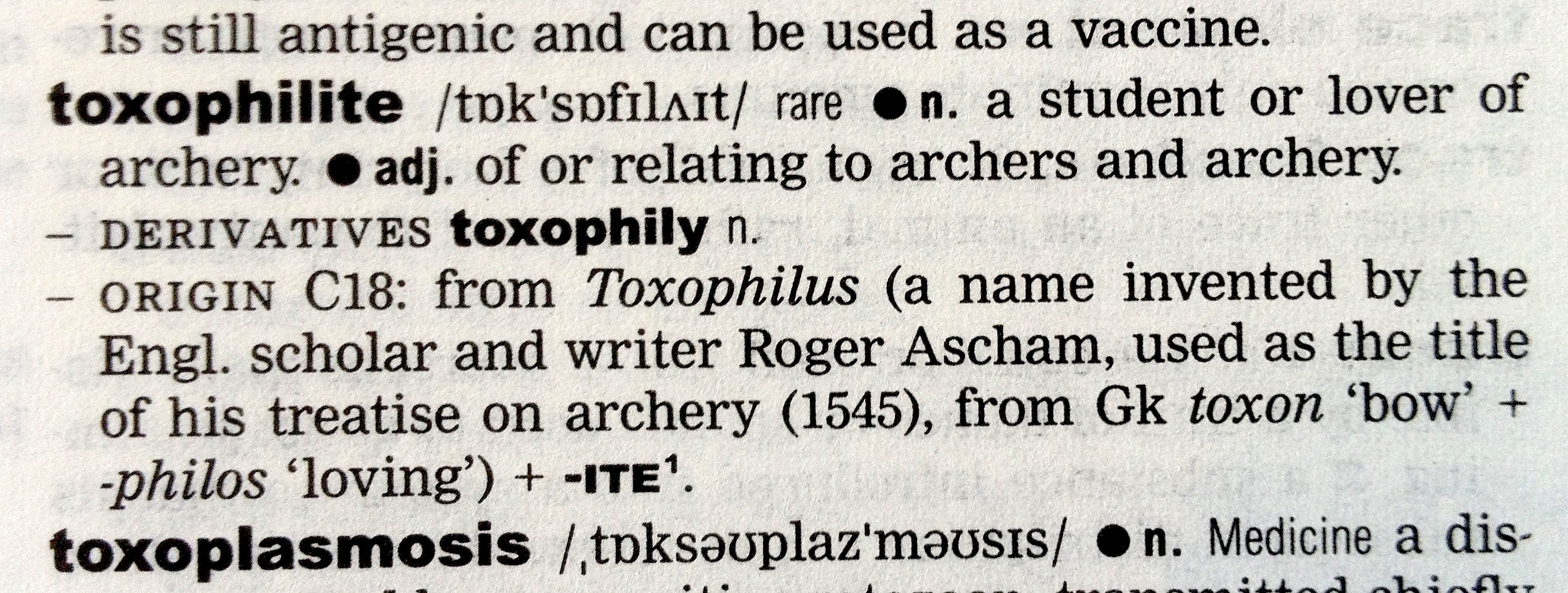
toxophilite
CREDITS:
Thanks very much to Dr Liv Walsh and Thomas Godard, and to Dr Rachele De Felice who helped me find them.
This episode was produced by me, Helen Zaltzman. All the music is by Martin Austwick. Hear and/or download more - WITH LYRICS! - at thesoundoftheladies.bandcamp.com.
Say hello to me at facebook.com/allusionistshow, twitter.com/allusionistshow and twitter.com/helenzaltzman.
