• Episodes
  • Listen
  • Transcripts
  • Tranquillusionist
  • Events
  • Lexicon
  • Donate
  • Contact
  • Merch
Menu

The Allusionist

Street Address
City, State, Zip
Phone Number
A PODCAST ABOUT LANGUAGE
BY HELEN ZALTZMAN

Your Custom Text Here

The Allusionist

  • Episodes
  • Listen
  • Transcripts
  • Tranquillusionist
  • Events
  • Lexicon
  • Donate
  • Contact
  • Merch

Allusionist 181. Cairns

September 13, 2023 The Allusionist

There's an abiding myth that the landmark dictionaries are the work of one man, in a dusty paper-filled garrett tirelessly working away singlehandedly. But really it took a village: behind every Big Daddy of Lexicography was usually a team of women, keeping the garrett clean, organising the piles of papers, reading through all the citations, doing research, writing definitions, editing, subediting...essentially being lexicographers, without the credit or the pay.

Academic Lindsay Rose Russell, author of Women and Dictionary-Making, talks about the roles of women in lexicography: enabling male lexicographers to get the job done, but also making their own dictionaries, and challenging the very paradigms of dictionaries.

Read more
In episodes Tags etymology, society, culture, words, language, lexicography, lexicon, vocabulary, history, dictionaries, dictionary, Lindsay Rose Russell, women, men, sexism, Merriam-Webster, Noah Webster, Samuel Johnson, James Murray, Jonathon Green, Green’s Dictionary of Slang, work, OED, Oxford English Dictionary, collaboration, wives, daughters, sheds, Ada Murray, Susan Ford, Jessie Craigie, William Craigie, John Florio, Mary Evelyn, John Evelyn, Robert Cawdry, Table Alphabeticall, labour, attribution, citation, hair, Fop Dictionary, feminism, feminists, feminist dictionaries, publishing, books, Gretchen McCulloch, amanuensis, geniculate

Allusionist 93. Gossip

February 6, 2019 The Allusionist
A93 gossip logo.jpg

‘Idle’, ‘trivial’, ‘scurrilous’: the word ‘gossip’ is often accompanied by uncomplimentary adjectives. But don’t dismiss it; from childbirth to Hollywood to political analysis to whisper networks, gossip may be more useful and serious than you realise.

Read more
In episodes Tags words, language, linguistics, education, comedy, entertainment, society & culture, arts, literature, Helen Zaltzman, etymology, lexicography, gossip, women, woman, female, feminine, birth, childbirth, relations, family, godsibb, siblings, Anne Helen Petersen, Elaine Lui, Lainey Lui, Lainey Gossip, celebrities, stars, Hollywood, press, journalism, magazines, tabloids, newspapers, TV, movies, film, whisper network

Allusionist 50: Under the Covers - part I
February 8, 2017 The Allusionist

Escape into the loving embrace of a romance novel - although don't think you'll be able to escape gender politics while you're in there. Bea and Leah Koch, proprietors of the romance-only bookstore The Ripped Bodice, consider the genre; and publisher Lisa Milton scrolls through the 109-year history of the imprint that epitomises romance novels, Mills & Boon.

Read more
In episodes Tags bookshops, feminism, love, bookstores, sex, bodice rippers, The Ripped Bodice, fiction, literary, Fabio, escapism, Lisa Milton, Leah Koch, novels, literature, Mills & Boon, women, erotica, publishers, romance, publishing, Bea Koch, female, romantic, books, relationships
6 Comments

Allusionist 28: WLTM part I

January 27, 2016 The Allusionist

iTUNES • RSS • MP3

Your online dating profile is the latest spin on a 300-year-old tradition of advertising yourself in order to find a spouse, a sexual partner, or someone to take care of your pigs.

Francesca Beauman, author of Shapely Ankle Preferr’d: A History of the Lonely Hearts Ad, digs into lonely hearts ads to see how British society and desires have evolved over the past three centuries.

WARNING: Some of the content is a little saucy, but not, like, swimming in sauce.

READING MATTER:

  • Reviews of hundreds of different dating sites? You got it.

  • I love reading the Blind Dates in the Guardian each Saturday, and The Guyliner’s dissection thereof shortly afterwards.

  • Atlas Obscura tests the Victorian seduction technique of reading aloud.

  • Not so much a lonely heart ad as a curious soul ad, but it resulted in one of the most intriguing books I’ve ever read: The Life Swap by Nancy Weber. Read about it here (NB spoilers).

  • Warlock: offensive term?

  • The transcript of this episode is at theallusionist.org/transcripts/wltm-i.

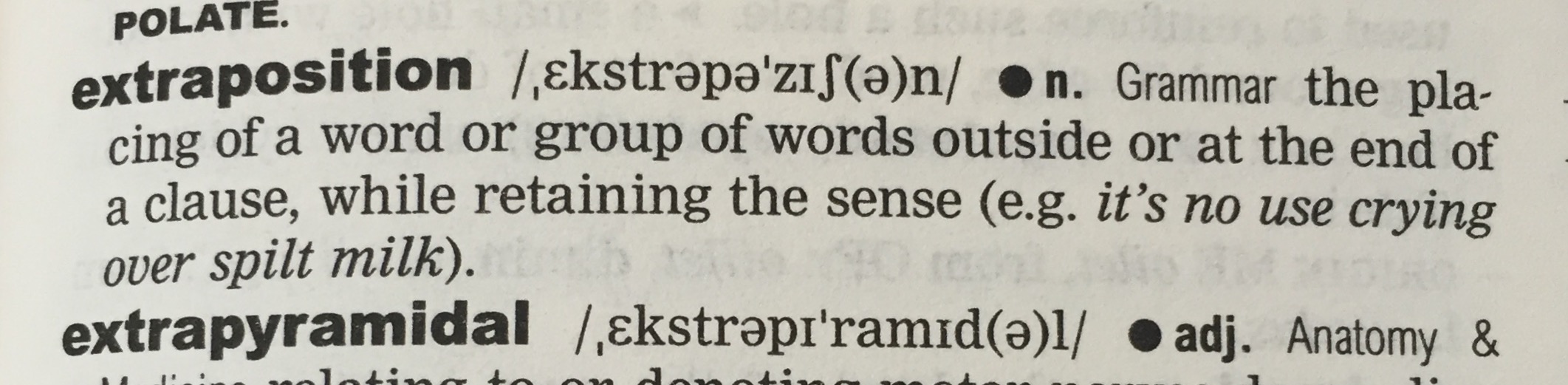
RANDOMLY SELECTED WORD FROM THE DICTIONARY:
extraposition
CREDITS:

  • Find Francesca Beauman at francescabeauman.com and buy her books, including the excellent Shapely Ankle Preferr’d, from your usual book-buying places.

  • This episode was produced by me, Helen Zaltzman.

  • Martin Austwick provided all the music.

  • Matthew Crosby provided his voice.

  • Allusionist listeners provided their dating profiles, for which I am extremely grateful.

  • WLTM you at facebook.com/allusionistshow, twitter.com/allusionistshow and twitter.com/helenzaltzman.

This is a two-parter, and the second half is an absolute belter, so return next week to hear it.

- HZ

In episodes Tags words, language, history, linguistics, communication, internet, technology, online dating, dating, love, sex, marriage, romance, courtship, gender, women, men, Victorians, England, Britain, matrimony, matchmaking, gay, homosexuality, code, private lives, emotions, pigs, lonely hearts, adverts, ads, advertising, feminism, wedlock, warlock, Squarespace, Fallen London, newspapers, press, print, media, deception, fraud, scandal, liberation
1 Comment

Allusionist 19: Architecting About Dance

September 23, 2015 The Allusionist
Dance Boggle board.png

iTUNES • RSS • MP3

“Talking about music is like dancing about architecture” is a problematic statement: not just because nobody can agree on who came up with it, but because dancing about architecture doesn’t seem particularly far-fetched. Talking about dance, however - that's really difficult. How do you put a wordless form of communication into words?

Audio describer Alice Sanders and choreographer Steven Hoggett take the issue for a twirl.

READING ABOUT DANCE IS LIKE READING ABOUT ARCHITECTURE:

  • If you want to find out more about "[doing a thing] about [a thing] is like [doing a different thing] about [another thing]" adages, take a look here and here.

  • Further werewolf reading-matter: find out about Old English wolf-words; read this plea for feminist werewolves/wifwolves; and this, apparently, is The Problem with Female Werewolves (too hairy for this bikini-waxed world?).

  • You want to learn Labanotation? Don't let me stop you.

  • You want to learn about the Step Up series of films? Don't let me stop you.

  • Steven Hoggett talks more about how he goes about his work, here and here.

  • Here is the transcript of this episode.

RANDOMLY SELECTED WORD FROM THE DICTIONARY:
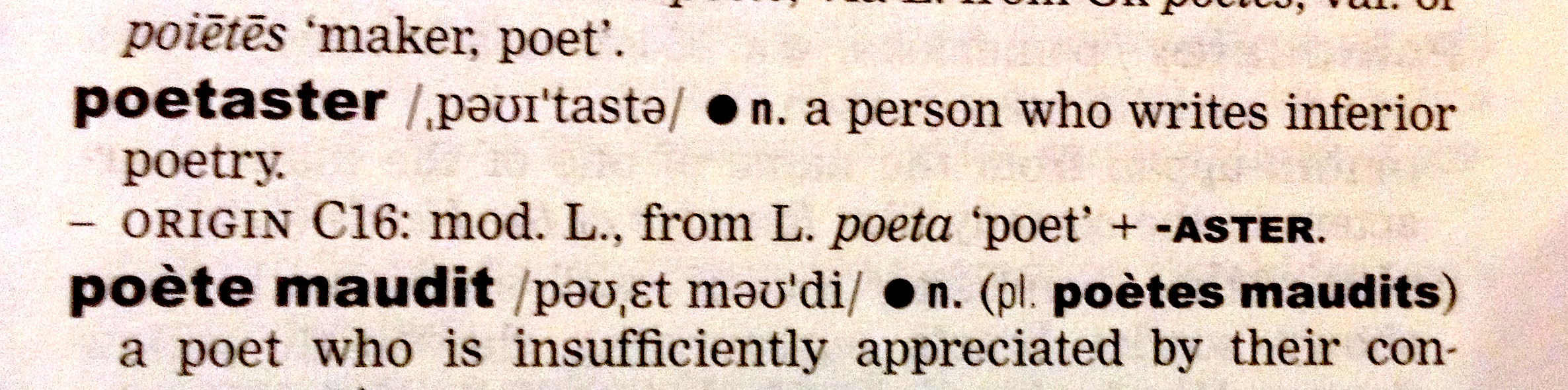
poetaster
CREDITS:

  • Alice Sanders writes very funny articles and blogs. Find her at twitter.com/wernerspenguin.

  • Steven Hoggett is working on exciting forthcoming projects including the stage adaptation of Disney's Pinocchio, AND the Harry Potter play. You'll have to wait a little while for those; but his Burt Bacharach show, Close To You, is about to open at London's Criterion Theatre. The Curious Incident of the Dog In The Night-Time is on in the UK and on Broadway, and Once seems to be all over the place.

  • The non-speech noises in this episode were:

  1. Allusionist Theme by Martin Austwick

  2. The Nutcracker, Swan Lake and Sleeping Beauty by Tchaikovsky

  3. A snippet of the film version of A Chorus Line

  4. Cinderella by Prokofiev

This episode was produced by me, Helen Zaltzman. Thanks to Eleanor McDowall and Miranda Sawyer.

Dance along to facebook.com/allusionistshow, twitter.com/allusionistshow and twitter.com/helenzaltzman.

- HZ

In episodes Tags words, language, history, gender, sexism, werewolf, werewolves, man, female, woman, women, sexist, dance, dancing, Step Up, Alice Sanders, Steven Hoggett, choreography, movement, Labanotation, stage, theatre, theater, performance, actors, dancers, film, movies, TV, television, entertainment, non-verbal communication, wordless, Old English, A Chorus Line, ballet, classical ballet, repetiteurs, choreographers, books, literature, documentation, musicality, person, Latin, audio description
6 Comments

Allusionist 15: Step Away

July 29, 2015 The Allusionist
Step Away Boggle board.png

iTUNES • RSS • MP3

'Step-', as in stepparents or stepchildren, originated in grief. Family structures have evolved, but are stepmothers now so tainted by fairytale associations with the word 'wicked' that we need new terminology? Lore's Aaron Mahnke stops by to describe the lovelessness, literary tropes and life expectancy around 'step-'.

ADDITIONAL READING:

  • Diagnose yourself with novercaphobia, if you must.

  • But according to Neil Gaiman, in early versions of many of the Brothers Grimm's fairy tales, the evil stepmothers were actually evil bilogical mothers...

  • Here's information about the study Aaron mentioned about 'The Cinderella Effect' upon stepchild mortality; there are some curious findings.

  • Read about the ancient prototypes for Cinderella, and then some analysis of some of the newer spins on the tale.

  • Or perhaps you'd prefer an annotated version of Hansel and Gretel, plus a load of different illustrators' takes on it.

  • Have you seen the film Wicked Stepmother? No, nor have I. It is distinguished by being Bette Davis's final film, and seems to average around two stars out of five from what I've read about it.

  • The transcript of this episode is here.

On Tuesday 4th August 2015 at 8pm UK time, 3pm ET, 12pm PT, I'll be doing a live discussion about this episode at spoken.am. Please come along to tell me what you think, divulge about your own steprelatives, and to ask me anything about the show.

Go to spoken.am to request your invite* and I'll see you there, yes? (Or you can catch up afterwards, if you must.)

UPDATE: Now that we are living in the post-live chat era, you can catch up at spoken.am/allusionist/step-away

*My school English teacher used to HATE people using 'invite' as a noun. I feel both guilty and slyly delighted to have done so just now.

RANDOMLY SELECTED WORD FROM THE DICTIONARY:
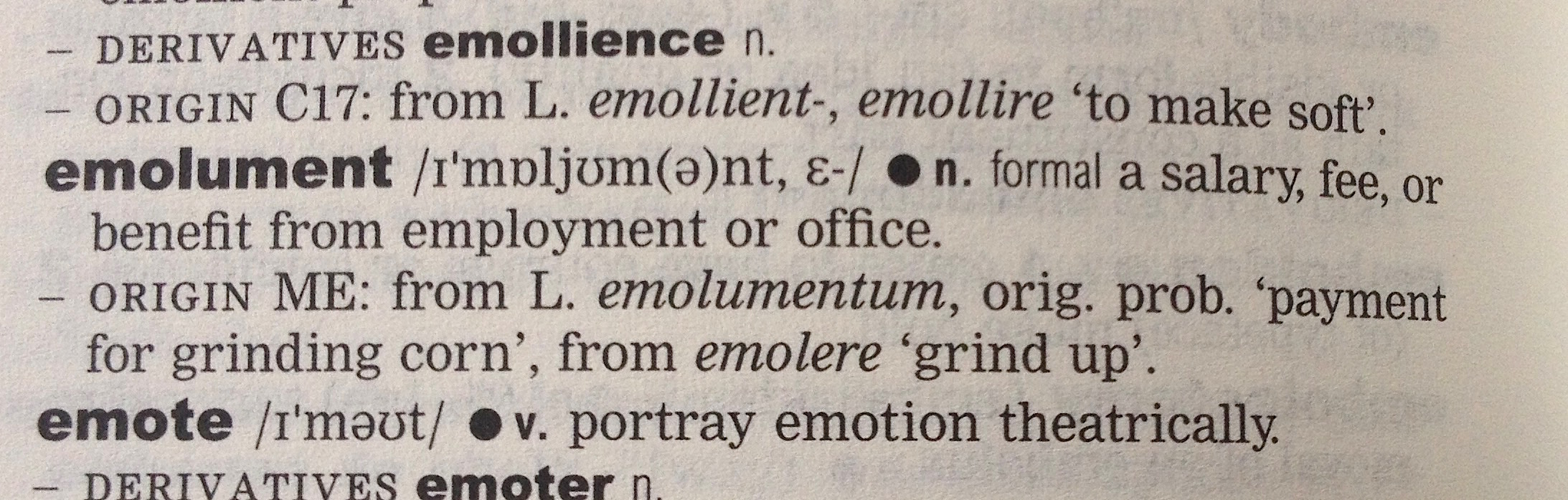
emolument
CREDITS:

  • Aaron Mahnke hosts Lore podcast, about scary stories and folklore. Visit lorepodcast.com, and find more of Aaron's work including his books at aaronmahnke.com.

  • Big sloppy thanks are served to all the listeners who answered my plea and kindly contributed their thoughts about step-terms.

  • This episode was produced by me, Helen Zaltzman. All the music is by Martin Austwick. Hear and/or download more - WITH LYRICS! - at thesoundoftheladies.bandcamp.com.

  • Say hello to me at facebook.com/allusionistshow, twitter.com/allusionistshow and twitter.com/helenzaltzman.

Back in a fortnight. Don't let anyone turn you into a pumpkin in the meantime.

- HZ

In episodes Tags Cinderella, literature, Lore, stories, evil, stepfathers, folklore, pilot, history, grief, Romans, stepmothers, novercaphobia, fiction, Hansel and Gretel, children, etymology, fairy tales, Germany, words, death, families, relationships, language, linguistics, bereavement, marriage, Grimm, parents, stepchildren, orphans, widows, Aaron Mahnke, widowers, Disney, women, step-, step, fathers, mothers, childhood, family
7 Comments

Allusionist 4: Detonating the C-Bomb

February 11, 2015 The Allusionist

iTUNES • RSS • MP3

WARNING: this episode is full of FOUL PROFANE LANGUAGE. I suggest you don't listen to it through loudspeakers at a christening.

Today I'm trying to figure out why 'cunt' is considered to be a ruder swear word than others like 'twat' which mean the same thing, or male equivalents like 'dick' and 'knob'. A few hundred years ago, cunt was sufficiently not-rude that there were streets named Gropecunt Lane in most of Britain's major market towns; yet now, it is top tier of the hierarchy of offensiveness. But maybe in another few hundred years, it will have been supplanted by 'swear word' or 'Jeff'. Find out why: listen now via iTunes, miscellaneous podcast directories, or RSS.

SUPPLEMENTARY ENTERTAINMENT:

  • If you enjoyed hearing about Gropecunt Lane, then I'm sure you'll like the triumphant tale of Tickle Cock Bridge.

  • There's a very interesting discussion of 'bloody' and other religious swear words on episode 44 of the brilliant podcast No Such Thing As A Fish.

  • Study TS Eliot's poem 'The Triumph of Bullshit'.

  • See Eve Ensler perform The Vagina Monologues.

  • Worried about whether to spell bellend 'bellend', 'bell-end' or 'bell end'? The editor of the Sunday Sport has the definitive answer.

RANDOMLY SELECTED WORD OF THE DAY:
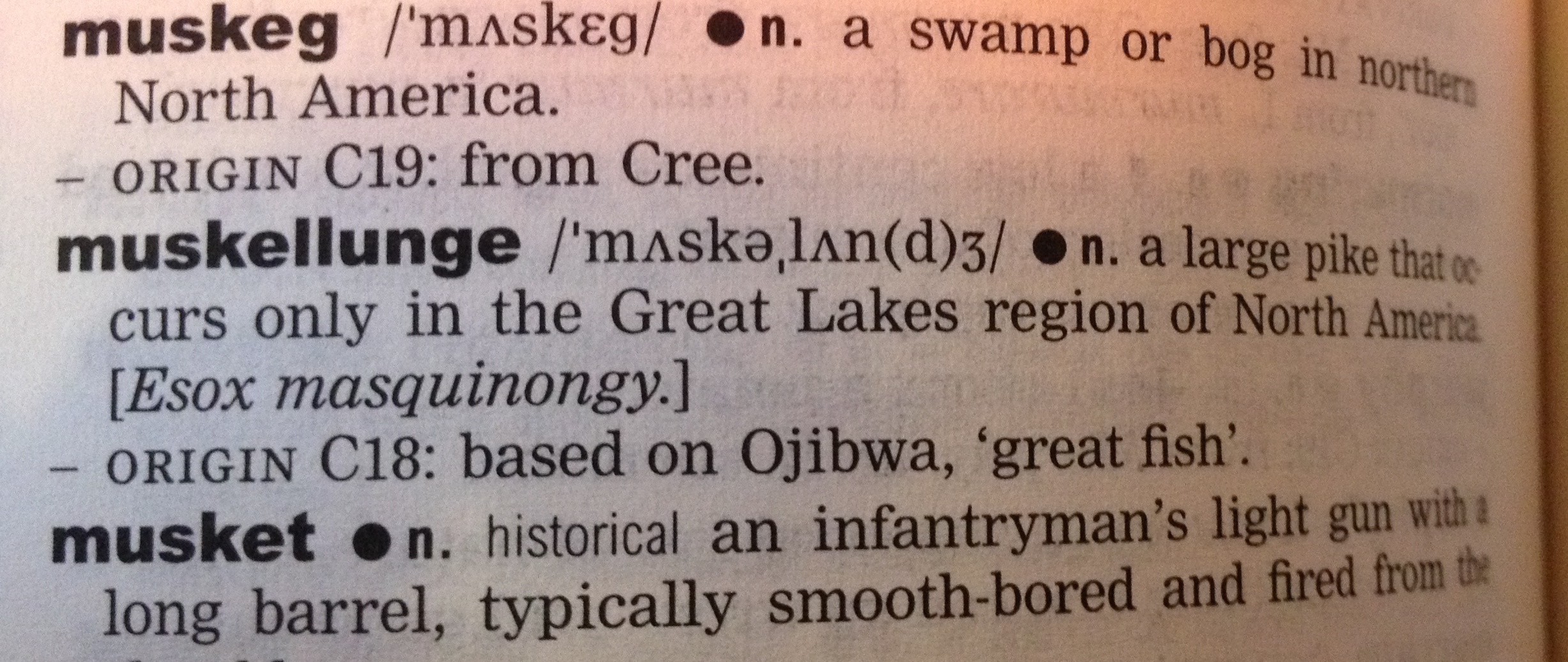
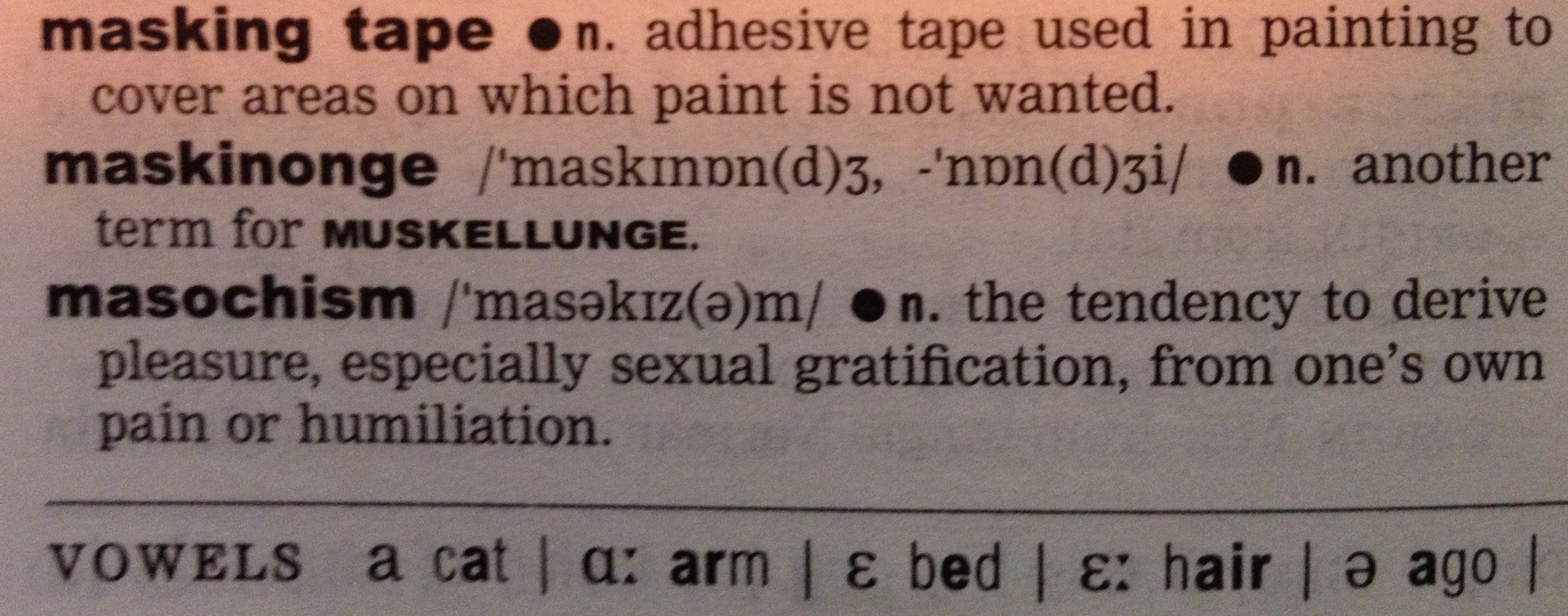
maskinonge
Share your thoughts with me at facebook.com/allusionistshow and twitter.com/allusionistshow.

- HZ

CREDITS

  • Presented and produced by Helen Zaltzman.

  • Leon Wilson helms such bawdy television shows as Celebrity Juice.

  • Jane Garvey uses only the most fragrant language when she presents Woman's Hour on BBC Radio 4. Her range of cockwipes will be in stores soon.

  • Thanks to all the people who contributed their rudest swear word, including the good people of Maximum Fun, but especially Tom Jenkinson's mum.

In episodes Tags language, etymology, words, bullshit, fuck, cunt, profanity, swear words, swearing, obscenities, TS Eliot, Wyndham Lewis, Ezra Pound, television, TV, Celebrity Juice, twat, Jane Garvey, Leon Wilson, ITV, cockwipes, cock, euphemisms, genitalia, motherfucker, offense, offensive language, naughty words, EXPLICIT, The Triumph of Bullshit, Blast, women, genitals, misogyny, feminine hygiene, place names, street names, Gropecunt Lane, sex, bodies, bodily, body, religion, God, Jeff, testicles, balls, bollocks, knob
9 Comments

Allusionist 2: Bosom Holder

January 14, 2015 The Allusionist

iTUNES • RSS • MP3

Today, we learn how 'bra' went from meaning a piece of French armour to something sold at Victoria's Secret.

Bra expert Lori Smith gives us a peek beneath the blouses of yore, from bra-boning to bra-burning.

Here's the first recorded appearance of the word 'brassiere', in Vogue from 23rd May 1907:

Fancy making your own hankie bra, a la Mary Phelps Jacobs? Here's the pattern. Or the blueprints for a power station, I'm not sure.

Here's an instructional video to help you:

Nope, not a clue.

Additional reading:

  • They discovered a medieval bra, AKA 'breastbags'.

  • Here's an interesting potted history of the bra, and here's a brief history of knickers that includes an illustration of a woman relieving herself into what looks like a gravyboat.

  • Mary Phelps Jacobs changed her name to Caresse Crosby and went on to have an intriguing, turbulent life - patenting the first brassiere was certainly not the pinnacle of her achievements.

RANDOMLY SELECTED WORD FROM THE DICTIONARY:
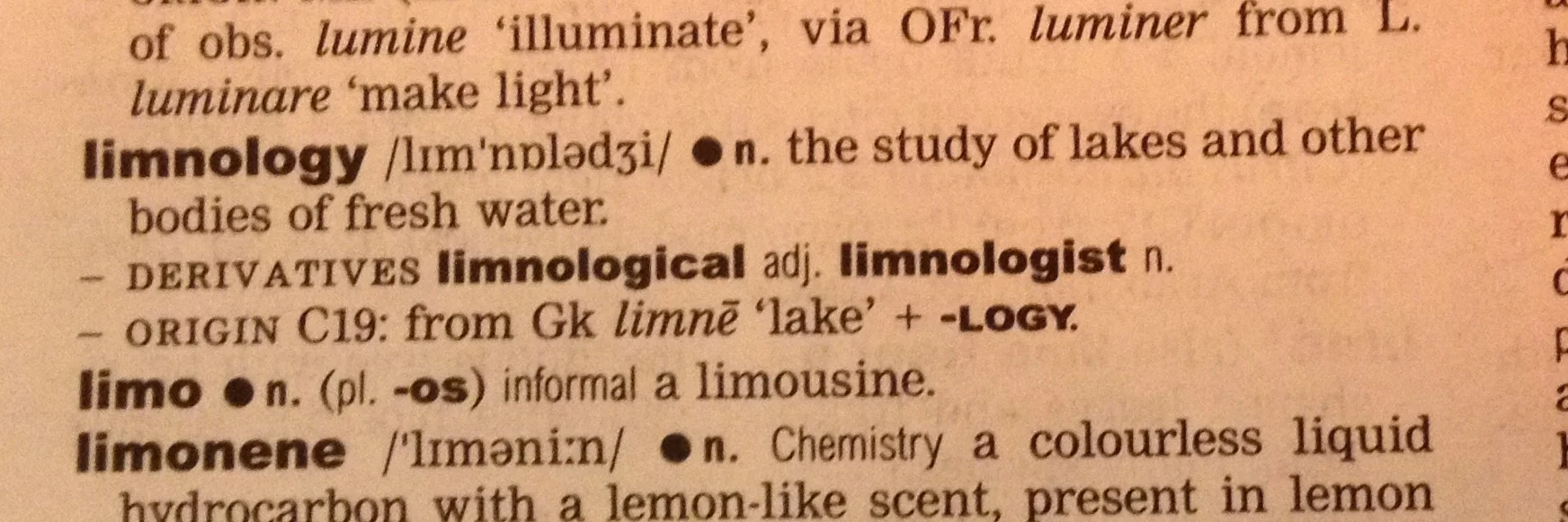
limnology
limnology.jpg

CREDITS

  • Presented and produced by Helen Zaltzman.

  • Bra master Lori Smith blogs at rarelywearslipstick.com and tweets at @lipsticklori.

  • Thanks to Amber Butchart and Greg Jenner.

MUSIC

  • 'Allusionist Theme' - Martin Austwick

  • 'Underwear' - Magnetic Fields

  • 'Underneath Your Clothes' [Instrumental] - Shakira

  • 'Underwear' - Pulp

- HZ

In episodes Tags etymology, women, feminism, corsets, corsetry, underpants, bras, knickers, undergarments, Mary Phelps Jacobs, brassiere, bra, bra-burning
5 Comments
Allusionist Patreon
Featured
Allusionist 233. Phobia

'Phobia' gets used for anything from a mild aversion to a debilitating anxiety response to various forms of bigotry. Deboki Chakravarti and Sam Jones of the podcast Tiny Matters join to consider the term from its comedic origins with one of the founding fathers of the USA, via rabies and Greek deities, to its role in their lives today.

CONTENT NOTE: we’re not trying to stoke anyone’s phobias, but we do discuss some common phobia-inducers, including snakes, germs and small holes, and there’s a brief mention of tarantulas. There’s also talk about OCD and rabies.

Read more →
Allusionist 232. Vega

What do you call yourself if you're a part-time vegetarian? What petty linguistic things would you change? And what do you do if people gripe at you if you say that you are bi or pan? To answer these questions from the Allusionist mailbag are esteemed alumsionists: Hrishikesh Hirway and Samin Nosrat of Home Cooking podcast; academic and author Alex Ketchum; lexicographer Kory Stamper; and linguist Lauren Gawne of Lingthusiasm podcast.

Read more →
Tranquillusionist: cheesy cheesybobs

This is the Tranquillusionist, in which I, Helen Zaltzman, say a series of words to relax your mind, replace a hectic interior monologue, maybe lull you to sleep, hopefully quell the mental uproar just for a little while.

Today: nicknames for woodlice AKA rolypoly bugs AKA slaters AKA all these other things; and a list of cheeses from Great Britain and Ireland.

Read more →
78AF926C-7878-4567-A87F-13CFF415B647_1_105_c.jpeg
sorry lads, we're getting bad ads

TL;DR version:

  • For the show's financial survival (hopefully), over the next few weeks I'm having to switch on programmatic advertisements. This means, for the first time in the show's nearly 12-year existence, you may be subjected to ads that are not voiced, scripted and individually approved by me.

  • If you would prefer to listen to the show without ads in it, patreonise the show at the Gravy, Wedge or Check tiers, which include the perk of an ad-free RSS feed.

Click through to read the rest of the post about why I’m doing this thing I don’t want to do.

Read more →
Allusionist 231. Lingthusionist

“Linguistics and language is such a good mechanism for being curious,” says Lauren Gawne, linguistics prof, author of the book Gesture, and cohost of the podcast Lingthusiasm. I'm in vacation mode (although not on actual vacation alas), so today's episode is a fun chat with our nice pal about making language podcasts, the firey digestive punishments for linguistics researchers, working in reality television, and cute tame nouns versus scary intimidating verbs.

Read more →
Allusionist 230. Draculae part 4: Transformation

Throughout the Draculae miniseries, about the Swedish and Icelandic translations of Dracula that played fast and loose with the original text, I've been wondering a couple of questions: why are cover versions of songs and remakes of films so normal and acceptable, whereas cover versions in book form cause such a stir? And do these Scandinavian Draculae count as fan fiction? And if not, why not? Fansplaining.com's Elizabeth Minkel explains what fan fiction can mean.

Read more →
Allusionist 229. Draculae part 3: Hunting Down the Count

Many mysteries accompany the revelations that Powers of Darkness, the Icelandic and Swedish versions of Dracula, are not direct translations of Bram Stoker's original, but stories that significantly differ in character names, plot and runtime. Like: did Bram Stoker write it himself, to publish some raunchy content that British censors would forbid? Was Powers of Darkness based on his early drafts? And did he really not copyright Dracula in the USA was that a deliberate ruse? Welllll... brace yourself for ole thrill-destroyer Zaltzman to pop your balloons of excitement.

Read more →
queer playlist
Read more →
Allusionist 228. Draculae part 2: Surprises in the Vaults

Happy World Dracula Day to all who celebrate!

This is the second episode of the Draculae miniseries, about a literary mystery which came to me via a meme: “Someone translated Dracula into Icelandic, and it took over 100 years for anyone to point out he just made a fanfic rewrite of what he wanted the story to be.”

In Draculae part 2, Ásgeir Jónsson explains how he got that Icelandic adaptation of Dracula back into print, to little fanfare - but then Dutch scholar Hans Corneel de Roos set about making an English translation. Following that: like me, Will Trimble also got meme-struck, and that propelled him to get a translation of the Swedish version that begat the Icelandic one.

Before listening to this, check out the first episode of the Draculae miniseries explaining the three versions of Dracula: Dracula published by Bram Stoker in 1897; the Icelandic version Makt Myrkranna by newspaper editor Valdimar Ásmundsson, serialised in his newspaper Fyallkonan in 1900-1901; and the Swedish version Mörkrets makter by an author known only as A—e, and serialised in a couple of Swedish newspapers 1899-1900.

Read more →
Allusionist 227. Draculae part 1: Enter the Castle

A literary mystery came to me via a meme.

Read more →
Allusionist 226. Suburbia

"The word ‘suburbia’ sort of evokes a very fixed idea of a place that is identikit, that all suburbs are the same, that within the suburb everything is the same, that all people are the same, all experiences are the same," says social historian and author John Grindrod. "I think it has this kind of flattening-out facility, that word, that isn't true."

Read more →
Allusionist 225. Hues

You know what's an absolutely pesky kind of word to define in a dictionary? Colour names. A passel of lexicographers spent years - decades, even - trying different ways to describe colours in words for Webster's Third International Dictionary. It was such a huge, complicated effort that it took twelve years for former Merriam-Webster lexicographer Kory Stamper to write a book about it.

Read more →
Allusionist 224. Cosmic Hairball

Pack your oxygen tank, we're going up to space. There’s a lot of etymology up there.

Read more →
Allusionist 223. Bonus 2025
Read more →
Allusionist 222. A Christmas Carol

Today, we read the novelisation of The Muppet Christmas Carol, also known as the 1843 festive lit hit A Christmas Carol by Charles Dickens.

Read more →
Creative Commons Licence
The Allusionist by Helen Zaltzman is licensed under a Creative Commons Attribution-NonCommercial-NoDerivatives 4.0 International License.