Throughout the Draculae miniseries, about the Swedish and Icelandic translations of Dracula that played fast and loose with the original text, I've been wondering a couple of questions: why are cover versions of songs and remakes of films so normal and acceptable, whereas cover versions in book form cause such a stir? And do these Scandinavian Draculae count as fan fiction? And if not, why not? Fansplaining.com's Elizabeth Minkel explains what fan fiction can mean.
Read moreAllusionist 229. Draculae part 3: Hunting Down the Count
Many mysteries accompany the revelations that Powers of Darkness, the Icelandic and Swedish versions of Dracula, are not direct translations of Bram Stoker's original, but stories that significantly differ in character names, plot and runtime. Like: did Bram Stoker write it himself, to publish some raunchy content that British censors would forbid? Was Powers of Darkness based on his early drafts? And did he really not copyright Dracula in the USA was that a deliberate ruse? Welllll... brace yourself for ole thrill-destroyer Zaltzman to pop your balloons of excitement.
Read moreAllusionist 228. Draculae part 2: Surprises in the Vaults
Happy World Dracula Day to all who celebrate!
This is the second episode of the Draculae miniseries, about a literary mystery which came to me via a meme: “Someone translated Dracula into Icelandic, and it took over 100 years for anyone to point out he just made a fanfic rewrite of what he wanted the story to be.”
In Draculae part 2, Ásgeir Jónsson explains how he got that Icelandic adaptation of Dracula back into print, to little fanfare - but then Dutch scholar Hans Corneel de Roos set about making an English translation. Following that: like me, Will Trimble also got meme-struck, and that propelled him to get a translation of the Swedish version that begat the Icelandic one.
Before listening to this, check out the first episode of the Draculae miniseries explaining the three versions of Dracula: Dracula published by Bram Stoker in 1897; the Icelandic version Makt Myrkranna by newspaper editor Valdimar Ásmundsson, serialised in his newspaper Fyallkonan in 1900-1901; and the Swedish version Mörkrets makter by an author known only as A—e, and serialised in a couple of Swedish newspapers 1899-1900.
Read moreAllusionist 227. Draculae part 1: Enter the Castle
A literary mystery came to me via a meme.
Read moreAllusionist 222. A Christmas Carol
Today, we read the novelisation of The Muppet Christmas Carol, also known as the 1843 festive lit hit A Christmas Carol by Charles Dickens.
Read moreAllusionist 221. Scribe
"I have never felt so naked. That's how exposed I felt at the idea that my handwriting was going to be seen by the world," says Tim Brookes, founder of the Endangered Alphabets Project and author of the new book about handwriting By Hand: Can the Art of Writing Be Saved? Writing the book (yes, by hand!) celebrates the act of handwriting, even overcoming the shame arising from his own.
Read moreAllusionist 219. Making Trouble
A change of scene for one episode: recently the brilliant poet and performer Molly Naylor interviewed me for her podcast Making Trouble, about creativity, and she kindly let me run a version of that episode here for you. We're talking about ideas, but also long-term creative careers, mortality, podcasting, external validation, and Molly offers some great prompts for either sparking ideas or making a dinner conversation a bit more lively.
Read moreAllusionist 218. Banned Books

It's Banned Books Week. Honorary youth chair Iris Mogul and Sam Helmick, president of the American Library Association, talk about what it is, why it matters so much, and how you can get involved.
Read moreAllusionist 211. Four Letter Words: -gate
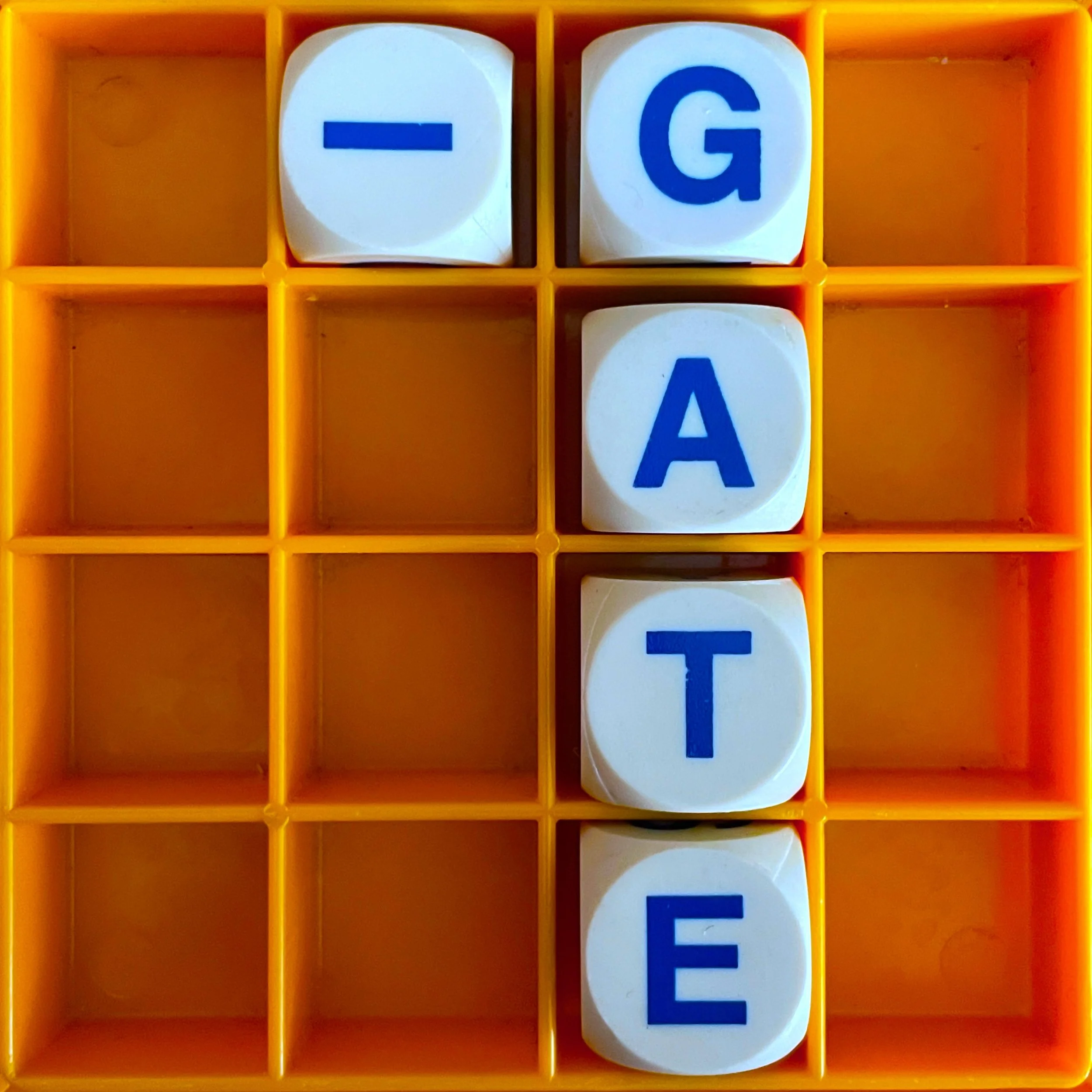
The other day was the 53rd anniversary of the break-in at the Watergate Hotel, which not only caused a lot of political uproar, it had a big linguistic legacy: the suffix -gate to mean a scandal.
Today, as part of Four Letter Word season, we have a list of -gates - royal, sporting, political, food, showbiz - it's a non-exhaustive list because there are so many, and new ones are being spawned all the time. Content warning for all sorts of bad human behaviour.
Read moreAllusionist 210. Four Letter Words: 4x4x4 Quiz

Four Letter Word season continues with a quiz (which is a four-letter word itself) about four letter words. Listen and play along to test your etymological knowledge, and hear about the original nepo baby, John Venn's invention that wasn't the venn diagram, brat, gunk, rube, the time(s) Led Zeppelin changed their name, and plenty more.
Click here to use the interactive score sheet.
Read more