• Episodes
  • Listen
  • Transcripts
  • Tranquillusionist
  • Events
  • Lexicon
  • Donate
  • Contact
  • Merch
Menu

The Allusionist

Street Address
City, State, Zip
Phone Number
A PODCAST ABOUT LANGUAGE
BY HELEN ZALTZMAN

Your Custom Text Here

The Allusionist

  • Episodes
  • Listen
  • Transcripts
  • Tranquillusionist
  • Events
  • Lexicon
  • Donate
  • Contact
  • Merch

Allusionist 198: Queer Arab Glossary

August 9, 2024 The Allusionist
Boggle grid spelling out the words "Queer Arab Glossary"

Since 2019, Marwan Kaabour has been collecting Arabic slang words used by and about queer people, first for the online community Takweer, and now the newly published Queer Arab Glossary. "When researching for this book, I discovered so much of the sociopolitical, cultural, linguistic, and historical layers that make up the words," he says. He also discovered quite a lot about frying, white beans and worms (metaphorical ones).

Read more
In episodes Tags lexicography, lexicon, society, culture, words, language, etymology, vocabulary, Marwan Kaabour, Takweer, Queer Arab Glossary, dialect, Arabic, Levantine, Iraqi, Egyptian, Gulf, Sudanese, Maghrebi, Al-Sham, Lebanon, Levant, Southwest Asia, North Africa, SWANA, Libya, Syria, Sudan, Tunisia, Kurdish, queerness, queer, LGBTQIA, gender, masculinity, femininity, gay, trans, lesbian, sex work, genitals, penis, slang, slurs, colonisation, worms, yarn, crocodile, falcon, cow, hyena, food, frying, Hajj, K-pop, Mickey Mouse, Italian, French, English, metaphors, genderfree, detritivore

Allusionist 174. Eurovision part 1

April 7, 2023 The Allusionist

There aren't many multilingual, multinational television shows that have been running for nearly seven decades. But what makes the Eurovision Song Contest so special to me is not the music, or the dancing, or the costumes that range from spangletastic to tear-off: no, it's the people butting heads about language. Historian Dean Vuletic, author of Postwar Europe and the Eurovision Song Contest, recounts the many changes in Eurovision's language rules, and its language hopes and dreams.

Read more
In episodes Tags etymology, words, language, society & culture, arts, history, Dean Vuletic, singing, songs, tv, television, broadcasting, geography, politics, political, Eurovision Song Contest, European, Europe, pop, music, ABBA, Waterloo, Volare, Italian, French, German, Dutch, Swedish, France, Spain, Spanish, Norway, Sweden, Malta, English, Italy, United Kingdom, UK, Welsh, Wales, Australia, Luxembourg, Belgium, Flemish, Walloon, Israel, Hebrew, Finland, Netherlands, European Broadcasting Union, EBU, European Broadcasting Area, ESC, public broadcasters, latitude, longitude, multilingual, polyglot, bloc voting, francophone, national languages, Breton, controversy, Domenico Modugno, 20th century, 1950s, radio, portmanteau, portmanteaux, Serge Gainsbourg, Marc Chagall, rules, constructed languages, conlang, soccer, technology, ruelle, Eurovisionallusionist

Allusionist 158. Creature Quiz!

August 5, 2022 The Allusionist

There's lots of fun etymology of creatures and a lot of fun etymology derived from creatures, and now it is gathered into this fun playalong quiz about animal etymologies!

Read more
In audio, quiz Tags words, language, linguistics, education, comedy, entertainment, society & culture, literature, Helen Zaltzman, history, lexicon, vocabulary, culture, arts, etymology, quiz, meatus, animals, creatures, fish, birds, beasts, magpie, Margaret, pie, pica, sexism, Latin, Greek, Old English, parrot, Italian, priest, piebald, skewbald, bald, camelopard, offend, elephant, raccoon, chicken pox, chickens, cowardice, pox, goose barnacles, geese, goose, barnacles, myths, squirrel, cattle, weasel, smell, stinky, ferret, eggs, manure, porpoise, shrews, beshrew, agriculture, poop, dung, bison, polecats, weasel words, chattel, property, real estate, fee, livestock, petunia, penis, genitals, bowels

Allusionist 142. Zero

September 25, 2021 The Allusionist

Did any number cause as much trouble as zero? It stranded ships; it scrambles the brains of mathematicians, calendar users and computers; it even got itself banned in Florence. Math(s) communicator and drag queen Kyne explains the Terminator of numbers.

Read more
In episodes Tags words, language, linguistics, education, comedy, entertainment, society & culture, arts, literature, etymology, lexicon, vocabulary, Helen Zaltzman, history, Kyne, zero, nought, nothing, math, maths, mathematics, arithmetic, numbers, numerals, negative, counting, Mayans, India, Brahma Gupta, Italy, Italian, Fibonacci, eponyms, Hindu-Arabic numerals, Arabic, Sanskrit, Florence, calendars, typographical, placeholder, illegal math, imaginary numbers, Aristotle, voids, fraud, debt, Renaissance, printing press, errors, hippuric

Allusionist 141. Food Quiz

September 10, 2021 The Allusionist

Quiz time! Samin Nosrat and Hrishikesh Hirway of Home Cooking podcast join to deliver questions about food etymology, as well as what are the two words that make a dance track, and whether 'za' is an acceptable abbreviation for 'pizza'.

Play along and keep track of your score using the interactive scoresheet further down this post.

Read more
In episodes, quiz Tags words, history, etymology, language, entertainment, education, linguistics, lexicon, vocabulary, quiz, Samin Nosrat, Hrishikesh Hirway, Home Cooking, meringue, pets, farts, boobs, laxatives, drinks, food, eating, drinking, dining, cooking, meat, slang, lunch, nonmete, Mars, horses, French toast, vagina, calamari, aperitif, garlic, carpaccio, walnut, mousse, Snickers, top banana, vanilla, karoshi, squid, Ancient Greek, pens, avocados, tomato, Farsi, Iran, Italy, French, France, Italian, fennel, pizza, za, nicknames, strawberry, dessert, scum, comedy, vaudeville, quizlusionist

Allusionist 121. No Title

September 14, 2020 The Allusionist
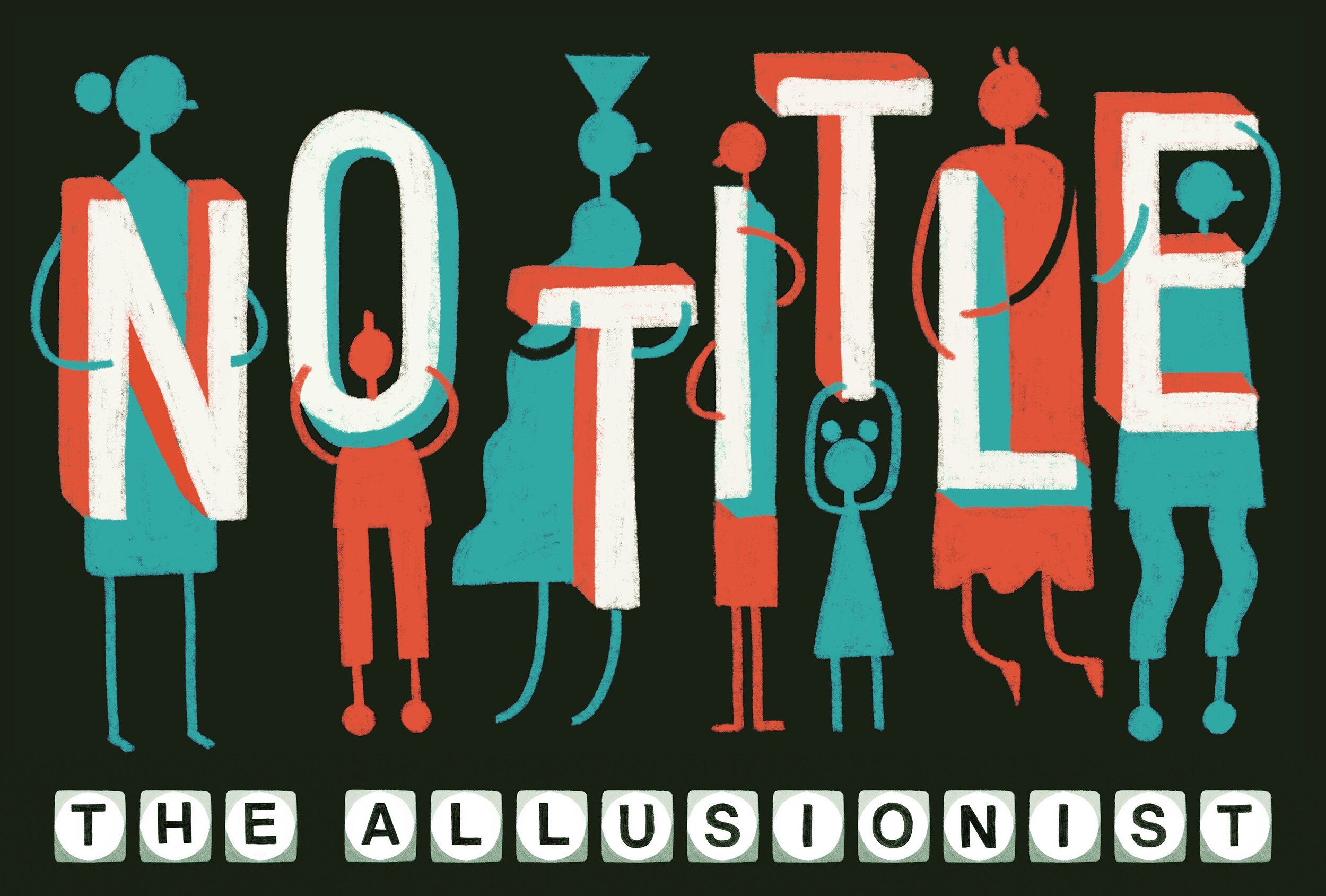
The Allusionist No Title poster colours.jpg

In 2014, a seemingly trivial and boring incident at the bank propelled me down a linguistic road via medieval werewolves, Ms Marvel and confusingly inscribed gravestones, to find out why the English language is riddled with all this gender. What’s it FOR? How did it GET there? Will it go AWAY now please? It is, at the very least, taking up brainspace and not paying any rent.

This is a recording of a live performance at the Blueberry Hill Duck Room in St Louis, Missouri on 23 November 2019, and there were visuals happening, so I’ll drop in sometimes to explain them, and I’ve also put a transcript and pictures in this post.

There are swears in this. There are also arguments that will be very useful to you if you ever come up against a denier of singular they. You will definitely win.

Read more
In live recording, episodes Tags words, language, linguistics, education, comedy, entertainment, society & culture, arts, literature, Helen Zaltzman, etymology, lexicon, vocabulary, live show, live recording, performance, No Title, gender, sex, identity, pronouns, titles, singular they, they, non-conforming, fluid, rank, hierarchy, marriage, social status, status, aristocracy, doctor, doctorate, Latin, Ms, Mrs, Master, Mister, Mr, Dr, Mx, ip, gender neutral, gender free, gender neutral pronouns, gender free pronouns, Ms Magazine, Ms Marvel, Sheila Michaels, feminism, feminists, tombstones, graves, gravestones, Downton Abbey, William and the Werewolf, medieval, Italian, Italy, signora, signorina, Frau, Fräulein, mademoiselle, madame, Académie Française, Mondamoiseau, Z, Mre, Russian, Russia, manners, politeness, etiquette, seamtress, seamster, manhole, you, ey, Martin Austwick

Allusionist 99. Polari

May 11, 2019 The Allusionist
A99 Polari logo.jpg

When there were no safe spaces to be gay, Polari allowed gay men to identify and communicate with each other, and to keep things secret from outsiders.

Professor Paul Baker, author of the Polari dictionary and the upcoming book Fabulosa! The Story of Polari, Britain’s Secret Gay Language, explains how Polari emerged from criminal cant and London’s theatres and docks to be used a code language for gay men in the oppressive 1950s - and then, not long after, it entered the slang lexicons of the general public, via popular sketch comedy and the mouth of an annoyed princess.

Read more
In episodes Tags words, language, linguistics, education, comedy, entertainment, society & culture, arts, literature, Helen Zaltzman, etymology, lexicography, Polari, slang, argot, lingua franca, secret, secrecy, code, Cant, camp, drag, criminals, decriminalisation, LGBTQ, gay cuture, homosexuality, 1950s, 1960s, 1970s, 20th century, BBC, Mary Whitehouse, Sisters of Perpetual Indulgence, Julian and Sandy, Kenneth Horne, Kenneth Williams, Hugh Paddick, sex, Round the Horne, innuendo, Italian, Parlyaree, London, Britain, police, gender, dating, Princess Anne, Princess Royal, royals, West End, East End, clobber, zhoozh, cline, navy, merchant navy, Americanisms, gay, history, gay culture, Pride, Gay Pride, Pride Month, scytale, queer, queer history

Allusionist 81. Shark Week

July 27, 2018 The Allusionist
A81 Shark Week logo.jpg

What is the expression 'beyond the pale' on about? How do you express the absence of feeling? Does 'testify' have anything to do with testicles? Do avocados have anything to do with testicles? How does the phrase "It's all Greek to me" relate to food styling? Can you have a caper with capers? Are sharks misunderstood, etymologically and morally? And finally: where do allusions come from?

Read more
In episodes Tags Radiotopian guest appearance, The Beatles, indifference, emotions, nouns, verbs, adjectives, beyond the pale, phrases, sayings, ghetto, pale, impale, fences, Irish Pale, Russian Pale, Calais Pale, oppression, Jews, mood, ambivalence, testicles, balls, crotch, genitals, law, swearing, witness, testify, testis, ovaries, legal system, etymology, anatomy, Latin, Greek, ancient languages, Bible, supplication, stones, nuts, eggs, slang, avocados, Spanish, onomatopoeia, cinnamon, food, food styling, food stylists, brands, Chinese, it’s all Greek to me, typography, scribes, writing, placeholder, goats, capers, capering, foodstuffs, caprice, caprine, G.O.A.T., sharks, sea creatures, fish, Jaws, Mayan, xoc, German, sea-dog, dogs, loan shark, allusion, allude, Hrishikesh Hirway, Song Exploder, The West Wing Weekly, words, history, language, linguistics, expressions, Italian, Serena Williams, goatmilker

Allusionist 17: Fix part I

August 26, 2015 The Allusionist
Fix I Boggle board.png

iTUNES • RSS • MP3

The English language is a mess. And if you don't like it, what are you going to do about it - fix it? Good luck with that.

In the early 18th century, a movement of grammarians and authors wanted to set up an official authority to regulate English, like French had in the Academie Francaise. But is trying to fix a language a good move? Linguists Liv Walsh and Thomas Godard weigh up the evidence.


Apologies in advance, pedants: this episode may contain some truths you* don't want to hear.
*we.

READING MATTER:

  • Some of the audio is a bit unclear, so here's a transcript of the show.

  • Find out about the Academie Francaise, including what you'll need to do if you want to become one of Les Immortels. (You'll probably have to kill one of the current ones.)

  • Here is Jonathan Swift’s language proposal and here is his Modest Proposal.

  • This article summarises how most linguistic rules are just busking it; it also links to a 1909 paper about the subject that doesn't mess around.

  • Thomas Godard recommends reading Fixing English by Anne Curzan and The Bishop's Grammar by Ingrid Tieken-Boon van Ostade, and listening to PRI's The World in Words.

  • The purists among you may wish to seek refuge with the Queen's English Society.

RANDOMLY SELECTED WORD FROM THE DICTIONARY:
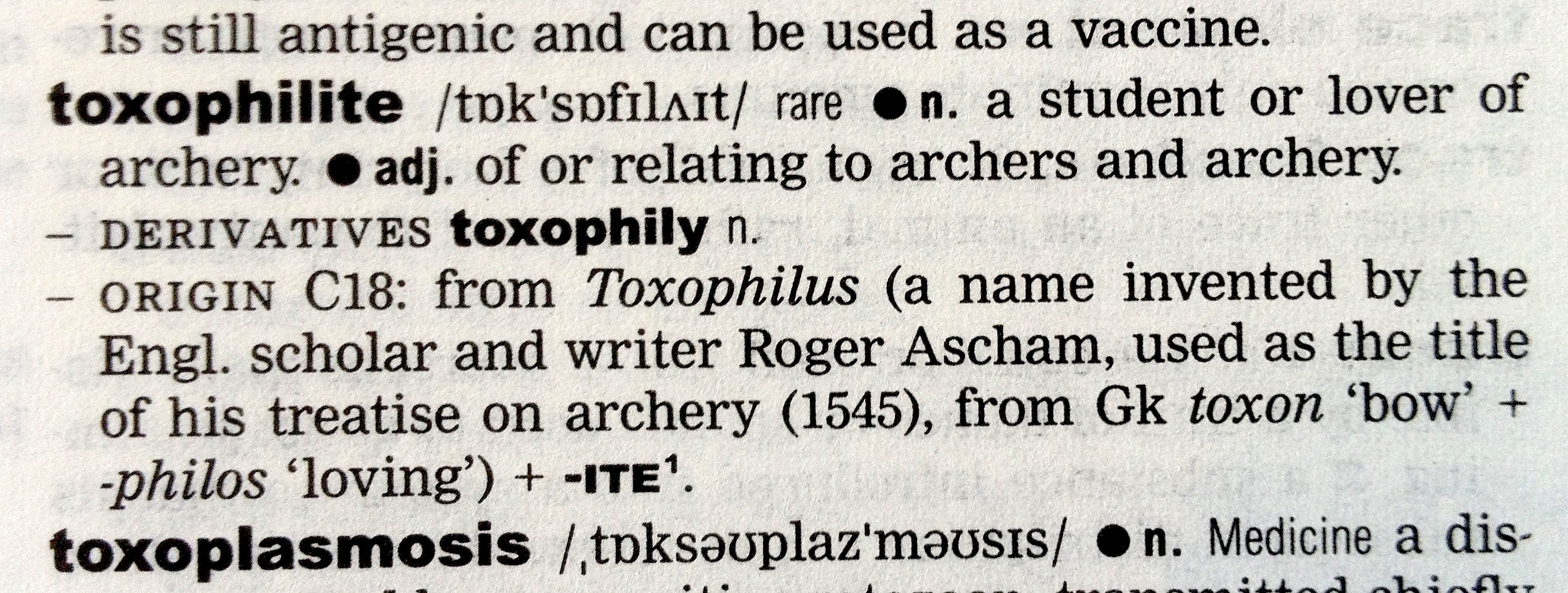
toxophilite
CREDITS:

  • Thanks very much to Dr Liv Walsh and Thomas Godard, and to Dr Rachele De Felice who helped me find them.

  • This episode was produced by me, Helen Zaltzman. All the music is by Martin Austwick. Hear and/or download more - WITH LYRICS! - at thesoundoftheladies.bandcamp.com.

  • Say hello to me at facebook.com/allusionistshow, twitter.com/allusionistshow and twitter.com/helenzaltzman.

Come back in a fortnight to see if the current attempts to fix English are faring any better than the 18th century ones.

- HZ

In episodes Tags linguistics, Thomas Godard, English, fixing language, dictionaries, purism, spelling, spelling reform, pedantry, log on, Terminology Commission, split infinitives, Academies, fixing, preservation, technology, computing, Johnson's Dictionary, punishment, toxophilite, sailors, borrowing, knots, ancient languages, perfection, history, bran, standardisation, F-Secure, log in, reforms, logs, grammarians, reform, French Revolution, grammar, Liv Walsh, Italian, ships, Academy, Jonathan Swift, Italy, A Modest Proposal, education, Samual Johnson, Academie Francaise, purity, Hover, Latin grammar, login, France, computation, computers, semantic shift, Cardinal Richelieu, the ineluctable march of progress, evolution, nautical, Dr Johnson, rules, Les Immortelles, Latin, social reform, pedants, language reform, language, authority, French, standardization, words
Allusionist Patreon
Featured
Allusionist 233. Phobia

'Phobia' gets used for anything from a mild aversion to a debilitating anxiety response to various forms of bigotry. Deboki Chakravarti and Sam Jones of the podcast Tiny Matters join to consider the term from its comedic origins with one of the founding fathers of the USA, via rabies and Greek deities, to its role in their lives today.

CONTENT NOTE: we’re not trying to stoke anyone’s phobias, but we do discuss some common phobia-inducers, including snakes, germs and small holes, and there’s a brief mention of tarantulas. There’s also talk about OCD and rabies.

Read more →
Allusionist 232. Vega

What do you call yourself if you're a part-time vegetarian? What petty linguistic things would you change? And what do you do if people gripe at you if you say that you are bi or pan? To answer these questions from the Allusionist mailbag are esteemed alumsionists: Hrishikesh Hirway and Samin Nosrat of Home Cooking podcast; academic and author Alex Ketchum; lexicographer Kory Stamper; and linguist Lauren Gawne of Lingthusiasm podcast.

Read more →
Tranquillusionist: cheesy cheesybobs

This is the Tranquillusionist, in which I, Helen Zaltzman, say a series of words to relax your mind, replace a hectic interior monologue, maybe lull you to sleep, hopefully quell the mental uproar just for a little while.

Today: nicknames for woodlice AKA rolypoly bugs AKA slaters AKA all these other things; and a list of cheeses from Great Britain and Ireland.

Read more →
78AF926C-7878-4567-A87F-13CFF415B647_1_105_c.jpeg
sorry lads, we're getting bad ads

TL;DR version:

  • For the show's financial survival (hopefully), over the next few weeks I'm having to switch on programmatic advertisements. This means, for the first time in the show's nearly 12-year existence, you may be subjected to ads that are not voiced, scripted and individually approved by me.

  • If you would prefer to listen to the show without ads in it, patreonise the show at the Gravy, Wedge or Check tiers, which include the perk of an ad-free RSS feed.

Click through to read the rest of the post about why I’m doing this thing I don’t want to do.

Read more →
Allusionist 231. Lingthusionist

“Linguistics and language is such a good mechanism for being curious,” says Lauren Gawne, linguistics prof, author of the book Gesture, and cohost of the podcast Lingthusiasm. I'm in vacation mode (although not on actual vacation alas), so today's episode is a fun chat with our nice pal about making language podcasts, the firey digestive punishments for linguistics researchers, working in reality television, and cute tame nouns versus scary intimidating verbs.

Read more →
Allusionist 230. Draculae part 4: Transformation

Throughout the Draculae miniseries, about the Swedish and Icelandic translations of Dracula that played fast and loose with the original text, I've been wondering a couple of questions: why are cover versions of songs and remakes of films so normal and acceptable, whereas cover versions in book form cause such a stir? And do these Scandinavian Draculae count as fan fiction? And if not, why not? Fansplaining.com's Elizabeth Minkel explains what fan fiction can mean.

Read more →
Allusionist 229. Draculae part 3: Hunting Down the Count

Many mysteries accompany the revelations that Powers of Darkness, the Icelandic and Swedish versions of Dracula, are not direct translations of Bram Stoker's original, but stories that significantly differ in character names, plot and runtime. Like: did Bram Stoker write it himself, to publish some raunchy content that British censors would forbid? Was Powers of Darkness based on his early drafts? And did he really not copyright Dracula in the USA was that a deliberate ruse? Welllll... brace yourself for ole thrill-destroyer Zaltzman to pop your balloons of excitement.

Read more →
queer playlist
Read more →
Allusionist 228. Draculae part 2: Surprises in the Vaults

Happy World Dracula Day to all who celebrate!

This is the second episode of the Draculae miniseries, about a literary mystery which came to me via a meme: “Someone translated Dracula into Icelandic, and it took over 100 years for anyone to point out he just made a fanfic rewrite of what he wanted the story to be.”

In Draculae part 2, Ásgeir Jónsson explains how he got that Icelandic adaptation of Dracula back into print, to little fanfare - but then Dutch scholar Hans Corneel de Roos set about making an English translation. Following that: like me, Will Trimble also got meme-struck, and that propelled him to get a translation of the Swedish version that begat the Icelandic one.

Before listening to this, check out the first episode of the Draculae miniseries explaining the three versions of Dracula: Dracula published by Bram Stoker in 1897; the Icelandic version Makt Myrkranna by newspaper editor Valdimar Ásmundsson, serialised in his newspaper Fyallkonan in 1900-1901; and the Swedish version Mörkrets makter by an author known only as A—e, and serialised in a couple of Swedish newspapers 1899-1900.

Read more →
Allusionist 227. Draculae part 1: Enter the Castle

A literary mystery came to me via a meme.

Read more →
Allusionist 226. Suburbia

"The word ‘suburbia’ sort of evokes a very fixed idea of a place that is identikit, that all suburbs are the same, that within the suburb everything is the same, that all people are the same, all experiences are the same," says social historian and author John Grindrod. "I think it has this kind of flattening-out facility, that word, that isn't true."

Read more →
Allusionist 225. Hues

You know what's an absolutely pesky kind of word to define in a dictionary? Colour names. A passel of lexicographers spent years - decades, even - trying different ways to describe colours in words for Webster's Third International Dictionary. It was such a huge, complicated effort that it took twelve years for former Merriam-Webster lexicographer Kory Stamper to write a book about it.

Read more →
Allusionist 224. Cosmic Hairball

Pack your oxygen tank, we're going up to space. There’s a lot of etymology up there.

Read more →
Allusionist 223. Bonus 2025
Read more →
Allusionist 222. A Christmas Carol

Today, we read the novelisation of The Muppet Christmas Carol, also known as the 1843 festive lit hit A Christmas Carol by Charles Dickens.

Read more →
Creative Commons Licence
The Allusionist by Helen Zaltzman is licensed under a Creative Commons Attribution-NonCommercial-NoDerivatives 4.0 International License.