• Episodes
  • Listen
  • Transcripts
  • Tranquillusionist
  • Events
  • Lexicon
  • Donate
  • Contact
  • Merch
Menu

The Allusionist

Street Address
City, State, Zip
Phone Number
A PODCAST ABOUT LANGUAGE
BY HELEN ZALTZMAN

Your Custom Text Here

The Allusionist

  • Episodes
  • Listen
  • Transcripts
  • Tranquillusionist
  • Events
  • Lexicon
  • Donate
  • Contact
  • Merch

Allusionist 18: Fix part II

September 9, 2015 The Allusionist
Fix II Boggle board.png

iTUNES • RSS • MP3

The messiness of English is the price of its success. It is the most widely spoken language in the world, geographically, being an official language in 88 different countries, and there are countless different versions of it all over the world. With so many speakers in so many places, it would be impossible to establish a single 'correct' form of English; and, as became evident in Fix part I, to try to do so is a losing game.

In Europe, a new strain of English is emerging. It's not spoken very widely, but it is used by some of the most powerful people in the world. Hampton and Michael Catlin, founders of the collaborative online dictionary Wordset, lead us into this linguistic netherworld.

Beware: excessive suffixes.

READING MATTER:

  • Who WOULDN'T want to read the European Court of Auditors' 66-page 2013 report Misused Words and Expressions in EU Publications? Curl up on the sofa and prepare to discover bold new uses for 'homogenise', 'mission' and 'jury'.

  • The history of musical notation, do re mi - née ut re mi - is interesting; read more about it here.

  • If you're infuriated by someone who muddles up words like 'gamut' and 'gamete', you could direct them to diffen.com or the-difference-between.com.

  • The transcript of today's show is here.

  • The Guardian interviewed me about the Allusionist and Answer Me This; take a look here (if just for the accompanying photo).

RANDOMLY SELECTED WORD FROM THE DICTIONARY:
gleet

CREDITS:

  • Hampton and Michael Catlin founded Wordset, the online collaborative dictionary that aims to collect every different form of English. You can help out at wordset.org. You can also hear the Catlins on their podcast, We Have A Microphone.

  • This episode was produced by me, Helen Zaltzman. Thanks to Matthew Crosby for his vocal contributions. The music is by Martin Austwick. Hear and/or download more - WITH LYRICS! - at thesoundoftheladies.bandcamp.com.

  • Say hello to me at facebook.com/allusionistshow, twitter.com/allusionistshow and twitter.com/helenzaltzman.

The next episode will appear in a fortnight. Thank you for your actorness in listening.

- HZ

In episodes Tags words, language, fixing, fixing language, Europe, European Union, mistakes, word-building, new forms, excessive suffixes, verbs, nouns, actor, actorness, planification, English, Wordset, technocrats, pedantry, valorise, gamut, gamete, rage, errors, misuse, evolution, morphology, Michael Catlin, Hampton Catlin, solfege, musical notation, do re mi, gamma ut, ut re mi, music, notes, confusion
12 Comments

Allusionist 17: Fix part I

August 26, 2015 The Allusionist
Fix I Boggle board.png

iTUNES • RSS • MP3

The English language is a mess. And if you don't like it, what are you going to do about it - fix it? Good luck with that.

In the early 18th century, a movement of grammarians and authors wanted to set up an official authority to regulate English, like French had in the Academie Francaise. But is trying to fix a language a good move? Linguists Liv Walsh and Thomas Godard weigh up the evidence.


Apologies in advance, pedants: this episode may contain some truths you* don't want to hear.
*we.

READING MATTER:

  • Some of the audio is a bit unclear, so here's a transcript of the show.

  • Find out about the Academie Francaise, including what you'll need to do if you want to become one of Les Immortels. (You'll probably have to kill one of the current ones.)

  • Here is Jonathan Swift’s language proposal and here is his Modest Proposal.

  • This article summarises how most linguistic rules are just busking it; it also links to a 1909 paper about the subject that doesn't mess around.

  • Thomas Godard recommends reading Fixing English by Anne Curzan and The Bishop's Grammar by Ingrid Tieken-Boon van Ostade, and listening to PRI's The World in Words.

  • The purists among you may wish to seek refuge with the Queen's English Society.

RANDOMLY SELECTED WORD FROM THE DICTIONARY:
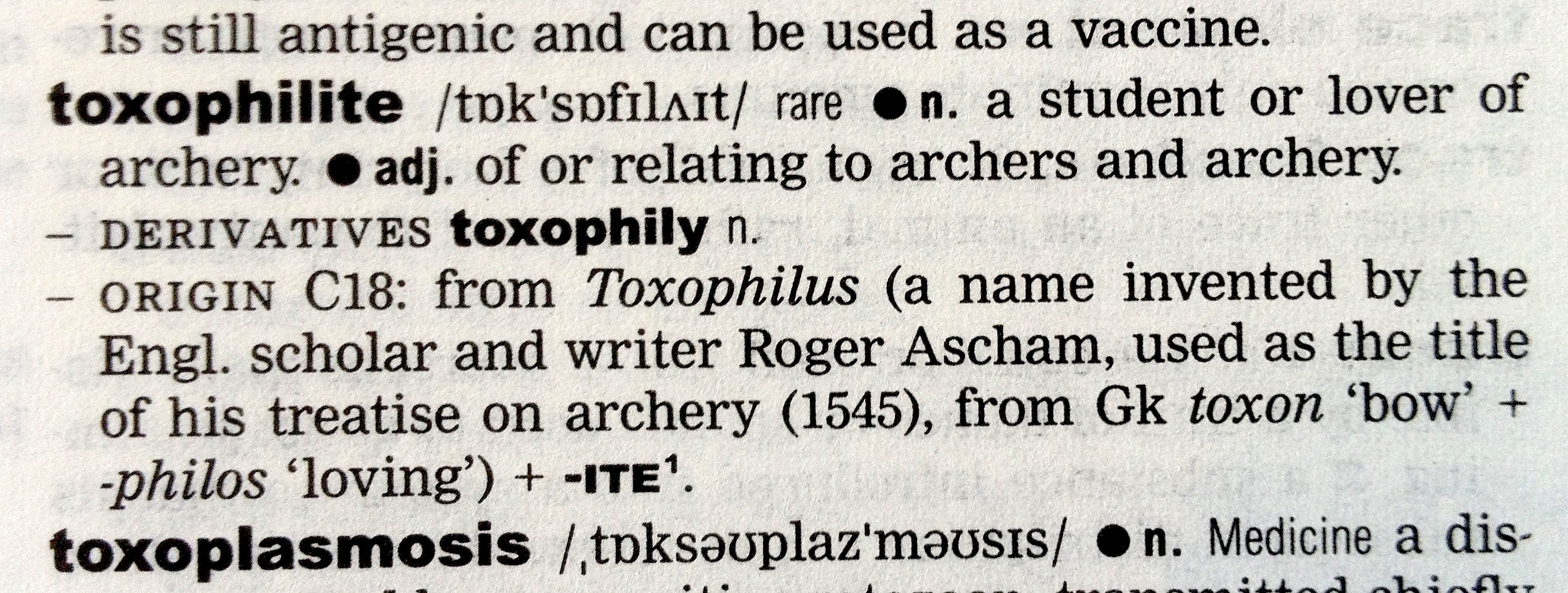
toxophilite

CREDITS:

  • Thanks very much to Dr Liv Walsh and Thomas Godard, and to Dr Rachele De Felice who helped me find them.

  • This episode was produced by me, Helen Zaltzman. All the music is by Martin Austwick. Hear and/or download more - WITH LYRICS! - at thesoundoftheladies.bandcamp.com.

  • Say hello to me at facebook.com/allusionistshow, twitter.com/allusionistshow and twitter.com/helenzaltzman.

Come back in a fortnight to see if the current attempts to fix English are faring any better than the 18th century ones.

- HZ

In episodes Tags linguistics, Thomas Godard, English, fixing language, dictionaries, purism, spelling, spelling reform, pedantry, log on, Terminology Commission, split infinitives, Academies, fixing, preservation, technology, computing, Johnson's Dictionary, punishment, toxophilite, sailors, borrowing, knots, ancient languages, perfection, history, bran, standardisation, F-Secure, log in, reforms, logs, grammarians, reform, French Revolution, grammar, Liv Walsh, Italian, ships, Academy, Jonathan Swift, Italy, A Modest Proposal, education, Samual Johnson, Academie Francaise, purity, Hover, Latin grammar, login, France, computation, computers, semantic shift, Cardinal Richelieu, the ineluctable march of progress, evolution, nautical, Dr Johnson, rules, Les Immortelles, Latin, social reform, pedants, language reform, language, authority, French, standardization, words

Allusionist 16: Word Play

August 12, 2015 The Allusionist
Wordplay Boggle board.png

Words are all over the place. So how do you turn them into fun games? Here to show the way is Leslie Scott, founder of Oxford Games and inventor of more than forty games - including word games such as Ex Libris, Anagram and Flummoxed, and the non-word game Jenga.

Read more
In episodes, Word Play Tags meat, game, games, hunting, Latin, French, Old French, 1066, Normans, Norman Invasion, history, fun, bluffing, Ex Libris, Flummoxed, play, cars, boredom, passing time, words, phrases, language, Oxford Games, Leslie Scott, imagineer, Scrabble, New York Times, scoring, letters, Viagra, products, product names, names, Swahili, Boggle, statistics, books, novels, etymology, Anagram, travel, journeys, alleviating boredom, naming, word play
5 Comments

Allusionist 15: Step Away

July 29, 2015 The Allusionist
Step Away Boggle board.png

iTUNES • RSS • MP3

'Step-', as in stepparents or stepchildren, originated in grief. Family structures have evolved, but are stepmothers now so tainted by fairytale associations with the word 'wicked' that we need new terminology? Lore's Aaron Mahnke stops by to describe the lovelessness, literary tropes and life expectancy around 'step-'.

ADDITIONAL READING:

  • Diagnose yourself with novercaphobia, if you must.

  • But according to Neil Gaiman, in early versions of many of the Brothers Grimm's fairy tales, the evil stepmothers were actually evil bilogical mothers...

  • Here's information about the study Aaron mentioned about 'The Cinderella Effect' upon stepchild mortality; there are some curious findings.

  • Read about the ancient prototypes for Cinderella, and then some analysis of some of the newer spins on the tale.

  • Or perhaps you'd prefer an annotated version of Hansel and Gretel, plus a load of different illustrators' takes on it.

  • Have you seen the film Wicked Stepmother? No, nor have I. It is distinguished by being Bette Davis's final film, and seems to average around two stars out of five from what I've read about it.

  • The transcript of this episode is here.

On Tuesday 4th August 2015 at 8pm UK time, 3pm ET, 12pm PT, I'll be doing a live discussion about this episode at spoken.am. Please come along to tell me what you think, divulge about your own steprelatives, and to ask me anything about the show.

Go to spoken.am to request your invite* and I'll see you there, yes? (Or you can catch up afterwards, if you must.)

UPDATE: Now that we are living in the post-live chat era, you can catch up at spoken.am/allusionist/step-away

*My school English teacher used to HATE people using 'invite' as a noun. I feel both guilty and slyly delighted to have done so just now.

RANDOMLY SELECTED WORD FROM THE DICTIONARY:
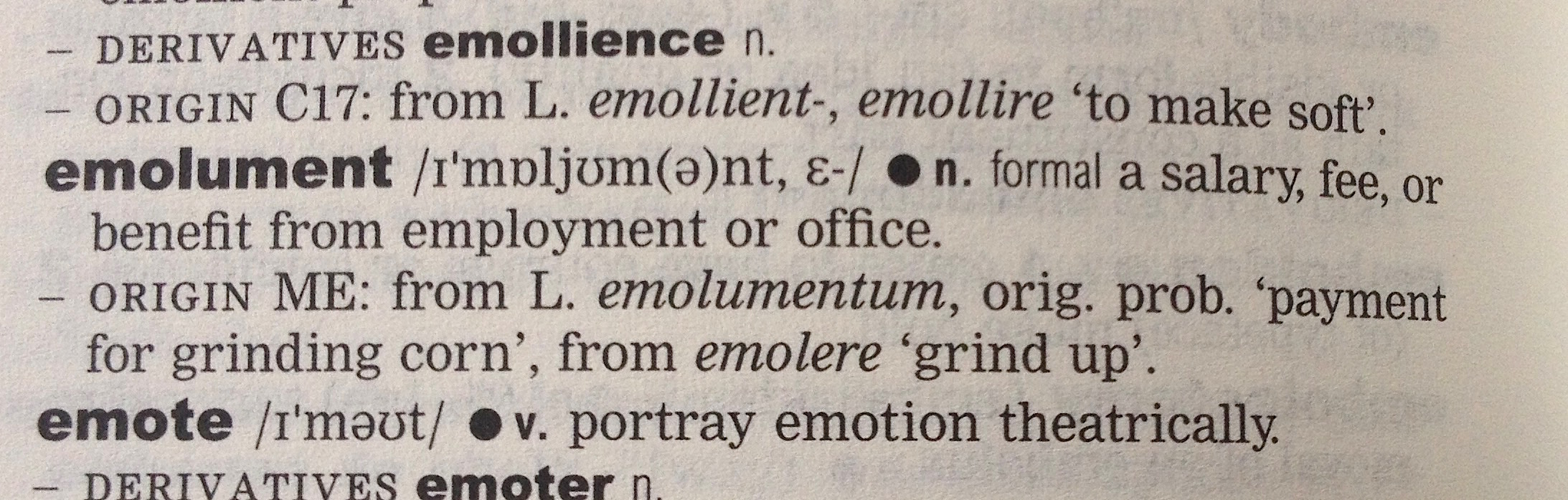
emolument

CREDITS:

  • Aaron Mahnke hosts Lore podcast, about scary stories and folklore. Visit lorepodcast.com, and find more of Aaron's work including his books at aaronmahnke.com.

  • Big sloppy thanks are served to all the listeners who answered my plea and kindly contributed their thoughts about step-terms.

  • This episode was produced by me, Helen Zaltzman. All the music is by Martin Austwick. Hear and/or download more - WITH LYRICS! - at thesoundoftheladies.bandcamp.com.

  • Say hello to me at facebook.com/allusionistshow, twitter.com/allusionistshow and twitter.com/helenzaltzman.

Back in a fortnight. Don't let anyone turn you into a pumpkin in the meantime.

- HZ

In episodes Tags Cinderella, literature, Lore, stories, evil, stepfathers, folklore, pilot, history, grief, Romans, stepmothers, novercaphobia, fiction, Hansel and Gretel, children, etymology, fairy tales, Germany, words, death, families, relationships, language, linguistics, bereavement, marriage, Grimm, parents, stepchildren, orphans, widows, Aaron Mahnke, widowers, Disney, women, step-, step, fathers, mothers, childhood, family
7 Comments

Allusionist 14: Behave

July 1, 2015 The Allusionist
Behave Boggle board.png

iTUNES • RSS • MP3

Sometimes words can become your worst enemy. Clinical psychologist and cognitive behavioural therapist Dr Jane Gregory tells how to defuse their power.

NB: Today's show concerns mental health, and the discussion nudges some topics which may not be comfortable for everybody. So if you have concerns, please sit this episode out, and return in two weeks for the next one.

ADDITIONAL READING:

  • When Jane has time around working with her patients, she writes very interesting pieces about CBT at cognitivebehaveyourself.com.

  • Here's a summary of CBT from the Royal College of Psychiatrists.

  • Have any of you played a mental health-themed game like Hellblade? How was it?

  • Philippa Perry's psychotherapy comic book Couch Fiction is rather wonderful. Read this interview with her then buy a copy from your local bookshop because I can't bring myself to link to Amazon.

  • Read a brief history of tennis AKA 'sphairistike'.

  • Here's a load of tennis etymology.

  • The transcript of this episode is here.

RANDOMLY SELECTED WORD FROM THE DICTIONARY:
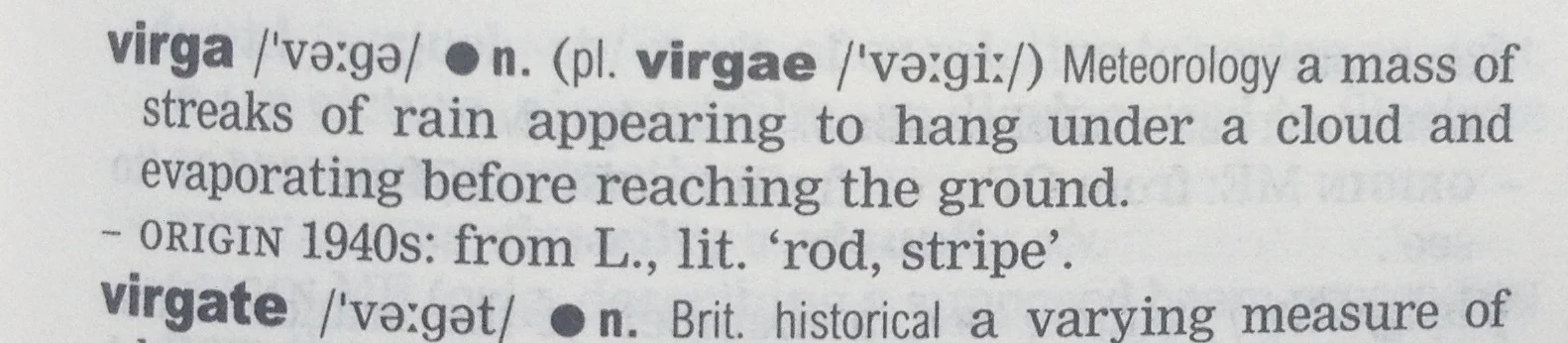
virga

CREDITS:

  • Dr Jane Gregory is a clinical psychologist working in the NHS and her own private practice. Find her at cognitivebehaveyourself.com and @CBYourself

  • This episode was produced by me, Helen Zaltzman. All the music is by Martin Austwick. Hear and/or download more at thesoundoftheladies.bandcamp.com.

  • Say hello to me at facebook.com/allusionistshow, twitter.com/allusionistshow and twitter.com/helenzaltzman.
I'll be back in a fortnight with a new episode. If you like this show, do tell someone about it. Not in a creepy pyramid scheme way; play it cool.

- HZ

In episodes Tags words, language, linguistics, therapy, CBT, cognitive behavioural therapy, psychotherapy, psychology, tennis, Wimbledon, sport, etymology, Ancient Greek, Old French, ball skills, defusion, sphairistike, lawn tennis, real tennis, Walter C. Wingfield, mental health, anxiety, OCD, Jane Gregory
1 Comment

Allusionist 13: Mixed Emojions

June 17, 2015 The Allusionist
Mixed Emojions Boggle board.png

iTUNES • RSS • MP3

Emoji allow communication without words. Could emoji be the universal language of the 21st century? Matt Gray and Tom Scott, founders of the emoji-only messaging platform emoj.li, talk through the pitfalls; and History Today's Dr Kate Wiles finds the 500- and 5,000-year-old precedents for emoji.

CONTENT WARNING: this episode contains one category B swear word, plus references to penises growing on trees.

ADDITIONAL READING:

  • There is a transcript of this episode here.

  • Keep up to date with all matters emojional at Emojipedia.

  • Learn more about cuneiform and poor old St Audrey.

  • Read the Luttrell Psalter. Or Emoji Dick, if you must. (Try before you buy.)

  • It should have been a portent of Things To Come that at age six, my favourite of the Just So Stories was the one about the alphabet being invented. It's Rudyard Kipling's own spin on cuneiform, pretty much.

  • Why the interrobang never really took off. It's the "That's so fetch!" of punctuation.

  • Your summer beach read: Unicode.

  • The more medieval marginalia you find, the better they get. Here are some choice cuts, and there are many more at Got Medieval; read Kate Wiles herself on the topic; read an explanation as to why so many involve knights fighting snails; or if you can't be bothered to read, just watch the video I made for you:

RANDOMLY SELECTED WORD FROM THE DICTIONARY:
kloof

CREDITS:

  • Dr Kate Wiles is contributing editor at History Today and appears on their podcast.

  • Matt Gray and Tom Scott brought the emoji-only messenger Emoj.li to life and now they're putting it to death.

  • All the music in this episode is by Martin Austwick. Hear and/or download more at thesoundoftheladies.bandcamp.com.

  • This episode was produced by me, Helen Zaltzman. Thanks very much to the Soho Theatre in London for letting me record there.

  • Find me at facebook.com/allusionistshow, twitter.com/allusionistshow and twitter.com/helenzaltzman.
- HZ

In episodes Tags words, language, emoji, Japanese, Japan, mobile phones, smartphones, Unicode, Unicode Consortium, ideograms, pictographs, Emoj.li, Kate Wiles, history, communication, Squarespace, Animoto, Yo, social media, social networks, St Audrey, saints, Roman alphabet, alphabet, letters, characters, penises, poo, marginalia, nuns, manuscripts, medieval, scribes, Kirsten Dunst, Arabic, linguistics, syntax, semantics
5 Comments

Allusionist 12: Pride

June 3, 2015 The Allusionist
Pride Boggle board.png

iTUNES • RSS • MP3

"The poison is shame. The antidote is pride."

It’s June; the President of the USA has officially designated it LGBT Pride Month, and there’ll be Pride events around the world.

Activist and the publisher of Homosexuals Intransigent Craig Schoonmaker recounts how the word ‘pride’ was chosen, which eventually came to be the banner word for demonstrations and celebrations of LGBT rights and culture.

ADDITIONAL READING:

  • In the episode I contemplate the history of the word 'lesbian', and if you're also interested to know how 'gay' evolved from 'colourful' or 'cheerful' to its present meaning, read about it here and here.

  • For background on the Stonewall riots whence arose the Pride movement, listen to this short oral history on Witness by the BBC World Service. I haven't seen the Stonewall Uprising documentary, but the transcript is interesting.

  • Craig Schoonmaker mentions the Mattachine Society, one of the first gay rights organisations in the USA. Here's a short history; this was its mission statement (from probably the mid-1960s), and here's what the FBI thought of it.

  • Fred Sergeant remembers the first Pride march.

  • Barack Obama officially proclaims June 2015 to be Pride Month.

  • There is a movement called Gay Shame, founded in 1998 as a protest against/alternative to what they saw as the overcommercialisation and conservatism of Gay Pride. Read about them here.

  • There is a transcript of this episode here.

CREDITS:

  • L. Craig Schoonmaker has several websites, including Mr Gay Pride, featuring articles and materials going all the way back to 1969; the Mr Gay Pride blog is also very interesting. He also runs a photo journal about Newark, NJ, as well as a version making the case for phonetic (fonetik?) spelling of English.

  • This episode was produced by me and Eleanor McDowall of Falling Tree, with help from Peregrine Andrews.

  • All the music in this episode is by Martin Austwick. Hear and/or download more at thesoundoftheladies.bandcamp.com.

  • Find me at facebook.com/allusionistshow, twitter.com/allusionistshow and twitter.com/helenzaltzman.
RANDOMLY SELECTED WORD FROM THE DICTIONARY:
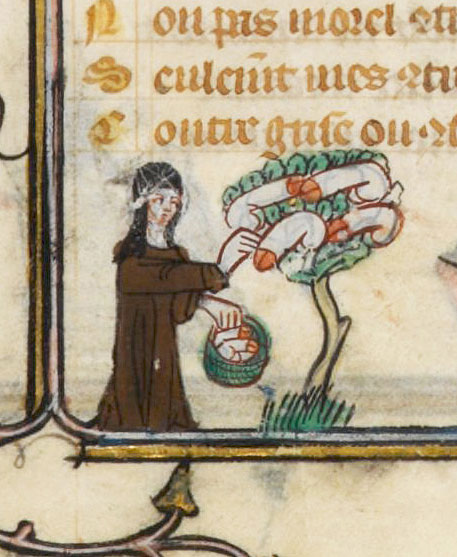
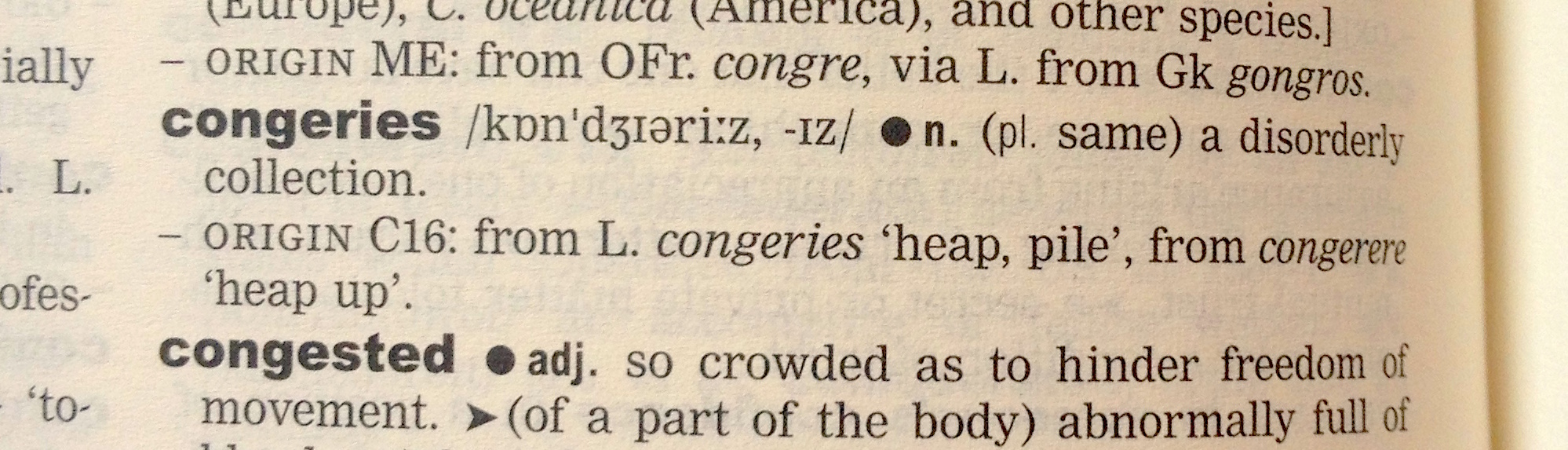
congeries

There'll be a new episode in a fortnight. Meantime, I'll be dispensing podcasting advice in California with Roman Mars and Colin Anderson: check here for details of the events.

- HZ

In episodes Tags words, language, linguistics, history, pride, Gay Pride, gay, homosexuality, LGBT, Stonewall, demonstrations, oppression, lesbian rule, Aristotle, civil rights, Quakers, Animoto, Christopher Street, Stonewall Riots, New York City, Mayor Lindsay, queerness, queer history, queer, LGBTQIA+, LGBTQIA
8 Comments

Allusionist 11: Brunchtime

May 20, 2015 The Allusionist
Brunchtime Boggle board.png

iTUNES • RSS • MP3

Brunch. What does it actually mean?

Yeah yeah, it's breakfast + lunch, but in function or in form? And what does it have to do with Lewis Carroll?

I chewed this over during brunch with Dan Pashman, host of the food podcast The Sporkful and author of Eat More Better. Fall down the rabbit hole of brunch semantics with us.

SIDE ORDERS:

  • Here is the transcript of this episode.

  • Want to know some more about the Rise of Brunch? Here you go.

  • The origins of the name of the classic brunch dish Eggs Benedict are as clear as Hollandaise.

  • Here's more about Lewis Carroll and his portmanteaus, and in case you're really hungry for arguments about semantics, here's Alice conversation with Humpty Dumpty in Through the Looking Glass.

  • In several languages, oranges are called variations of 'Portugal'.

  • Have any of you read Brunch: A History? I'm intrigued.

  • A lot of people seem to really hate brunch. Portlandia's 'Brunch Village' episode was fiction though, right?

RANDOMLY SELECTED WORD FROM THE DICTIONARY:
extrados

Next episode will appear in a fortnight. Don't stay awake the whole time until then just to game the word 'breakfast'. You'll only be spiting yourself.

- HZ

CREDITS

  • This episode was produced by Anne Saini, Dan Pashman and me, and recorded at the Square Diner on Leonard St, NYC. They were very sporting about it.

  • Hear Dan Pashman on WNYC's The Sporkful every week - thesporkful.com - and read his very funny and useful book Eat More Better. He is @TheSporkful on Twitter.

  • As well as producing The Sporkful, Anne Saini has her own podcast, Mother. She is @CitySpoonful on Twitter.

  • You can hear more of my conversation with Dan on this episode of The Sporkful. If you think he was going down some terrifying paths of logic about breakfast, wait till you hear his theories about fizzy water!

  • All* the music in this episode is by Martin Austwick. Hear and/or download more at thesoundoftheladies.bandcamp.com.
    * Aside from the songs playing in the background at the diner. I can make out 'Alone' by Heart and Maroon 5's 'Moves Like Jagger'. Shurrup, Maroon 5!

  • Find me at facebook.com/allusionistshow, twitter.com/allusionistshow and twitter.com/helenzaltzman.

Me and Dan in the Square Diner, post-porklift.

Me and Dan in the Square Diner, post-porklift.

In episodes Tags words, language, etymology, linguistics, orange, oranges, Sanskrit, French, Lewis Carroll, Alice Through the Looking Glass, portmanteau terms, portmanteaux, Dan Pashman, Sporkful, cronut, Guy Beringer, extrados, intrados, Jabberwocky, food, meals
7 Comments

Allusionist 10: Election Lexicon

May 6, 2015 The Allusionist
Election Lexicon Boggle board.png

iTUNES • RSS • MP3

On the eve of the 2015 General Election in the UK, join me for a jaunt through the etymology of election-related words.

Find out why casting a vote should be more like basketball, how debating could descend into fisticuffs, and why polling is hairy.

FURTHER READING:

  • Producer Matt and I went out in a high wind with a megaphone to record at the place for shouting about politics through a megaphone: Speakers' Corner in Hyde Park. Here's a brief history of Speakers' Corner, where people have been blowing high wind through megaphones for more than a century.

  • For those who insist upon continuing to do their campaigning indoors, here's a potted history of lobbying in the US.

  • I only briefly mentioned the origins of the Tories' name: it has a very knotty history. Read more about that here.

  • Swingometer fans! Thanks to the BBC, here're some archive videos and pictures of swingometers through history.

  • Here is the transcript of this episode.

RANDOMLY SELECTED WORD FROM THE DICTIONARY:
pismire

See you in a fortnight, unless etymologocracy wins the day and I'm too drunk on power to make this show.

- HZ

CREDITS

  • This episode was produced by me, Helen Zaltzman, with megaphone assitance from Matt Hill. Matt tweets as @virtualmatthill and makes numerous podcasts and apps, including Spark London and the Media Podcast. Find more of his work at rethinkdaily.co.uk.

  • All the music is by Martin Austwick. Hear more of it at http://thesoundoftheladies.bandcamp.com/.

  • Find me at facebook.com/allusionistshow, twitter.com/allusionistshow and twitter.com/helenzaltzman.


So goddamn windy that day. The campaign trail is more challenging than I had expected.

In episodes Tags words, language, etymology, politics, elections, General Election, history, Tories, Tory, Conservatives, party, parties, Conservative Party, British, government, lobby, lobbying, The Tasting Room, French, Old French, Proto-Indo-European, democracy, poll, voting, ballot, balls, polling, Middle English, hair, etymologocracy, pismire
2 Comments

Allusionist 9: The Space Between

April 22, 2015 The Allusionist
Space Between Boggle board.jpeg

I know this is a show about words, but forget the words for a moment; look at the spaces between the words. 

Without the spaces, the words would be nigh incomprehensible. And yet, they're a relatively recent linguistic innovation.

Read more
In episodes Tags language, words, Anglo-Saxon, Old English, Latin, Irish, Ireland, scribes, monks, medieval, Normans, spaces, punctuation, layout, nombril, disgruntled, gruntled, runes, runic, Ogham, Kate Wiles, history, writing, text, manuscripts, Old Irish, Romans, Christianity, email, URLs, hashtags, internet, Aristophanes, spelling, letters, phonemes, Chinese, oral tradition, spoken language, reading, pauses, lower case, upper case, majuscule, capital letters, carving, inscriptions, Anchorman, quills
10 Comments
← Newer Posts Older Posts →
Allusionist Patreon
Featured
Allusionist 226. Suburbia
Allusionist 225. Hues
Allusionist 224. Cosmic Hairball
Allusionist 223. Bonus 2025
Allusionist 222. A Christmas Carol
Allusionist 221. Scribe
Allusionist 220. Disobedience
Allusionist 219. Making Trouble
Allusionist 218. Banned Books
Allusionist 217. Bread and Roses, and Coffee
Allusionist 216. Four Letter Words: Terisk
Allusionist 215. Two-Letter Words
Allusionist 214. Four Letter Words: Bane Bain Bath
Souvenirs on BBC Radio 4
Allusionist 213. Four Letter Words: Dino
Creative Commons Licence
The Allusionist by Helen Zaltzman is licensed under a Creative Commons Attribution-NonCommercial-NoDerivatives 4.0 International License.