
DEV SHAH: Spelling is about roots, language. I genuinely loved getting a word I didn't know and having all this information - it was like a detective case: you have the language of origin, the definition, alternate pronunciations, roots; it's like witnesses and having details to a crime scene, forensics. And, you know, it was just me piecing out together, doing what I love, in front of millions of people, shining on a stage, cameras, and still getting a lot from it.
HZ: And you got to do all that detective work in ninety seconds.
DEV SHAH: Exactly.
Allusionist 195. Word play part 5: 100 Pages of Solvitude transcript
HZ: What would make you happier: if nobody solves it or if lots of people solve it?
JOHN FINNEMORE: Oh, lots of people, without question. I hope it's not trivial, but any puzzle has failed if nobody solves it.
Read moreAllusionist 194 Word Play part 4: Good Grids
ERIK AGARD: What I see a lot in crosswords is, I think, not unique to crosswords where historically they've been for a very specific cross-section of an audience. They're written with certain people in mind, and certain other people not in mind. And I think we're starting to see the tip of the iceberg of some changes that expands the range of who they're for.
Read moreAllusionist 193 Word Play part 3: Lemon Demon transcript
AJ JACOBS: Anagrams played a part in a trial, sort of a witch trial in the 1600s in the UK. And it was a woman who was put on trial for claiming that she was a prophet. Part of her proof was that if you rearrange the letters in her name - her name was Eleanor Davies - if you rearrange it, then it says, ‘Reveal, O Daniel’, as in the prophet Daniel. I don't believe that that was proof she was a prophet. They came down on her hard in the trial, so they said, “If you rearrange” - her married name was Dame Eleanor Davies - “and you rearrange those letters, it spells ‘Never So Mad A Lady;.” So like, “she's so crazy.” So that was how she was convicted. And by the way, that was when anagrams were easier, because there were so many spellings.
Read moreAllusionist 192 Word Play part 2 transcript

HZ: People assume to my face that a podcast about language won't be fun, and they're like, “Why would you do something that sounds so boring and dry and like a punishment?” What kind of reactions do you get when people learn that you make games about language?
KATHRYN HYMES: It's so interesting - for some people there's a similar reaction, but for a set of people, it's like you have given them the thing that they have most wanted in the world and maybe didn't realise or articulate or hope that such a thing could be made. And it's somewhat shocking that there's enough of those people and that the internet is able to connect it, you know, connect us to them that we end up finding each other.
Allusionist 191 Hypochondria - transcript
CAROLINE CRAMPTON: A lot of the theoretical material that I'd read about hypochondria very much positioned it in this binary situation that either someone has, quote, real illness, i.e. illness that you can detect with a scan or a blood test or some other diagnostic tool, or "It's all in their head and it's made up," and those are the only two ways it can be. But, just personally, I feel like I'm pretty much constantly experiencing some combination of the two. And I think the idea that there is unwarranted fear: I don't think there is any such thing as unwarranted fear, to be honest.
Read moreAllusionist 190 Craters - transcript

ANNIE LENNOX: It really all came to light when I got the opportunity to name my first feature on Mercury - which was, side note, one of the most exciting things. To find something that is scientifically significant and then to get the chance to name it on another planet: super cool.
Read moreTranquillusionist: Person In Scene transcript

This is the Tranquillusionist, in which I, Helen Zaltzman, soothe your brain by saying a load of words that don’t really mean very much, to give you an emotional break by temporarily supplanting your interior monologue with something you can benignly ignore. This isn’t like the usual episodes of the Allusionist, there’ll be no learning, no journey, you don’t have to feel or think anything. And you’ll find previous editions of the Tranquillusionist at theallusionist.org/tranquillusionist, featuring champion dogs, gay animals, punchlines with no setups and more.
Today’s theme was requested by Lachlan, so long ago that Lachlan will have perhaps forgotten, but at some point in the past they wanted a Tranquillusionist featuring the characters from films that don't have names - so in the credits they’re listed as "man in shop", "lady with pram", "angry customer 2".
Read moreAllusionist 189 Mouthful of Fortune transcript
HZ: What is this principle that is at play here, with foods being lucky because their names sound like other things?
MIRANDA BROWN: The main principle is that there's this very ancient Chinese belief that dates, I think, to the first or second century AD during the Han dynasty, that things that share similar sort of qualities - it could be appearance, it could be sort of textures, and names - share in common some sort of cosmic resonance. So the basic principle is that if you sort of you can activate those resonances by, let's say, you want a lot of money, then you might wear clothes that have gold, or you could eat foods that sound like a lot of money or ‘get rich’, and that would in some ways attract that desired end into your life. And this is especially important during liminal times of the year or when seasons are changing or when you're celebrating a holiday. The future is being decided, or it's somewhat inchoate. So this is your way of making these desired outcomes realized.
HZ: Because I was wondering: if the foods are lucky, then why can't you eat them throughout the year? But is that just gaming the system in a way it should not be gamed?
MIRANDA BROWN: I think there's something special about holidays, which, are transitional periods, that I think make that kind of eating especially effective. And, I also have to remember that during Lunar New Year, it's the beginning of the year. If you're going to set your goals for the year, the beginning is a good time to start.
Read moreAllusionist 188 Lipread transcript

HELEN BARROW: If you want me to do a quick demo, I will give you three words then, totally without context. Okay? [She mouths three words.]
HZ: Well, it looked like you were saying, “baa, baa, baa,” but that, I assume, is not what you were saying.
HELEN BARROW: That wasn't what I was saying, no.
HZ: What were you saying?
HELEN BARROW: So you've got the right one in that you've got the B. Yeah? So one of them was a B. So if I give you some context then, if I tell you one was a furry animal, one can be a civic leader, and one can be a piece of fruit. Okay, right, I'll do it again. [She mouths the same three words again.]
HZ: …I'm bad at this.
HELEN BARROW: But the thing is, I have deliberately picked three words that I know look alike, because, to go into the technical side of it, consonant confusion group, you know, a set of lip shapes that look alike.
Allusionist 187 Bonus 2023 transcript

It is the annual Bonus episode - because the people who appear on this show always say so much good stuff, it doesn’t all fit into their original episodes, so at the end of each year we get to enjoy all the extra bounty. Coming up, we’ve got a mythical disappearing island, geese, human dictionaries, the dubious history of the Body Mass Index, a Eurovision thing that has puzzled me for years, Victorian death department stores, and much more.
Read moreAllusionist 186 Ravels transcript
MIRIAM FELTON: No; I think, as with most of these things, they're just named after people. The people themselves don't really have much association with it. Like the Earl of Cardigan didn't ever wear a cardigan as far as we know.
HZ: What? What?? I assumed that he was out there on the battlefields in a cardigan.
MIRIAM FELTON: Like a nice fair isle one with all the stranded colour work? That would have been awesome.
HZ: Just some kind of frontally divided knitted garment. But no?
MIRIAM FELTON: No.
HZ: What?!
MIRIAM FELTON: Not as far as we have any evidence.
Allusionist 185 Gems and Patties transcript
I've got a doctorate in this, and I have got dwarfism, but there'll always be an average-sized person whose only recollection of dwarfism is through Snow White, and yet somehow they'll construct themselves as the expert, and tell you it's not offensive or, “No, you've got that wrong.”
HZ: Also by having it on bags of sweets, that's kind of the ultimate “It's okay to say this in normal conversation”.
ERIN PRITCHARD: Yeah. But you do get through to some people, some people go, “I never realised that. I never knew that.”
Read moreAllusionist 184 Misophonia transcript
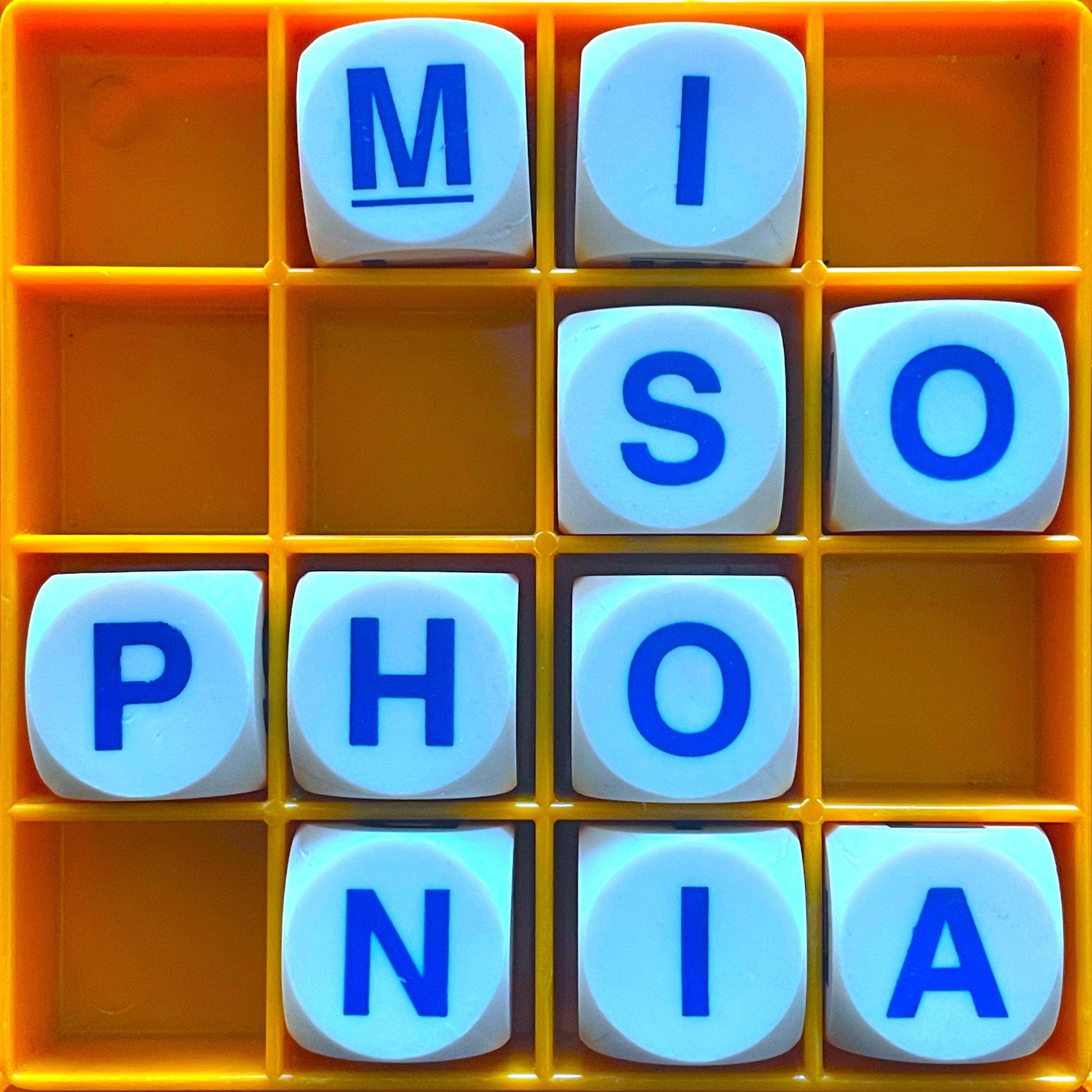
JANE GREGORY: Misophonia is an extreme reaction to certain sounds and not an aversion to all sounds, but an extreme reaction to specific sounds. And the most common sounds are eating and heavy breathing and kind of repetitive sniffing and coughing and things like that. Which are also sounds that most people don't like the sound of, but people with misophonia will get a much more intense reaction, so it might be more like a fight or flight kind of response, a feeling of anger or panic as opposed to feeling annoyed or irritated or disgusted by the sound. And there's a bit more to it in terms of what goes on around the sounds as well. So it might be feeling trapped or helpless when they can't get away from these sounds. It might be listening out for sounds, even when there aren't any, or continuing to listen to see if the sound is still going, even if it's stopped. And doing things to organize your life around sounds or to cope with sounds. when they happen. So most people who don't like a sound will just deal with it. For people with misophonia, they have to do things to not be able to hear it or to be able to cope with their reactions to it.
HZ: Rather than just grimacing.
JANE GREGORY: Exactly. I mean, there's also some grimacing, but probably also some glaring.
Allusionist Apple Fest transcript
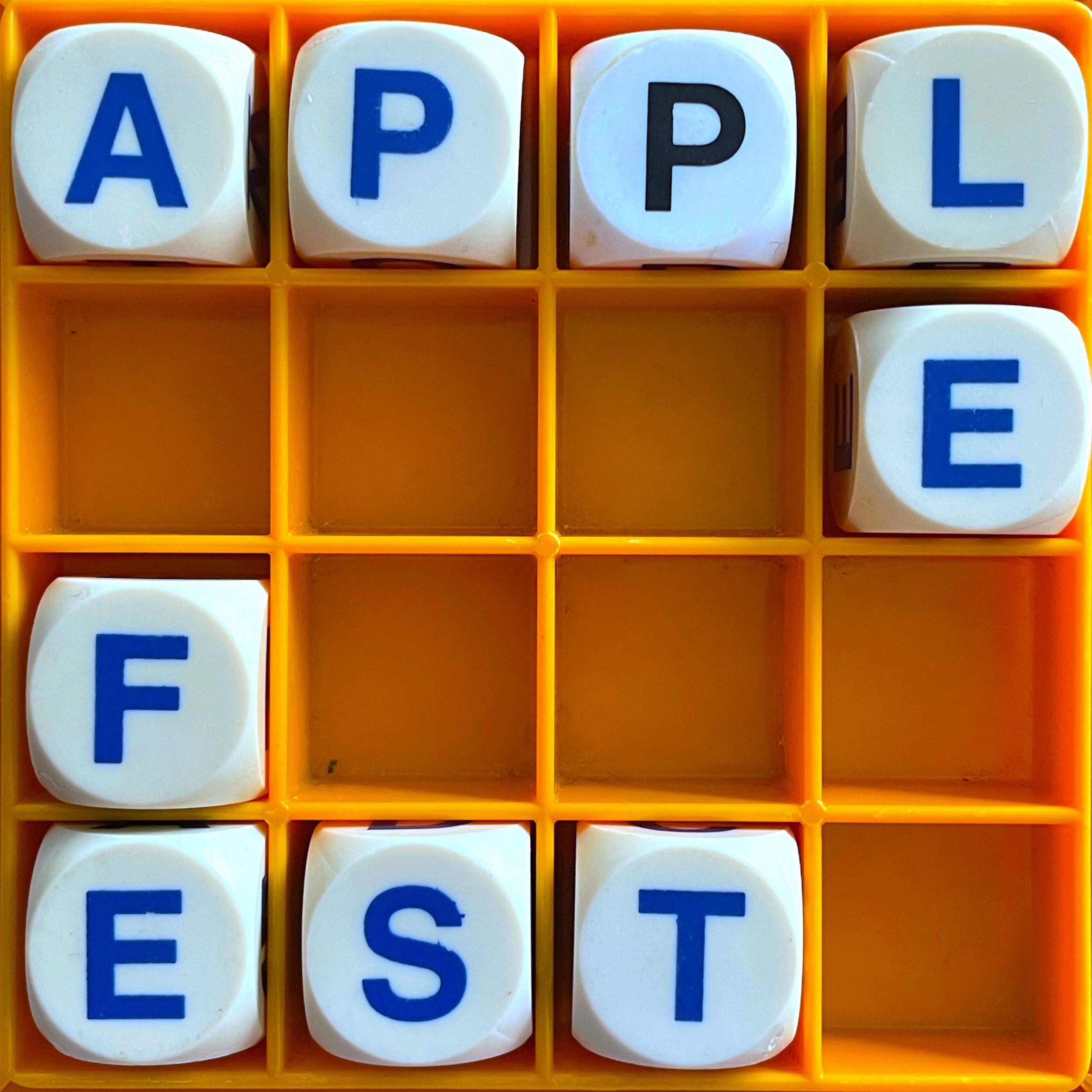
HZ: Each apple varietal had a little card with background information about the varietal's provenance and tasting notes.
HZ: “Topaz. Refreshing, sharp, sweet, mellows with age.” I mean, that's... Something for me to aspire to, but I feel I'm going the other way.
HANNAH McGREGOR: I'm definitely getting sharper and more acidic with age.
HZ: I'm getting withered and bitter without having achieved true ripeness.
HANNAH McGREGOR: Sorry, could we just check in about what it means to achieve true ripeness?
Read more