KORY STAMPER: You say, “I write dictionaries,” and people go, “Oh!” and then they immediately tell you all the words they hate. And ‘moist’ is always at the top of the list. “Oh, I hate moist. It's so gross.” And like, if you wanna go find the studies that have been written on why people don't like the combination of sounds that result in the word moist, you can; but I just think sometimes moist is the word you need to use. And so just to be petty, I would just make it a more prominent word.
Read moreTranquillusionist: Gay Animals transcript
This is the Tranquillusionist, in which I, Helen Zaltzman, say a load of words which aren’t really about anything so that your brain gets a little gentle diversion from thinking and/or feeling. This is not a regular episode of the Allusionist where you’re supposed to think and/or feel things. The Tranquillusionist is meant to be a bit dull, and maybe it’ll help you get to sleep or at least turn your existential screaming down to 11.
Today I shall be reading a list of gay animals.
Read moreAllusionist 144 Aro Ace transcript

HZ: How did it feel when you found the vocabulary to explain yourself?
LEWIS BROWN: Oh, it was so good. I think it's maybe a bit of a cliche to say, but it was like I'd found a puzzle piece. And I was like, "Oh! That makes sense. Right. Yeah. You know, that checks out." It really helps, I think, to have to have a term for it. Before I had words like aromantic and asexual, I don't know, I just had a bad feeling. When I assumed that I did feel attracted to other people and I was kind of thinking, do I just have some trauma or something? Am I just a selfish person? And these are a cruel things to be thinking about yourself. And then I was like, oh, wait, no, no I don't. I can think of all the ways in which I'm a pretty giving person. I care about the people that I care about quite a lot. Just not necessarily in the way that everyone thinks is the most important way.
Read moreAllusionist 101. Two or More - transcript
MARK WILKINSON: If you talk about something a certain way for enough time over a sustained period of time then it will likely affect the way people perceive that issue, right? So if something is framed in a certain way over a sustained period of time, you always hear the same words for something, then eventually it frames the way you think about it.
HZ: In this case, he’s been studying the use and framing of the word ‘bisexual’.
MARK WILKINSON: I think bisexual - the word bisexual, and the people as well - the word has had a really rough go of it.
Read moreAllusionist 79. Queer - transcript

AMY SUEYOSHI: I see 'queer' as an umbrella term, as a political call for revolution as well as unity across different groups of people.
JONATHAN VAN NESS: I think of it definitely with positive and loving energy around it, I don’t think of it as an insult at all; growing up, I would have thought of it more as an insult. I think it was in 2015 when we got marriage equality, and the media, especially the LGBTQ+ media, began to use it as an umbrella term, something we could all be part of. So I think I got the cue from media to know that it was a gorgeous amazing word, one where we’re taking the love back and it wasn’t one to be offended by any more.
KATIE MINGLE: I haven’t always loved the term for myself, because it feels like an umbrella term that you can use if you’re gay and in a relationship with someone of the same sex, or you can use if you’re a basically straight couple who occasionally has a threesome with someone. That’s what ‘queer’ has come to mean: anyone who’s not inside the norm.
AMY SUEYOSHI: I think it's rejecting things like patriarchy and heteronormativity, mandates of morality. So not just to be able to keep things gray or to be postmodern, post category, but instead rather to call for a true revolution of the way we see the world, the way we categorize the world. So it's not just about LGBT rights per se but it's about creating a world that's more respectful of equity and thinks about diversity as a plus and values different ideas as a side of radical change rather than fear.
KATIE HERZOG: I sort of hate it. It’s too broad.
TOBIN LOW: It's so useful. I mean especially as there is this proliferation of identities that people can call themselves and identify with and really claim, it's a great way of just sort of acknowledging that it's all in the umbrella and that it's all valid; it's just like a way of acknowledging the validity of all the things, which I think is great.
ERIC MARCUS: This word has tortured me.
Read moreAllusionist 12: Pride - transcript
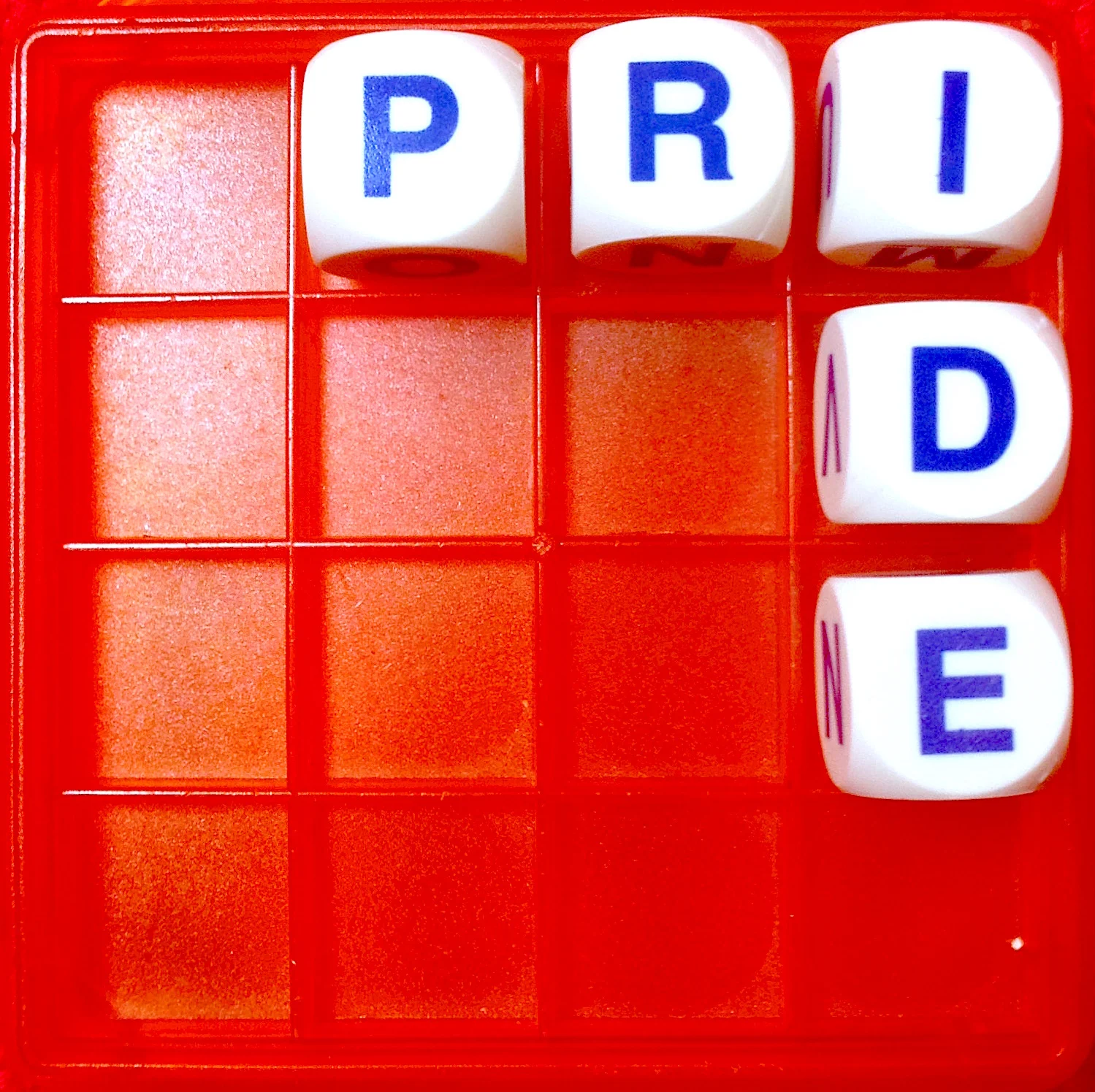
New York City in 1970. Homosexuality was still classified as a mental illness; gay sex was punishable with fines and prison sentences. A police raid on the Stonewall Inn on Christopher St on 28th June 1969 sparked the Stonewall Riots, after which the gay civil rights movement was gathering momentum, and pride began to mean something more.
CS: My name is Craig Schoonmaker, and in 1970 I authored the word ‘pride’ for gay pride. Somebody had to come up with it!
We had a committee to commemorate the Stonewall riots. We were going to create a number of events the same weekend as the march to bring in people out of town, and wanted to unite the events under a label. First thought was ‘Gay Power’. I didn’t like that, so proposed gay pride.
There’s very little chance for people in the world to have power, but anyone can have pride.
