JW: László Bíró would hear people say the ballpoint was ruining writing skills, and he’d smile and say, “Well, if writing comes from the heart, if we can help the hand to perform the hand to perform the task, what’s so wrong with that?” And I think there’s nothing wrong with that. Well done László Bíró.
HZ: I think it’s also interesting that Bíró and Bic's names are on products that are hugely successful, but rarely the centre of attention - and also disposable.
JW: Yeah. And also they are kind of disposable, in that you can know what a Bic or a Biro is, but you don’t need to know who Marcel is or who László is. They’ve made this disposable contribution to history, and in the same way made themselves disposable.
Allusionist 20: Baby Talk - transcript
[baby voice] Wook at your widdle face. Who’s a cutie pie? Who’s a cutie pie? Here comes the aeroplane - [cough] [/baby voice]
When you’re talking to a baby, it’s hard to maintain dignity. In fact even the baby, who can’t talk, thinks jigsaws are for eating, and is probably sitting in its own effluvium, is more dignified than you at that point.
But, good news! All those stupid voices, and banal rhetorical questions, are helping the baby to learn language.
Read moreAllusionist 19: Architecting About Dance - transcript
“Talking about music is like dancing about architecture,” said Elvis Costello. Or Frank Zappa. Or Gore Vidal. Or Laurie Anderson. Or Steve Martin. Or the comedian Martin Mull.
I think this is a problematic statement, not just because nobody can agree on who came up with it. But because dancing about architecture doesn’t seem particularly far-fetched - they’re both visual, in fact each medium could probably elegantly reflect the other. Talking about dance, however, is really difficult.
Read moreAllusionist 18: Fix, part II - transcript

HC: We ended up discovering that there is a whole other group of English speakers you don’t normally think of. It’s a very small group; they speak a very strange version of English; and they’re some of the most powerful people on the planet. They probably directly influence your lives. And they speak a strange pidgin of English, known as Euro English, or Euro Speak.
HZ: Who are ‘they’? European Union officials.
HC: Euro English is the English spoken by technocrats at the EU. Most of them don’t speak English as a first language, so what’s happened is they’ve kind of misappropriated English words and misunderstood what they mean, or invented new words.
Read moreAllusionist 17: Fix, part I - transcript
Most of the questions I get asked about the English language can be boiled down to this: why is English such an idiosyncratic mess? And why has nobody tried to sort it out?
Well, some people did kind of try. For hundreds of years, English had been a swirling concoction full of Latin, German and French thanks to all the invasions of Britain, plus words English had nicked from other languages, all refusing to behave regularly or obey rules consistently, and riddled with silent Gs.
300 or so years ago, some decided they had HAD ENOUGH.
Allusionist 16: Word Play - transcript
LESLIE SCOTT: Not many people realise the success of Scrabble is based on a statistician figuring out the scoring system - it's the first time someone had a word game where the score of the word game was based on him researching very thoroughly the number of times a particular letter was used. He scoured the New York Times for years counting how many times an E comes up, a Z, etc. Hence the numbers of those letters in the stack to start with was based on this, as is the scoring. And it works, whether or not you like the game. We have a mathematician to thank.
HZ: Probably why it’s not fun.
HZ: Sorry, Scrabble. But a game where you can triumph just by memorizing every two letter word will never have my affection.
Read moreAllusionist 15: Step Away - transcript
Since 'step-' indicates the biological and possibly emotional distance between relations, I had assumed that etymologically, that was where the term originated - the idea of someone being a step away from the family. But step the family word, and step as in to tread, have totally different roots - and very different meanings.
Read moreAllusionist 14: Behave - transcript
Thanks to your own brain, words have the capacity to become your worst enemy.
JG: it could just be a random word, something attached to something you know, or something that you happened to be thinking at the time you were feeling awful so it became the word that means something bad.
HZ: No words are safe.
JG: No! Because that part of our mind just mashes things together in different ways, and if it mashes two things together at a time when you’re feeling a certain way, that connection sticks, which is where the therapy comes in - unsticking those things.
Allusionist 13: Mixed Emojions - transcript
Emoji - the 'e' means picture, 'moji', letter in Japanese - seem like a very modern phenomenon, dependent on the proliferation of mobile phones. But they have precedent in language far more ancient than our own. A picture per concept is pretty much what the ancient Sumerians were using to communicate some 5,500 years ago when they came up with the cuneiform writing system.
Read moreAllusionist 12: Pride - transcript
New York City in 1970. Homosexuality was still classified as a mental illness; gay sex was punishable with fines and prison sentences. A police raid on the Stonewall Inn on Christopher St on 28th June 1969 sparked the Stonewall Riots, after which the gay civil rights movement was gathering momentum, and pride began to mean something more.
CS: My name is Craig Schoonmaker, and in 1970 I authored the word ‘pride’ for gay pride. Somebody had to come up with it!
We had a committee to commemorate the Stonewall riots. We were going to create a number of events the same weekend as the march to bring in people out of town, and wanted to unite the events under a label. First thought was ‘Gay Power’. I didn’t like that, so proposed gay pride.
There’s very little chance for people in the world to have power, but anyone can have pride.
Allusionist 11: Brunchtime - transcript
Motel. Email. Chocoholic. Labradoodle. Fanzine. Tanzania. Jazzercise. Breathalyzer. Televangelist. Chillax. Smog. Bromance. Velcro. Brangelina. Chrismukkah. Podcast. Jorts.
Modern English is awash with portmanteau terms, words formed from two or more words spliced together. The word ‘Portmanteau’, meaning a piece of luggage, is itself a portmanteau word from the 16th century, uniting the French words ‘porter’, meaning ‘to carry’, and ‘manteau’, meaning cloak. But credit for the Frankenword sense of 'portmanteau' goes to Lewis Carroll, in Alice Through The Looking Glass. Alice asks Humpty Dumpty to help her make sense of the Jabberwocky poem, full of portmanteaus like slithy, mimsy, galumph and chortle. “You see it's like a portmanteau,” says Humpty Dumpty, “there are two meanings packed up into one word.”
Today, I want to unpack one particular portmanteau, and that portmanteau is 'brunch'.
Read moreAllusionist 10: Election Lexicon - transcript
This episode comes out the day before the 2015 General Election in the UK, so please join me for a jaunt through the etymology of some of the words that are the linguistic flies buzzing around the carcase of democracy.
Read moreAllusionist 9. The Space Between - transcript
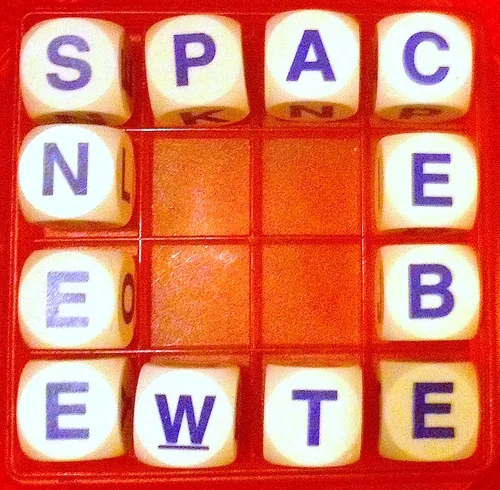
The Allusionist is a show about words, but today’s episode isn’t looking at words themselves, but what’s on either side of them: that is, nothingness.
If it weren’t for the absence of words, the words themselves would be rather incomprehensible - how do you know where one word ends and the next begins without the space between?
Since the spaces serve such a crucial function in language, I was pretty astonished to discover they are a lot younger than language itself.
Read moreAllusionist 8 Crosswords transcript

Hear this episode at theallusionist.org/crosswords.
This is The Allusionist, in which I, Helen Zaltzman, search for meaning in a bowl of alphaghetti. Let's warm-up for today's show with a little word history. Today, we are talking about "junk". Not the rather vulgar slang for genitals, but in the sense of "rubbish". This arose from the 14th century meaning of "junk", which was the nautical term for "rope", and it evolved to mean "the crap left behind by ships", and from that to mean "any old crap at all". On with the show.
HZ: "Tomb ends in one century, livid gloss puzzles. 7,10." That's your clue for what this episode is about. As I'm sure you deduced, cryptic crosswords, or, as I like to call them, "infuriating word puzzles that I can't do". On a good day, I can get maybe four clues. I think I'm thwarted pretty quickly by my ineptitude at divorcing a word from its meaning in that context, which, if you've been listening to The Allusionist since the beginning, you'll remember was one of the reasons I am averse to puns. So I'll blame my shoddy cryptic crossword ability on my suspicion that the clues are puns.
JOHN FEETENBY: A pun does not always work when you write it down, because people have different ways of pronouncing different words. Clues can be analogous to a pun, but I think clues are more like jokes, and that's kind of what I keep falling back on. If you can tell jokes, and if you can understand jokes when other people tell them, I think you're probably most of the way there to being able to do cryptic crosswords.
HZ: I am capable of identifying jokes. Perhaps there is hope for me with cryptic crosswords, then.
JOHN FEETENBY: My name is John Feetenby and I compile crosswords for a living. I do the two cryptic crosswords, I do the big general knowledge crossword, and I do assorted other bits and bobs, for the newspaper that I work for. When I announce that I make crosswords, the first thing is, "Oh, I can't do those, oh, that would be impossible." The second response I get is, "Ah, you're the devious so-and-so who ruins my Sunday morning every week." Sorry.
HZ: Cryptic crosswords have been ruining Sunday mornings since the 30th of July, 1925, the publication date of what is considered to be the first true cryptic crossword, in the Sunday Express newspaper in Britain. Straightforward crosswords had been around for considerably longer, but the first official crossword appeared in December 1913, when Arthur Wynne, a former onion farmer who was, by then, the editor of The New York World newspaper, decided to fill some space on a page with what was then called a "word cross". That's how crosswords started. But how does John Feetenby start a crossword?
JOHN FEETENBY: The way I do it is starting with the grid, and to keep things easy for their graphics department I work from a finite number of grids that I know I can fit words into fairly easily.
HZ: How many grids?
JOHN FEETENBY: With the cryptic ones, I've got 31 different ones.
HZ: Oof.
JOHN FEETENBY: So this is just to keep it varied. Whatever the day of the month is that the puzzle will be published on, I use the grid for that, pretty confident in the knowledge that I haven't used it recently.
HZ: For the average British cryptic crossword, the grid is 12 to 15 squares square, and has a rotationally symmetrical word layout.
Which more normally comes first, the word or the idea for the clue?
JOHN FEETENBY: I don't see how you could do it other than starting with the word. I think that's the bedrock, that's what the solver will be working towards, so that's what you're working from. So, you know, you start with your grid full of words and no clues at all. I'm not sure how you could work doing it the other way round, you know, having a brilliant idea for word, you then have to find a place for it in the grid, which is unlikely to happen over and over. Whereas if you go the other way round, you know, you're starting with your words. I'm absolutely, totally egalitarian as far as words are concerned. I think you can write an interesting clue for any word, and any word will lend itself to an interesting definition. And then you just furrow your brow until brilliant cryptic clues fall out of your fingers.
HZ: Yeah, those brilliant cryptic clues that, to the uninitiated, look like lines that David Lynch cut from a script for being too confusing. Show me the way, John.
JOHN FEETENBY: I don't think there is a rigid set of rules where you can say, well, this is fair and that's not fair and this is what you're doing, this is what you don't do, because as long as the person who is solving the crossword has got the word from the clue you have given them, then that's an alright clue. When you first look at it, it should look like a sentence that reads off the page. But you know, out of that sentence, there is going to be a word, and you know how many letters long it is, and that helps. And then you just have to start breaking the clue down and seeing what kind of thing it's trying to tell you, because if you can't get it, it's pointless. It has to be apprehendable at some level.
Squashing words into grids, it's sort of a little bit routine. As you do it, you're kind of looking at the words going in and thinking, "Well, there's something I might do with that, and that's something I might do with that." There are things I fall back on, and I think I'll have shortcuts that I use. The letter "S" can be "second", or "son", or something like that. "T" can be "time". My route one is anagrams. You know, if I get stuck on compiling a cryptic clue then I start poking around with the letters and see if they anagrammatise into something appealing.
And it's not particularly elegant, but there was a crossword I was compiling not long ago and I had the phrase "in loco parentis", and I said, "Wow, man, had you start clueing that?" And I had this train fixation going on, I wanted to do something about trains, because it's got "loco" in the middle, and it didn't work, it didn't work, and it was the last one, and I clued everything else, and I was just like, "It's going to have to be an anagram." But it turns out "in loco parentis" is an anagram of "oral inspection", and it just, to me, it doesn't look like it should be. Lovely, you know, "Oral inspection, ordered for one acting as mum or dad."
"Oral inspection", that's all the letters you need, "ordered" is the indication that you're going to have to jumble those up somehow, and then there's the definition tacked on the end, and that's a really kind of bread-and-butter clue. But you need stuff like that, there has to be a little toehold so that you can get started.
HZ: Here's the typical formula of a cryptic crossword clue. At the beginning or the end of the clue is the meaning of the answer you're looking for, while the rest of the clue indicates how you're supposed to get there. It might contain a code word to hint to the solver what is going on. For example, "endless" or "beheaded" to mean you have to remove a letter from the end of the word, or "confused", "wild", or "drunk" to show you're looking for an anagram. As well as taking liberties with our normal vocabulary, crossword clues have a vocabulary of their own.
JOHN FEETENBY: That's not set in stone. That's a thing that will change with time, you know, as language kind of moves on, and I persistently use the word "em", and the word "en", to mean "space". And people kind of understand that, but I don't know if they understand why they know it. I guess it's archaic in these days of not having hot metal presses. They're printers' measures for spaces. So an "en" was a single-character space, and an "em" was a double-character space. Now, I just use that quite blithely. Nobody ever rings up or emails to say, "What on earth do you mean by that?" But I don't know quite that that's a standard formation that's going to last that much longer.
HZ: If you don't speak fluent crossword and know every possible meaning of every word ever, there are manuals and dictionaries and websites that will help you decode what's going on in the clues. John, any other advice for the crossword novice?
JOHN FEETENBY: Any advice I have to give would not be much more complicated than keep going, keep trying. Have a look at the short words and see if anything leaps out. Getting the first clue in gives you an awful lot of ingress into the remaining clues. It gets easier as you carry on through it because you get more and more letters, but you never reach that point of triviality that you do with sudokus. They're really interesting when you start them, but as you go through the puzzle, it becomes progressively less and less challenging, to the point at which the last square can only be one thing, and you don't get that in crosswords.
You can be stuck on the last crossword clue for quite a long time. With the cryptic crosswords I do, one of them is two sets of clues for the same grid, so for the same answers there's a set of cryptic clues and a set of straightforward clues, and that's a great way of learning, because, if you cannot do the cryptic clue, have a look at the quick clue. Might give you an idea what the word is, and then sort of try and reverse-engineer the clue to see how it came out.
HZ: So you've got like a cheat right there, but it's legitimate.
JOHN FEETENBY: Right in front of you. I have one rather brilliant reader who got a little bit shirty about the fact that the straightforward clues were too visible. He said they would put him off because he tries to do it just using the cryptic clues, but he could sort of see the straightforward clues out the corner of his eye, so he has to mask them off with masking tape before he even starts.
HZ: That's a brilliantly low-tech solution to a problem. But technology is intruding on the crossword.
JOHN FEETENBY: Say 10 or 15 years ago, that general knowledge crossword, I would have to make that a lot more accessible than it is now. Whatever I write, people can google it, and they do. And there are crossword forums where people trade answers and comments and stuff. So at that point, how do you make a general knowledge crossword interesting? The only way to make interesting is by putting interesting things into it, so that's where I come from with that at the moment. The general knowledge crossword that I do every week has a prize attached to it, quite a big prize, so I do make the crossword quite challenging, but it is all ultimately googleable.
HZ: That's a hollow victory, though. Technology is changing crosswords in all sorts of ways with the setters.
JOHN FEETENBY: I've been dabbling in compiling crosswords and getting them published and stuff since the 1980s. When I started, my first job was for a trade journal called Computer Talk, which doesn't exist anymore. You'd think, well, OK, Computer Talk, that sounds like a very high-tech thing, but the way I was making a crossword for them was by drawing a grid on a piece of paper with a ruler and a pencil and then filling the words in manually, because there weren't, at that point, such things as easily-accessible databases of words or computer algorithms to squeeze them into grids. You kind of did it by trial and error, and one brilliant book, the Crossword Dictionary I think, and it had no definitions, but it had all the words from that dictionary listed by length of word, and then alphabetically by alternate letters. So you start, the first half of the book started with four-letter words that were "A"-something, "A"-something, and then "A"-something, "B"- something, until you got to the 26-letter words that were "Z"-something, "Z"-something, "Z"-something, which there aren't terribly many of. And then the second half of the book was exactly the same, but rearranged by the even-numbered letters rather than the odd-numbered ones. So you know, it used to be like a proper physical task, and now the process of actually filling a grid is pretty straightforward.
As a result of that, you now have, I suspect, companies who have large databases of grids, large databases of words, large databases of clues, and it is pretty much just pressing F1 on a keyboard and there's your crossword. I mean, know I'm just like some little guy with a loom sitting next to a clothes factory, sort of hand-stitching mine together and going, "Well, I hope mine have like a degree of idiosyncrasy, or they can be lighter on their feet maybe than the huge industrially-produced ones," but that doesn't alter the fact that it is quite easy just to buy things off the peg now.
HZ: Perhaps to prove that you can't replace him with a machine just yet, John then set himself a challenge.
JOHN FEETENBY: I very, very foolishly said something like, "Oh yeah, I know how you can write a clue for any word, it's a doddle."
HZ: The self-inflicted test to write a cryptic clue for my surname, "Zaltzman".
JOHN FEETENBY: I haven't entirely finessed it yet, but I could see where I was going with it, right? Spent ages with those "Z"s. "Jacuzzi", I was once in the position of having to write cryptically for "jacuzzi" and just about kind of scrapped the grid and started again. "Z" is a difficult one, and this is where bespoke crossword-compiling will will stand you in good stead, because you can move with the times. I am aware of a band called ZZ Top, and I am confident enough that ZZ Top are part of the cultural subconscious, that I could use them in a clue. So I reckon you could use the phrase "top band" to indicate "Z-Z", right?
HZ: Yes.
JOHN FEETENBY: So then you've just got an "A-L-T" in the middle of it, and "A-L-T" is brilliant because there's all sorts of things you can use as synonyms for that. It could be "a lieutenant", which is not very useful here, but it is short for "alternate" and "alternative". So, you've got your "Z-Z"s taken care of, you've got your "A-L-T" taken care of, and then "M-A-N" is just a doddle. I mean, it's not the most brilliant clue I've ever written, but I thought: "Top band, including alternative chap, a podcaster."
HZ: Incredible. This is like the proudest moment of my professional life.
JOHN FEETENBY: That's made my heart lift. That's brilliant. I very rarely sort of sit back from the screen and go, "Crikey, that was good," but I did once. It's: "100, minus one, equals 99."
HZ: Oh no.
JOHN FEETENBY: And it's four letters.
HZ: Cone?
JOHN FEETENBY: Brilliant!
HZ: You've encouraged me.
JOHN FEETENBY: Do you see where it comes from? The "C" is Roman numerals for a hundred.
HZ: I didn't even think of that. I'm a fool.
JOHN FEETENBY: And then "one" is just "O-N-E" written out, and then a "99" is a cone, an ice cream.
HZ: It was because it was four letters, that made it easier than if it was gonna be longer.
JOHN FEETENBY: Yeah, as I earnestly beseech people starting crosswords, to begin with use the small words, the little ones.
HZ: That is the quickest I've ever got a clue. It's a miracle.
Your randomly-selected word from the dictionary today is…
Waterbrash. Noun. A sudden flow of saliva associated with indigestion.
One of you asked if I could spell out the randomly-selected words of the day. Even better, there is a picture of the relevant dictionary entry on the post about each episode at theallusionist.org, as well as links to various interesting bits and bobs about the subject of the episode, and a bunch of other stuff. Take a look.
This episode was produced by me, Helen Zaltzman. The music is by Martin Austwick. John Feetenby's crosswords appear every Sunday in one of Britain's biggest newspapers. And, one final clue: "The den is in disarray, becoming terminal. 3,3." The end.
Allusionist 7 Mountweazel transcript
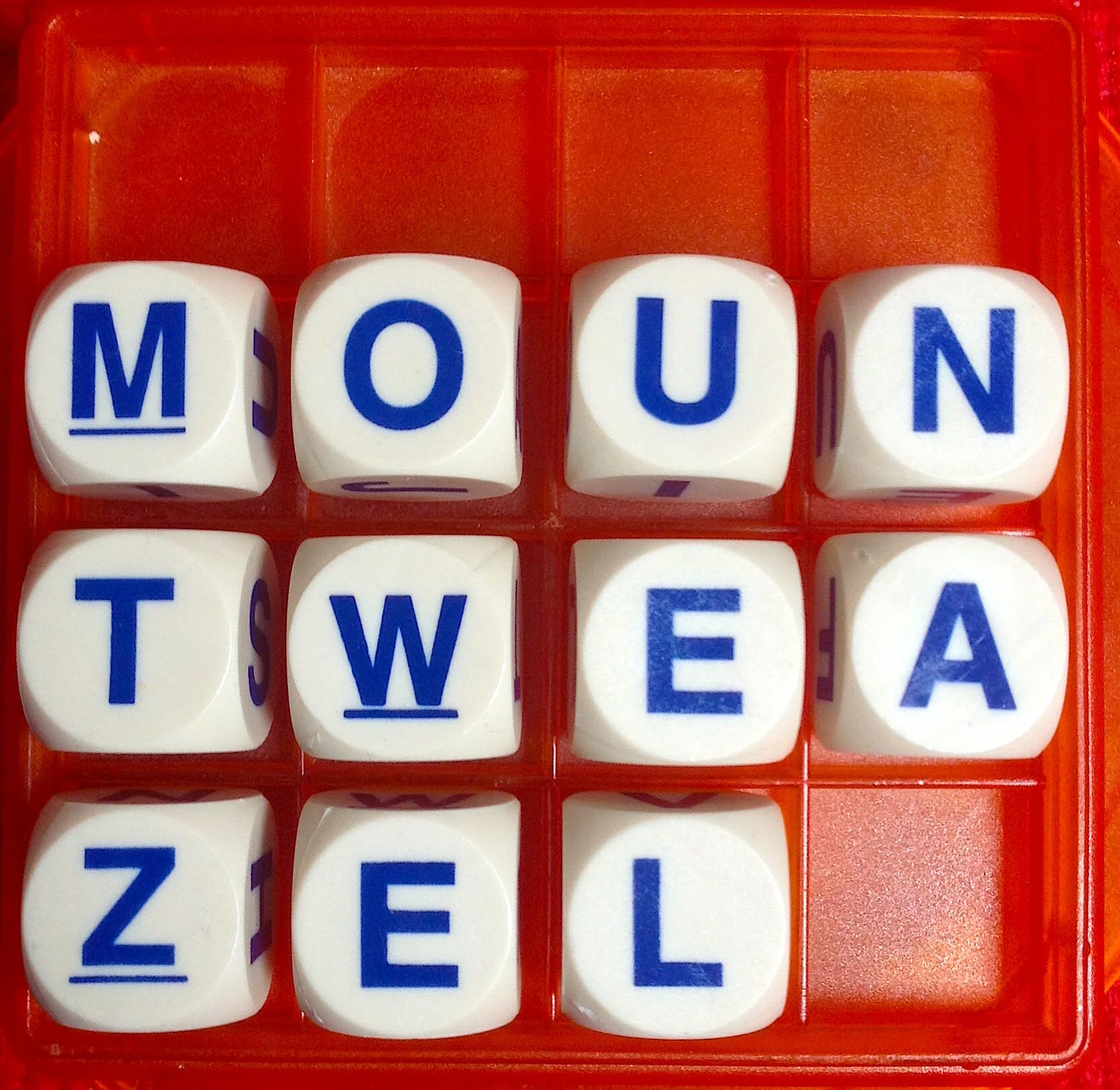
Hear this episode at theallusionist.org/mountweazel.
This is The Allusionist, in which I, Helen Zaltzman, pan for linguistic gold. Coming up in today's show are revelations that will shatter the belief you had in the one thing you thought you could trust in this chaotic world.
To warm-up, here's some word history. "Poodle", jaunty word for a jaunty kind of dog, and, because poodles are water dogs, their name came from the German word "pudel", meaning "splash". It shares a root with "puddle". Bonus dog etymology, "basset hounds" and the word "bass" shared the same linguistic root, which is the Latin "bassus", meaning "low". Because a basset hound is low, right? To the ground, not morally.
On with the show, and…
HZ: …a couple of weeks ago, I received an email from listener Eley Williams which basically said, "Hey, Helen, you know all those dictionaries you love and revere so much? Well, they're riddled with lies." Admittedly, she put it in much more polite terms, but she did say she's finishing a doctorate covering fake words that are deliberately listed in dictionaries. Shocked and intrigued, I had to find out more from Eley. Just as soon as I'd regained consciousness and got up off the floor.
ELEY WILLIAMS: I mean, I'm exactly the same. You kind of approach a dictionary, not even tentatively, it is, if it's in the dictionary, it is true, and that truth is pretty much immobile in between editions. Dictionaries kind of take on this weird, almost priest-like role on the bookshelf, and then they're sort of preserved. You kind of want it to be immutable, really, otherwise what's the point? But the idea of a word actually being looked up and either it being false, the definition, or if the word itself not to exist in reality at all, is what got me into this, this kind of... The idea of the deceit behind it. And also the idea, therefore, of a lexicographer lying.
HZ: Do you think it was very hard for them to lie, given that usually they have to concentrate on presenting the truth in as objective a way as possible?
ELEY WILLIAMS: Yeah, well, that's objectivity, but, I mean, it's the most kind of interesting and enjoyable, looking at these false words. What I really enjoy about the false words is that often you don't know who it was that made this up. You don't know what was the purpose for its creation.
HZ: These hoax terms are now known as "mountweazels", after probably the most famous hoax term, "Lillian Virginia Mountweazel", a made-up person who appeared in the 1975 edition of the New Columbia Encyclopedia.
ELEY WILLIAMS: On the same page as Mount Rushmore and Mussorgsky, so, you know, in good company. The entry is: "Mountweazel, Lillian Virginia, 1942-73..."
HZ: Oh, so a short life.
ELEY WILLIAMS: Wait for it, a tragic short life, peppered with intrigue. "An American photographer born in Bangs, Ohio..." - bit of foreshadowing, there. "Turning from fountain design to photography in 1963, Mountweazel produced her celebrated portraits of the South Sierra Miwok in 1964. She was awarded government grants to make a series of photo essays of unusual subject matter, including New York City buses, the cemeteries of Paris, and rural American mailboxes. The last group was exhibited extensively abroad, and published as "Flags Up!" in 1972. Mounweazel died at 31 in an explosion while on assignment for Combustibles magazine.".
Shed a tear, but someone here has had such fun, first of all, just making nonsense up, really, but the idea of something being published called "Flags Up!", as in flagging something up, the idea of this person working for "Combustibles magazine" and dying in an explosion, having been born in "Bangs, Ohio", I mean... Someone has put idle thought, but thought, into creating this little falsehood. This kind of interesting character, but, crucially, someone who's not too interesting. They couldn't be flicking through the dictionary in order to find Mountweazel, because she doesn't exist, nor do you really want it to necessarily be too obvious that it's fake, because often these words are included in dictionaries as copyright traps.
HZ: Ah.
ELEY WILLIAMS: So, say you, Helen Zaltzman, you are writing a dictionary and I'm writing a dictionary. It would be quite easy for me just to look at what you've come up with, and with a little bit of twiddling and finessing of some definitions, mine would be very similar to yours. If, however, you'd inserted a false entry into your dictionary and you saw that it occurred in mine, you'd be, it'd be quite clear that I've just made off of your copy. So sections contain these false words as little snares, almost, to catch potential piracy out.
HZ: But some people were determined to catch the traps before the traps caught them.
ELEY WILLIAMS: In 2005, in the New Oxford American Dictionary, an investigator asked whether they were any of these mountweazels, and the response came back there was one and it was in the "E" section. So the investigator then whittled down a list of five potential candidates, of which words he thought or she thought might be the potential false word. The first one was "earth loop". That's two words, which is a noun, "electrical British term for a ground loop".
HZ: Plausible.
ELEY WILLIAMS: Plausible. You think so? OK. The second one is "EGD". They're initials, which is "a technology or system that integrates a computer display with a pair of eyeglasses". An abbreviation of "eyeglass display".
HZ: And now there's Google Glass.
ELEY WILLIAMS: So the future is here.
HZ: Yeah.
ELEY WILLIAMS: There's then "electrofish", which is a verb, "ELSF", "esquivalience", and "euro creep" is the final one. And this is the kind of shortlist of potential falsehoods, and this is sent off to a number of lexicographers and editors and linguistic experts in order to kind of sound out, or flush out, which was the fake word that was there, and most of them agreed on which one was fake. And it turns out that it was "esquivalience", and the definition for that word, noun, is, "The wilful avoidance of one's official responsibilities, late 19th century, perhaps from the French 'esquive'..." - my French is not great - "...to dodge or slink away". And again, that's fitting, right? So the idea of dodging your responsibilities as a lexicographer by planting this fake word. But this was very much a word set there as a copyright trap.
It's interesting, because you can track, given that's 2005 and the content of so many dictionaries is now online, you can track quite easily whether it has then been copied without understanding that it's fake. So it turned up on dictionary.com as if it was a real word, and it's just, yeah, it's interesting to see how fake words or false words or fictitious entries do disseminate so quickly, when you haven't got a kind of editorial probity, or you don't necessarily research too well, by the fact of the word and its etymology, etc., it's come from.
HZ: Indeed, etymology, or rather lack of etymology, can be a dead giveaway.
ELEY WILLIAMS: This appeared in a wartime edition of Webster's New 20th Century Dictionary, and it's an entry for a bird, it's "jungftak", a noun, "A Persian bird, the male of which had only one wing on the right side, and the female only one wing on the left side. Instead of the missing wings, the male had a hook of bones and the female an eyelet of bones, and it was by uniting hook and eye that they were enabled to fly. Each one alone had to remain on the ground."
HZ: So romantic.
ELEY WILLIAMS: So lovely. Isn't it great?
HZ: It's like those broken heart necklaces.
ELEY WILLIAMS: Yes. As with the mountweazel, it shows this almost concern for narrative, with the entry, and how it's been framed, and how the characters are operating within it, as if it was a little short story or almost poetic conceit. It falls down so much as an entry because, as far as I've been able to tell, there's no etymological validity to "jungftak" as being Persian. It obviously is ridiculous. It puts me in mind of those cryptozoological pictures actually, where they kind of sew bits of 18 different animals together and then claim it's some underwater alien creature. So it's got the head of a walrus figure, and the feet of a penguin, and all the rest of it, and it just doesn't make any sense, and it looks so strange, but if you're looking to fool the right person it'll pass scrutiny. So yeah, it's a kind of tender portrait of something that really doesn't exist, that has no place in the dictionary, and almost seems kind of at odds to what the dictionary stand for, but so lovely just to be there.
HZ: So how many copyright traps are there in the average dictionary?
ELEY WILLIAMS: Well, lexicography, the world of lexicography, that dark shady underworld, tends to be quite quiet about them, obviously, because otherwise it would then undermine them even being there. So, I mean, the most famous one is probably "mountweazel". There's a cyclopaedia, the Appleton's Cyclopaedia of 1888-1889, and that had over 200 false entries, it's estimated, which makes you wonder why not just list it as a work of fiction? But they're very subtly incorrect, but intended to be incorrect, and it's posited that that's because the contributors were paid per word. So after a while they just thought, "Well, if it's a dollar a word, I can just make up another word and shove it in there."
HZ: Dictionaries have always been fallible. Not just because of human greed, but also egos, filing blunders, and household pests.
ELEY WILLIAMS: First draft of the Oxford English Dictionary, when it was first published, when they were moving around all the different slips of paper that were going to go into the final proofs, the entry for "bondmaid" just fell down the back of a cabinet and so wasn't included. Just there were errors like that. And some proofs were found made into a nest for rats, and there was some debate about whether Murray, who was the first editor of the OED, whether they should include an entry on "appendicitis", because at the time it wasn't seen as a necessarily relevant word, and it was a bit too specific, and not necessarily useful as a word for the dictionary at that time. So it didn't go in. But then in following years, but quite soon after, one of the royal family had appendicitis, and it was appearing in all these newspaper cuttings, but it wasn't in the dictionary. So you did feel a bit like kicking yourself, they just got the timing wrong there.
HZ: For lexicographers to consider including a word in a dictionary, there must be several examples of that word appearing in writing. Therefore, presumably, if a hoax word is discovered and then written about enough, it could end up back in the dictionary as a legitimate entry.
ELEY WILLIAMS: So I think "esquivalience" and "mountweazel", they have entered the lexicon, really, to mean "a fictitious entry". They were both quick to almost weed them out, I think, because once the hoax is exposed, it loses its destiny as a trap. Once you've discovered one, you kind of... Do you want to declare that you found it? Because it's declaring something obsolete. It's kind of taking away from the joy of the reading of it. You know, people get very personally attached to particular editions, and I think if one edition seems to be somehow flawed... But is it a flaw? I guess I find it... Not charming, because it is so unscrupulous, but it brings a real character to a dictionary, if you know that it's got these little nudges and winks that are there for the right reader. A reader with too much time on their hands.
HZ: It shows you the human behind the exercise.
ELEY WILLIAMS: Exactly. Exactly. And I do, that really is just the wonderful thing about lexicography, these little human details.
HZ: Stay vigilant for human mischief in all sorts of different works of reference.
ELEY WILLIAMS: I'm sure you've heard of "trap streets'' on maps, which are those false cartographical streets and rivers, tributaries, and anything on a map basically that's included there for the same reason as these fake words, to act as a copyright trap, so if it's replicated on a different map, they'll know that it's been copied. Which does mean you get some poor hikers trying to find a road that's very clearly marked on a map that doesn't actually exist. Grove's Dictionary is a musical tome, I think that's the title, has a couple of good ones. Full of composers and the rest of it.
HZ: It's everywhere. Can't even trust Grove's.
ELEY WILLIAMS: Mountweazels popping up, it's like whack-a-mole.
HZ: I think what we've learned is you cannot trust anything.
ELEY WILLIAMS: Trust nothing, trust no one.
HZ: This episode was produced by me, Helen Zaltzman. Many thanks to Eley Williams for bringing mountweazels to my attention, even though it has been emotionally and intellectually devastating. You'll find me on Twitter and Facebook at @AllusionistShow. There are links to Eley's website at theallusionist.org/mountweazel, where you can also see a beautiful illustration by Eley's sister Catherine of the fake bird, the "junkftak".
Your randomly-selected word from the dictionary today is…
Osculum. Noun. A large aperture in a sponge through which water is expelled.
Or is it, dictionary? I don't know what to believe any more.
