• Episodes
  • Listen
  • Transcripts
  • Tranquillusionist
  • Events
  • Lexicon
  • Donate
  • Contact
  • Merch
Menu

The Allusionist

Street Address
City, State, Zip
Phone Number
A PODCAST ABOUT LANGUAGE
BY HELEN ZALTZMAN

Your Custom Text Here

The Allusionist

  • Episodes
  • Listen
  • Transcripts
  • Tranquillusionist
  • Events
  • Lexicon
  • Donate
  • Contact
  • Merch

Allusionist 18: Fix, part II - transcript

September 11, 2015 The Allusionist
Fix II.JPG

HC: We ended up discovering that there is a whole other group of English speakers you don’t normally think of. It’s a very small group; they speak a very strange version of English; and they’re some of the most powerful people on the planet. They probably directly influence your lives. And they speak a strange pidgin of English, known as Euro English, or Euro Speak.

HZ: Who are ‘they’? European Union officials.

HC: Euro English is the English spoken by technocrats at the EU. Most of them don’t speak English as a first language, so what’s happened is they’ve kind of misappropriated English words and misunderstood what they mean, or invented new words.

Read more
In transcript Tags words, language, fixing the language, EU, European Union, techocrats, future English, efficiency, logic, rationality, rules
1 Comment

Allusionist 17: Fix, part I - transcript

August 26, 2015 The Allusionist

Most of the questions I get asked about the English language can be boiled down to this: why is English such an idiosyncratic mess? And why has nobody tried to sort it out?
Well, some people did kind of try. For hundreds of years, English had been a swirling concoction full of Latin, German and French thanks to all the invasions of Britain, plus words English had nicked from other languages, all refusing to behave regularly or obey rules consistently, and riddled with silent Gs.


300 or so years ago, some decided they had HAD ENOUGH.

Read more
In transcript Tags words, language, Academie Francaise, French, France, English, academies, Dr Johnson, Samuel Johnson, Johnson's Dictionary, fixing the language, pedantry, grammar, rules, split infinitives, Latin, Greek, preservation, evolution, purism, toxophilite, log in, login, computation
Comment

Allusionist 16: Word Play - transcript

August 12, 2015 The Allusionist

LESLIE SCOTT: Not many people realise the success of Scrabble is based on a statistician figuring out the scoring system - it's the first time someone had a word game where the score of the word game was based on him researching very thoroughly the number of times a particular letter was used. He scoured the New York Times for years counting how many times an E comes up, a Z, etc. Hence the numbers of those letters in the stack to start with was based on this, as is the scoring. And it works, whether or not you like the game. We have a mathematician to thank.
HZ: Probably why it’s not fun.

HZ: Sorry, Scrabble. But a game where you can triumph just by memorizing every two letter word will never have my affection.

Read more
In transcript, Word Play Tags transcript, games, words, Oxford Games, Leslie Scott, Jenga, fun, Ex Libris, Anagram, anagrams, inventions, word play, word games
Comment

Allusionist 15: Step Away - transcript

July 29, 2015 The Allusionist

Since 'step-' indicates the biological and possibly emotional distance between relations, I had assumed that etymologically, that was where the term originated - the idea of someone being a step away from the family. But step the family word, and step as in to tread, have totally different roots - and very different meanings.

Read more
In transcript Tags words, etymology, history, children, fairy tales, fiction, Aaron Mahnke, Lore, folklore, women, misogyny, family, families, step, stepchildren, stepmother, stepfather, infant mortality
Comment

Allusionist 14: Behave - transcript

July 1, 2015 The Allusionist

Thanks to your own brain, words have the capacity to become your worst enemy. 

JG: it could just be a random word, something attached to something you know, or something that you happened to be thinking at the time you were feeling awful so it became the word that means something bad.
HZ: No words are safe.
JG: No! Because that part of our mind just mashes things together in different ways, and if it mashes two things together at a time when you’re feeling a certain way, that connection sticks, which is where the therapy comes in - unsticking those things.

Read more
In transcript Tags words, language, psychology, therapy, CBT, cognitive behavioural therapy, Jane Gregory, brains, word association, tennis
Comment

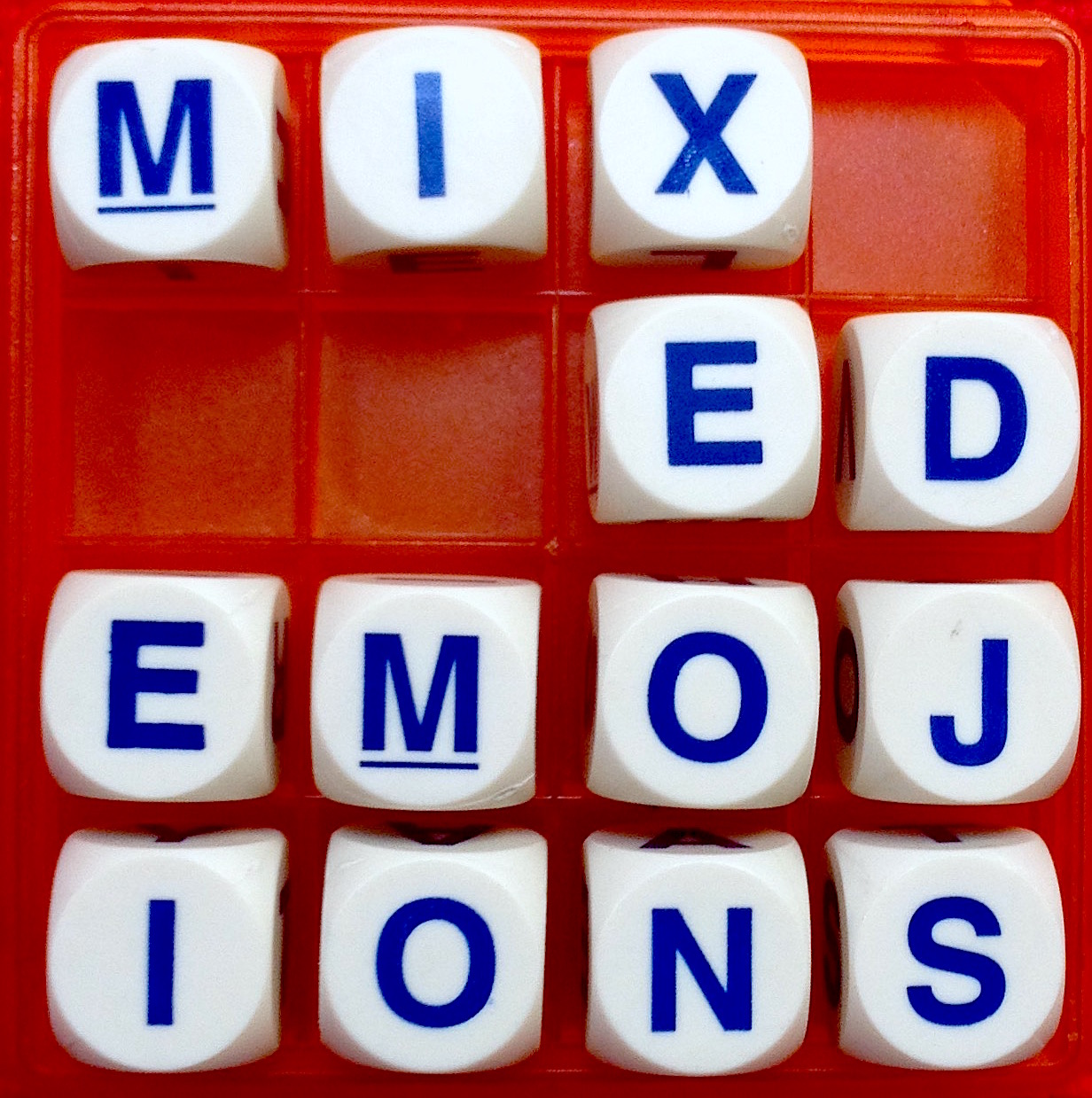
Allusionist 13: Mixed Emojions - transcript

June 17, 2015 The Allusionist

Emoji - the 'e' means picture, 'moji', letter in Japanese - seem like a very modern phenomenon, dependent on the proliferation of mobile phones. But they have precedent in language far more ancient than our own. A picture per concept is pretty much what the ancient Sumerians were using to communicate some 5,500 years ago when they came up with the cuneiform writing system.

Read more
In transcript Tags words, language, communication, emoji, Emojli, Kate Wiles, symbols, cuneiform, Tom Scott, Matt Gray
Comment

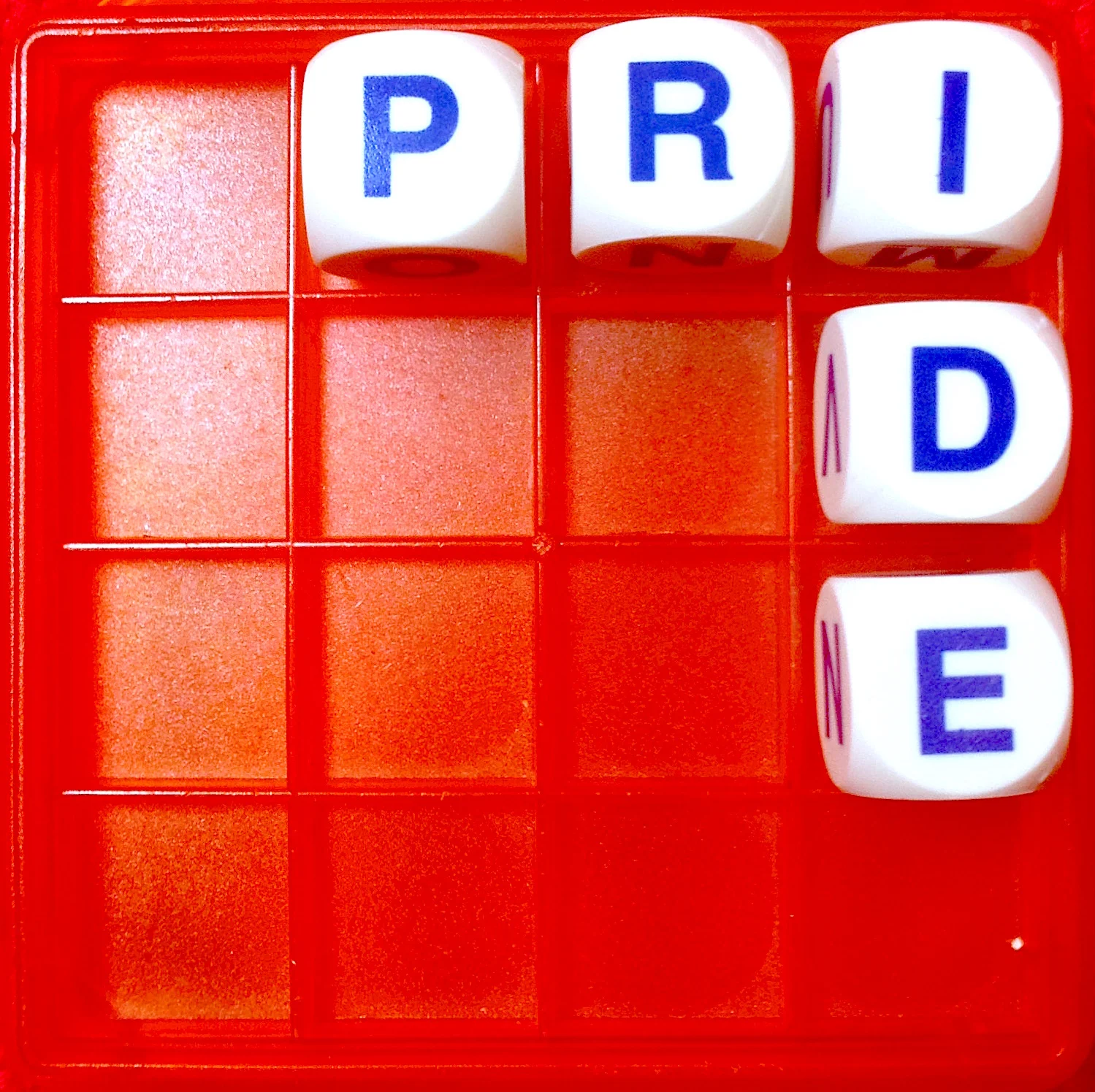
Allusionist 12: Pride - transcript

June 3, 2015 The Allusionist

New York City in 1970. Homosexuality was still classified as a mental illness; gay sex was punishable with fines and prison sentences. A police raid on the Stonewall Inn on Christopher St on 28th June 1969 sparked the Stonewall Riots, after which the gay civil rights movement was gathering momentum, and pride began to mean something more.

CS: My name is Craig Schoonmaker, and in 1970 I authored the word ‘pride’ for gay pride. Somebody had to come up with it!
We had a committee to commemorate the Stonewall riots. We were going to create a number of events the same weekend as the march to bring in people out of town, and wanted to unite the events under a label. First thought was ‘Gay Power’. I didn’t like that, so proposed gay pride.
There’s very little chance for people in the world to have power, but anyone can have pride.

Read more
In transcript Tags words, language, history, Craig Schoonmaker, Pride, LGBT, gay, lesbian, bisexual, trans, gay rights, homosexuality, New York, civil rights, Black Panthers, Quakers, Stonewall, Christopher St
1 Comment

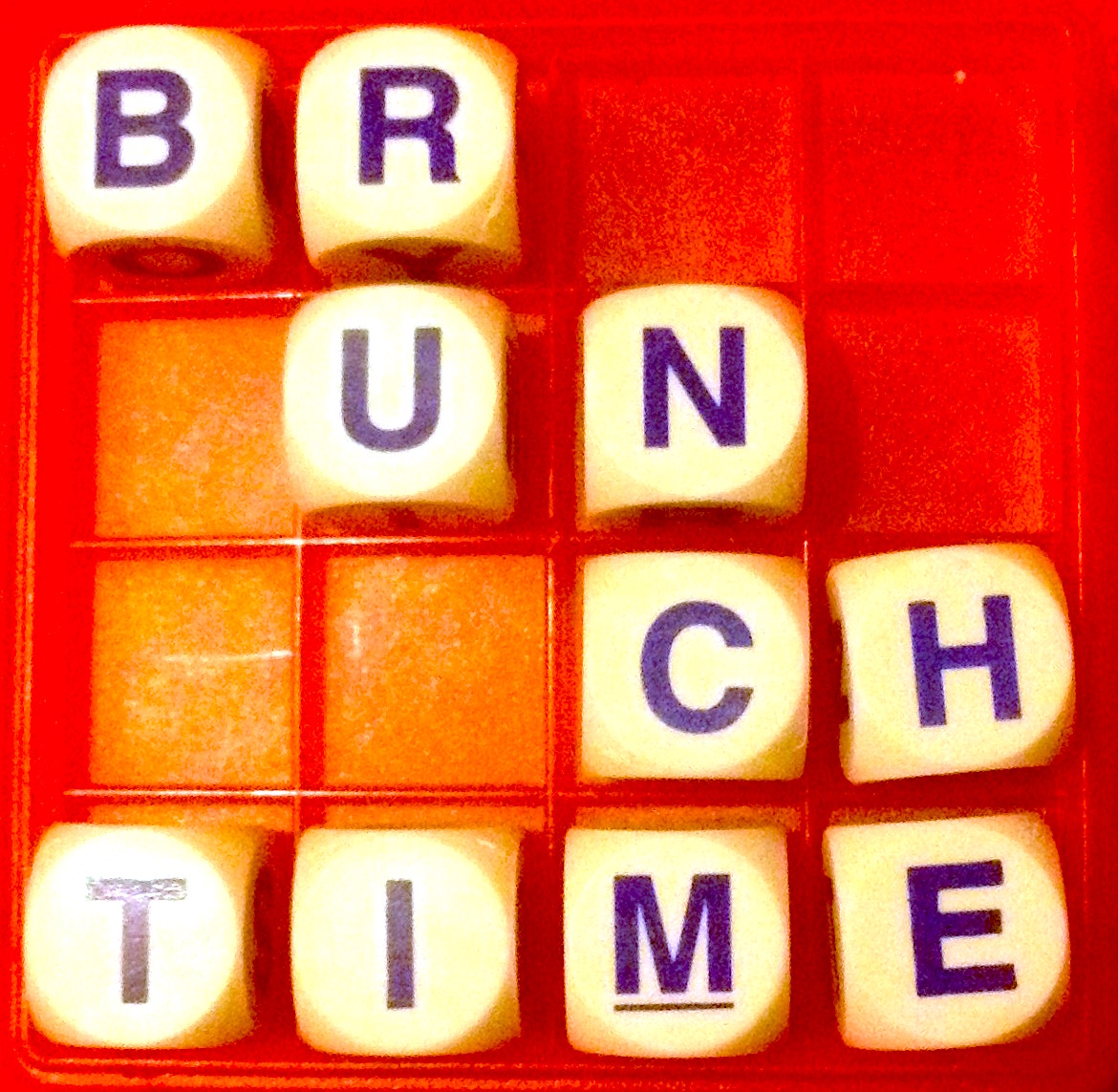
Allusionist 11: Brunchtime - transcript

May 20, 2015 The Allusionist

Motel. Email. Chocoholic. Labradoodle. Fanzine. Tanzania. Jazzercise. Breathalyzer. Televangelist. Chillax. Smog. Bromance. Velcro. Brangelina. Chrismukkah. Podcast. Jorts.

Modern English is awash with portmanteau terms, words formed from two or more words spliced together. The word ‘Portmanteau’, meaning a piece of luggage, is itself a portmanteau word from the 16th century, uniting the French words ‘porter’, meaning ‘to carry’, and ‘manteau’, meaning cloak. But credit for the Frankenword sense of 'portmanteau' goes to Lewis Carroll, in Alice Through The Looking Glass. Alice asks Humpty Dumpty to help her make sense of the Jabberwocky poem, full of portmanteaus like slithy, mimsy, galumph and chortle. “You see it's like a portmanteau,” says Humpty Dumpty, “there are two meanings packed up into one word.” 

Today, I want to unpack one particular portmanteau, and that portmanteau is 'brunch'.

Read more
In transcript Tags words, phrases, terminology, food, breakfast, brunch, lunch, meals, eating, dining, Dan Pashman, The Sporkful, portmanteau words, portmanteaux
Comment

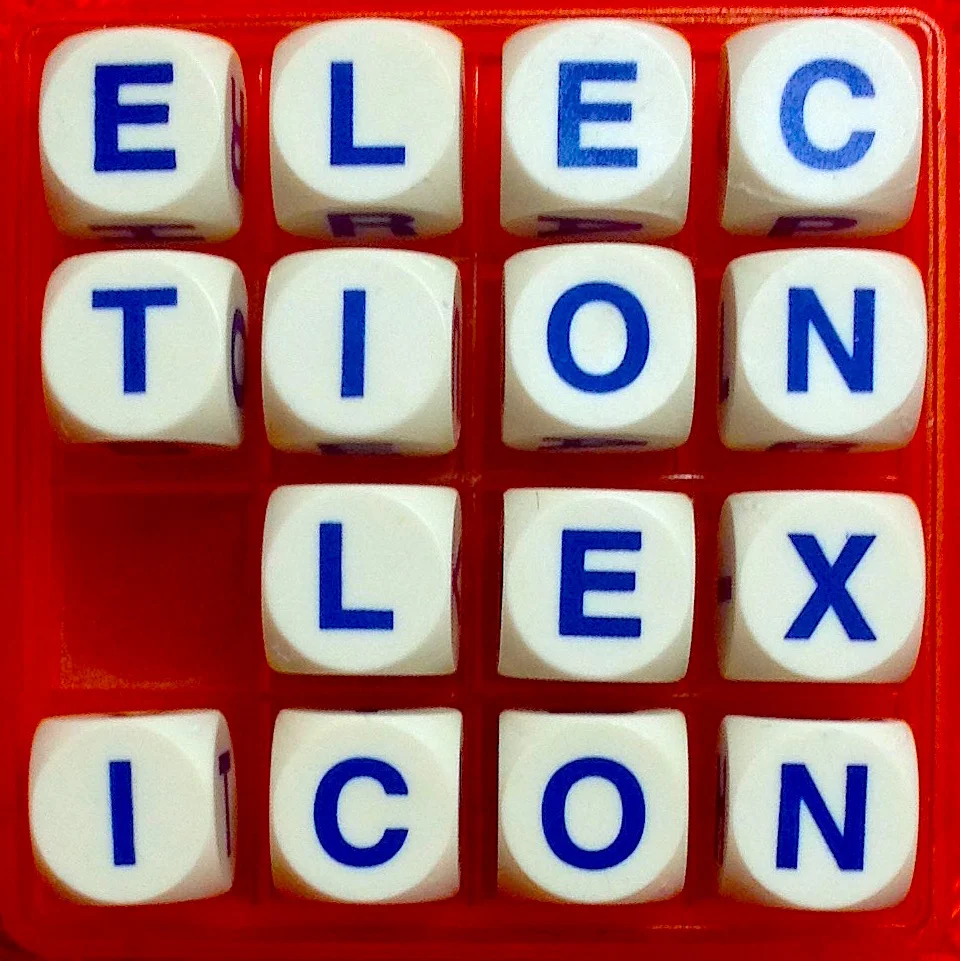
Allusionist 10: Election Lexicon - transcript

May 6, 2015 The Allusionist

This episode comes out the day before the 2015 General Election in the UK, so please join me for a jaunt through the etymology of some of the words that are the linguistic flies buzzing around the carcase of democracy.

Read more
In transcript Tags words, etymology, history, politics, language, elections, democracy, general election, Tories, Old French, Proto-Indo-European, party, parties, lobbying, poll, voting, ballot, balls, Italian, hair, etymologocracy, Middle English, pismire
Comment

Allusionist 9. The Space Between - transcript

April 22, 2015 The Allusionist
1464002851063.jpeg

The Allusionist is a show about words, but today’s episode isn’t looking at words themselves, but what’s on either side of them: that is, nothingness. 

If it weren’t for the absence of words, the words themselves would be rather incomprehensible - how do you know where one word ends and the next begins without the space between? 

Since the spaces serve such a crucial function in language, I was pretty astonished to discover they are a lot younger than language itself.

Read more
In transcript Tags spaces, punctuation, Kate Wiles, runes, Ancient Rome, Latin, Anglo-Saxon, writing, script, scribes, typography, Christianity, Irish

Allusionist 8 Crosswords transcript

April 8, 2015 The Allusionist
Crosswords logo.JPG

Hear this episode at theallusionist.org/crosswords.

This is The Allusionist, in which I, Helen Zaltzman, search for meaning in a bowl of alphaghetti. Let's warm-up for today's show with a little word history. Today, we are talking about "junk". Not the rather vulgar slang for genitals, but in the sense of "rubbish". This arose from the 14th century meaning of "junk", which was the nautical term for "rope", and it evolved to mean "the crap left behind by ships", and from that to mean "any old crap at all". On with the show.


HZ: "Tomb ends in one century, livid gloss puzzles. 7,10." That's your clue for what this episode is about. As I'm sure you deduced, cryptic crosswords, or, as I like to call them, "infuriating word puzzles that I can't do". On a good day, I can get maybe four clues. I think I'm thwarted pretty quickly by my ineptitude at divorcing a word from its meaning in that context, which, if you've been listening to The Allusionist since the beginning, you'll remember was one of the reasons I am averse to puns. So I'll blame my shoddy cryptic crossword ability on my suspicion that the clues are puns. 

JOHN FEETENBY: A pun does not always work when you write it down, because people have different ways of pronouncing different words. Clues can be analogous to a pun, but I think clues are more like jokes, and that's kind of what I keep falling back on. If you can tell jokes, and if you can understand jokes when other people tell them, I think you're probably most of the way there to being able to do cryptic crosswords. 

HZ: I am capable of identifying jokes. Perhaps there is hope for me with cryptic crosswords, then. 

JOHN FEETENBY: My name is John Feetenby and I compile crosswords for a living. I do the two cryptic crosswords, I do the big general knowledge crossword, and I do assorted other bits and bobs, for the newspaper that I work for. When I announce that I make crosswords, the first thing is, "Oh, I can't do those, oh, that would be impossible." The second response I get is, "Ah, you're the devious so-and-so who ruins my Sunday morning every week." Sorry.

HZ: Cryptic crosswords have been ruining Sunday mornings since the 30th of July, 1925, the publication date of what is considered to be the first true cryptic crossword, in the Sunday Express newspaper in Britain. Straightforward crosswords had been around for considerably longer, but the first official crossword appeared in December 1913, when Arthur Wynne, a former onion farmer who was, by then, the editor of The New York World newspaper, decided to fill some space on a page with what was then called a "word cross". That's how crosswords started. But how does John Feetenby start a crossword? 

JOHN FEETENBY: The way I do it is starting with the grid, and to keep things easy for their graphics department I work from a finite number of grids that I know I can fit words into fairly easily. 

HZ: How many grids? 

JOHN FEETENBY: With the cryptic ones, I've got 31 different ones. 

HZ: Oof. 

JOHN FEETENBY: So this is just to keep it varied. Whatever the day of the month is that the puzzle will be published on, I use the grid for that, pretty confident in the knowledge that I haven't used it recently. 

HZ: For the average British cryptic crossword, the grid is 12 to 15 squares square, and has a rotationally symmetrical word layout. 

Which more normally comes first, the word or the idea for the clue? 

JOHN FEETENBY: I don't see how you could do it other than starting with the word. I think that's the bedrock, that's what the solver will be working towards, so that's what you're working from. So, you know, you start with your grid full of words and no clues at all. I'm not sure how you could work doing it the other way round, you know, having a brilliant idea for word, you then have to find a place for it in the grid, which is unlikely to happen over and over. Whereas if you go the other way round, you know, you're starting with your words. I'm absolutely, totally egalitarian as far as words are concerned. I think you can write an interesting clue for any word, and any word will lend itself to an interesting definition. And then you just furrow your brow until brilliant cryptic clues fall out of your fingers. 

HZ: Yeah, those brilliant cryptic clues that, to the uninitiated, look like lines that David Lynch cut from a script for being too confusing. Show me the way, John. 

JOHN FEETENBY: I don't think there is a rigid set of rules where you can say, well, this is fair and that's not fair and this is what you're doing, this is what you don't do, because as long as the person who is solving the crossword has got the word from the clue you have given them, then that's an alright clue. When you first look at it, it should look like a sentence that reads off the page. But you know, out of that sentence, there is going to be a word, and you know how many letters long it is, and that helps. And then you just have to start breaking the clue down and seeing what kind of thing it's trying to tell you, because if you can't get it, it's pointless. It has to be apprehendable at some level. 

Squashing words into grids, it's sort of a little bit routine. As you do it, you're kind of looking at the words going in and thinking, "Well, there's something I might do with that, and that's something I might do with that." There are things I fall back on, and I think I'll have shortcuts that I use. The letter "S" can be "second", or "son", or something like that. "T" can be "time". My route one is anagrams. You know, if I get stuck on compiling a cryptic clue then I start poking around with the letters and see if they anagrammatise into something appealing. 

And it's not particularly elegant, but there was a crossword I was compiling not long ago and I had the phrase "in loco parentis", and I said, "Wow, man, had you start clueing that?" And I had this train fixation going on, I wanted to do something about trains, because it's got "loco" in the middle, and it didn't work, it didn't work, and it was the last one, and I clued everything else, and I was just like, "It's going to have to be an anagram." But it turns out "in loco parentis" is an anagram of "oral inspection", and it just, to me, it doesn't look like it should be. Lovely, you know, "Oral inspection, ordered for one acting as mum or dad."

"Oral inspection", that's all the letters you need, "ordered" is the indication that you're going to have to jumble those up somehow, and then there's the definition tacked on the end, and that's a really kind of bread-and-butter clue. But you need stuff like that, there has to be a little toehold so that you can get started. 

HZ: Here's the typical formula of a cryptic crossword clue. At the beginning or the end of the clue is the meaning of the answer you're looking for, while the rest of the clue indicates how you're supposed to get there. It might contain a code word to hint to the solver what is going on. For example, "endless" or "beheaded" to mean you have to remove a letter from the end of the word, or "confused", "wild", or "drunk" to show you're looking for an anagram. As well as taking liberties with our normal vocabulary, crossword clues have a vocabulary of their own. 

JOHN FEETENBY: That's not set in stone. That's a thing that will change with time, you know, as language kind of moves on, and I persistently use the word "em", and the word "en", to mean "space". And people kind of understand that, but I don't know if they understand why they know it. I guess it's archaic in these days of not having hot metal presses. They're printers' measures for spaces. So an "en" was a single-character space, and an "em" was a double-character space. Now, I just use that quite blithely. Nobody ever rings up or emails to say, "What on earth do you mean by that?" But I don't know quite that that's a standard formation that's going to last that much longer. 

HZ: If you don't speak fluent crossword and know every possible meaning of every word ever, there are manuals and dictionaries and websites that will help you decode what's going on in the clues. John, any other advice for the crossword novice? 

JOHN FEETENBY: Any advice I have to give would not be much more complicated than keep going, keep trying. Have a look at the short words and see if anything leaps out. Getting the first clue in gives you an awful lot of ingress into the remaining clues. It gets easier as you carry on through it because you get more and more letters, but you never reach that point of triviality that you do with sudokus. They're really interesting when you start them, but as you go through the puzzle, it becomes progressively less and less challenging, to the point at which the last square can only be one thing, and you don't get that in crosswords. 

You can be stuck on the last crossword clue for quite a long time. With the cryptic crosswords I do, one of them is two sets of clues for the same grid, so for the same answers there's a set of cryptic clues and a set of straightforward clues, and that's a great way of learning, because, if you cannot do the cryptic clue, have a look at the quick clue. Might give you an idea what the word is, and then sort of try and reverse-engineer the clue to see how it came out. 

HZ: So you've got like a cheat right there, but it's legitimate. 

JOHN FEETENBY: Right in front of you. I have one rather brilliant reader who got a little bit shirty about the fact that the straightforward clues were too visible. He said they would put him off because he tries to do it just using the cryptic clues, but he could sort of see the straightforward clues out the corner of his eye, so he has to mask them off with masking tape before he even starts. 

HZ: That's a brilliantly low-tech solution to a problem. But technology is intruding on the crossword. 

JOHN FEETENBY: Say 10 or 15 years ago, that general knowledge crossword, I would have to make that a lot more accessible than it is now. Whatever I write, people can google it, and they do. And there are crossword forums where people trade answers and comments and stuff. So at that point, how do you make a general knowledge crossword interesting? The only way to make interesting is by putting interesting things into it, so that's where I come from with that at the moment. The general knowledge crossword that I do every week has a prize attached to it, quite a big prize, so I do make the crossword quite challenging, but it is all ultimately googleable. 

HZ: That's a hollow victory, though. Technology is changing crosswords in all sorts of ways with the setters. 

JOHN FEETENBY: I've been dabbling in compiling crosswords and getting them published and stuff since the 1980s. When I started, my first job was for a trade journal called Computer Talk, which doesn't exist anymore. You'd think, well, OK, Computer Talk, that sounds like a very high-tech thing, but the way I was making a crossword for them was by drawing a grid on a piece of paper with a ruler and a pencil and then filling the words in manually, because there weren't, at that point, such things as easily-accessible databases of words or computer algorithms to squeeze them into grids. You kind of did it by trial and error, and one brilliant book, the Crossword Dictionary I think, and it had no definitions, but it had all the words from that dictionary listed by length of word, and then alphabetically by alternate letters. So you start, the first half of the book started with four-letter words that were "A"-something, "A"-something, and then "A"-something, "B"- something, until you got to the 26-letter words that were "Z"-something, "Z"-something, "Z"-something, which there aren't terribly many of. And then the second half of the book was exactly the same, but rearranged by the even-numbered letters rather than the odd-numbered ones. So you know, it used to be like a proper physical task, and now the process of actually filling a grid is pretty straightforward. 

As a result of that, you now have, I suspect, companies who have large databases of grids, large databases of words, large databases of clues, and it is pretty much just pressing F1 on a keyboard and there's your crossword. I mean, know I'm just like some little guy with a loom sitting next to a clothes factory, sort of hand-stitching mine together and going, "Well, I hope mine have like a degree of idiosyncrasy, or they can be lighter on their feet maybe than the huge industrially-produced ones," but that doesn't alter the fact that it is quite easy just to buy things off the peg now. 

HZ: Perhaps to prove that you can't replace him with a machine just yet, John then set himself a challenge. 

JOHN FEETENBY: I very, very foolishly said something like, "Oh yeah, I know how you can write a clue for any word, it's a doddle." 

HZ: The self-inflicted test to write a cryptic clue for my surname, "Zaltzman". 

JOHN FEETENBY: I haven't entirely finessed it yet, but I could see where I was going with it, right? Spent ages with those "Z"s. "Jacuzzi", I was once in the position of having to write cryptically for "jacuzzi" and just about kind of scrapped the grid and started again. "Z" is a difficult one, and this is where bespoke crossword-compiling will will stand you in good stead, because you can move with the times. I am aware of a band called ZZ Top, and I am confident enough that ZZ Top are part of the cultural subconscious, that I could use them in a clue. So I reckon you could use the phrase "top band" to indicate "Z-Z", right? 

HZ: Yes. 

JOHN FEETENBY: So then you've just got an "A-L-T" in the middle of it, and "A-L-T" is brilliant because there's all sorts of things you can use as synonyms for that. It could be "a lieutenant", which is not very useful here, but it is short for "alternate" and "alternative". So, you've got your "Z-Z"s taken care of, you've got your "A-L-T" taken care of, and then "M-A-N" is just a doddle. I mean, it's not the most brilliant clue I've ever written, but I thought: "Top band, including alternative chap, a podcaster."

HZ: Incredible. This is like the proudest moment of my professional life. 

JOHN FEETENBY: That's made my heart lift. That's brilliant. I very rarely sort of sit back from the screen and go, "Crikey, that was good," but I did once. It's: "100, minus one, equals 99."

HZ: Oh no. 

JOHN FEETENBY: And it's four letters. 

HZ: Cone? 

JOHN FEETENBY: Brilliant!

HZ: You've encouraged me. 

JOHN FEETENBY: Do you see where it comes from? The "C" is Roman numerals for a hundred. 

HZ: I didn't even think of that. I'm a fool. 

JOHN FEETENBY: And then "one" is just "O-N-E" written out, and then a "99" is a cone, an ice cream. 

HZ: It was because it was four letters, that made it easier than if it was gonna be longer. 

JOHN FEETENBY: Yeah, as I earnestly beseech people starting crosswords, to begin with use the small words, the little ones. 

HZ: That is the quickest I've ever got a clue. It's a miracle. 

Your randomly-selected word from the dictionary today is…

Waterbrash. Noun. A sudden flow of saliva associated with indigestion.

One of you asked if I could spell out the randomly-selected words of the day. Even better, there is a picture of the relevant dictionary entry on the post about each episode at theallusionist.org, as well as links to various interesting bits and bobs about the subject of the episode, and a bunch of other stuff. Take a look.

This episode was produced by me, Helen Zaltzman. The music is by Martin Austwick. John Feetenby's crosswords appear every Sunday in one of Britain's biggest newspapers. And, one final clue: "The den is in disarray, becoming terminal. 3,3." The end.

In transcript, Word Play Tags crosswords, John Feetenby, newspapers, word games, word play, cryptic, puzzles

Allusionist 7 Mountweazel transcript

March 25, 2015 The Allusionist
Mountweazel logo.jpg

Hear this episode at theallusionist.org/mountweazel.

This is The Allusionist, in which I, Helen Zaltzman, pan for linguistic gold. Coming up in today's show are revelations that will shatter the belief you had in the one thing you thought you could trust in this chaotic world.

To warm-up, here's some word history. "Poodle", jaunty word for a jaunty kind of dog, and, because poodles are water dogs, their name came from the German word "pudel", meaning "splash". It shares a root with "puddle". Bonus dog etymology, "basset hounds" and the word "bass" shared the same linguistic root, which is the Latin "bassus", meaning "low". Because a basset hound is low, right? To the ground, not morally. 

On with the show, and…


HZ: …a couple of weeks ago, I received an email from listener Eley Williams which basically said, "Hey, Helen, you know all those dictionaries you love and revere so much? Well, they're riddled with lies." Admittedly, she put it in much more polite terms, but she did say she's finishing a doctorate covering fake words that are deliberately listed in dictionaries. Shocked and intrigued, I had to find out more from Eley. Just as soon as I'd regained consciousness and got up off the floor. 

ELEY WILLIAMS: I mean, I'm exactly the same. You kind of approach a dictionary, not even tentatively, it is, if it's in the dictionary, it is true, and that truth is pretty much immobile in between editions. Dictionaries kind of take on this weird, almost priest-like role on the bookshelf, and then they're sort of preserved. You kind of want it to be immutable, really, otherwise what's the point? But the idea of a word actually being looked up and either it being false, the definition, or if the word itself not to exist in reality at all, is what got me into this, this kind of... The idea of the deceit behind it. And also the idea, therefore, of a lexicographer lying.

HZ: Do you think it was very hard for them to lie, given that usually they have to concentrate on presenting the truth in as objective a way as possible?

ELEY WILLIAMS: Yeah, well, that's objectivity, but, I mean, it's the most kind of interesting and enjoyable, looking at these false words. What I really enjoy about the false words is that often you don't know who it was that made this up. You don't know what was the purpose for its creation. 

HZ: These hoax terms are now known as "mountweazels", after probably the most famous hoax term, "Lillian Virginia Mountweazel", a made-up person who appeared in the 1975 edition of the New Columbia Encyclopedia. 

ELEY WILLIAMS: On the same page as Mount Rushmore and Mussorgsky, so, you know, in good company. The entry is: "Mountweazel, Lillian Virginia, 1942-73..."

HZ: Oh, so a short life. 

ELEY WILLIAMS: Wait for it, a tragic short life, peppered with intrigue. "An American photographer born in Bangs, Ohio..." - bit of foreshadowing, there. "Turning from fountain design to photography in 1963, Mountweazel produced her celebrated portraits of the South Sierra Miwok in 1964. She was awarded government grants to make a series of photo essays of unusual subject matter, including New York City buses, the cemeteries of Paris, and rural American mailboxes. The last group was exhibited extensively abroad, and published as "Flags Up!" in 1972. Mounweazel died at 31 in an explosion while on assignment for Combustibles magazine.". 

Shed a tear, but someone here has had such fun, first of all, just making nonsense up, really, but the idea of something being published called "Flags Up!", as in flagging something up, the idea of this person working for "Combustibles magazine" and dying in an explosion, having been born in "Bangs, Ohio", I mean... Someone has put idle thought, but thought, into creating this little falsehood. This kind of interesting character, but, crucially, someone who's not too interesting. They couldn't be flicking through the dictionary in order to find Mountweazel, because she doesn't exist, nor do you really want it to necessarily be too obvious that it's fake, because often these words are included in dictionaries as copyright traps. 

HZ: Ah. 

ELEY WILLIAMS: So, say you, Helen Zaltzman, you are writing a dictionary and I'm writing a dictionary. It would be quite easy for me just to look at what you've come up with, and with a little bit of twiddling and finessing of some definitions, mine would be very similar to yours. If, however, you'd inserted a false entry into your dictionary and you saw that it occurred in mine, you'd be, it'd be quite clear that I've just made off of your copy. So sections contain these false words as little snares, almost, to catch potential piracy out. 

HZ: But some people were determined to catch the traps before the traps caught them. 

ELEY WILLIAMS: In 2005, in the New Oxford American Dictionary, an investigator asked whether they were any of these mountweazels, and the response came back there was one and it was in the "E" section. So the investigator then whittled down a list of five potential candidates, of which words he thought or she thought might be the potential false word. The first one was "earth loop". That's two words, which is a noun, "electrical British term for a ground loop". 

HZ: Plausible. 

ELEY WILLIAMS: Plausible. You think so? OK. The second one is "EGD". They're initials, which is "a technology or system that integrates a computer display with a pair of eyeglasses". An abbreviation of "eyeglass display".

HZ: And now there's Google Glass. 

ELEY WILLIAMS: So the future is here. 

HZ: Yeah. 

ELEY WILLIAMS: There's then "electrofish", which is a verb, "ELSF", "esquivalience", and "euro creep" is the final one. And this is the kind of shortlist of potential falsehoods, and this is sent off to a number of lexicographers and editors and linguistic experts in order to kind of sound out, or flush out, which was the fake word that was there, and most of them agreed on which one was fake. And it turns out that it was "esquivalience", and the definition for that word, noun, is, "The wilful avoidance of one's official responsibilities, late 19th century, perhaps from the French 'esquive'..." - my French is not great - "...to dodge or slink away". And again, that's fitting, right? So the idea of dodging your responsibilities as a lexicographer by planting this fake word. But this was very much a word set there as a copyright trap.

It's interesting, because you can track, given that's 2005 and the content of so many dictionaries is now online, you can track quite easily whether it has then been copied without understanding that it's fake. So it turned up on dictionary.com as if it was a real word, and it's just, yeah, it's interesting to see how fake words or false words or fictitious entries do disseminate so quickly, when you haven't got a kind of editorial probity, or you don't necessarily research too well, by the fact of the word and its etymology, etc., it's come from.

HZ: Indeed, etymology, or rather lack of etymology, can be a dead giveaway. 

ELEY WILLIAMS: This appeared in a wartime edition of Webster's New 20th Century Dictionary, and it's an entry for a bird, it's "jungftak", a noun, "A Persian bird, the male of which had only one wing on the right side, and the female only one wing on the left side. Instead of the missing wings, the male had a hook of bones and the female an eyelet of bones, and it was by uniting hook and eye that they were enabled to fly. Each one alone had to remain on the ground." 

HZ: So romantic. 

ELEY WILLIAMS: So lovely. Isn't it great? 

HZ: It's like those broken heart necklaces. 

ELEY WILLIAMS: Yes. As with the mountweazel, it shows this almost concern for narrative, with the entry, and how it's been framed, and how the characters are operating within it, as if it was a little short story or almost poetic conceit. It falls down so much as an entry because, as far as I've been able to tell, there's no etymological validity to "jungftak" as being Persian. It obviously is ridiculous. It puts me in mind of those cryptozoological pictures actually, where they kind of sew bits of 18 different animals together and then claim it's some underwater alien creature. So it's got the head of a walrus figure, and the feet of a penguin, and all the rest of it, and it just doesn't make any sense, and it looks so strange, but if you're looking to fool the right person it'll pass scrutiny. So yeah, it's a kind of tender portrait of something that really doesn't exist, that has no place in the dictionary, and almost seems kind of at odds to what the dictionary stand for, but so lovely just to be there. 

HZ: So how many copyright traps are there in the average dictionary? 

ELEY WILLIAMS: Well, lexicography, the world of lexicography, that dark shady underworld, tends to be quite quiet about them, obviously, because otherwise it would then undermine them even being there. So, I mean, the most famous one is probably "mountweazel". There's a cyclopaedia, the Appleton's Cyclopaedia of 1888-1889, and that had over 200 false entries, it's estimated, which makes you wonder why not just list it as a work of fiction? But they're very subtly incorrect, but intended to be incorrect, and it's posited that that's because the contributors were paid per word. So after a while they just thought, "Well, if it's a dollar a word, I can just make up another word and shove it in there." 

HZ: Dictionaries have always been fallible. Not just because of human greed, but also egos, filing blunders, and household pests. 

ELEY WILLIAMS: First draft of the Oxford English Dictionary, when it was first published, when they were moving around all the different slips of paper that were going to go into the final proofs, the entry for "bondmaid" just fell down the back of a cabinet and so wasn't included. Just there were errors like that. And some proofs were found made into a nest for rats, and there was some debate about whether Murray, who was the first editor of the OED, whether they should include an entry on "appendicitis", because at the time it wasn't seen as a necessarily relevant word, and it was a bit too specific, and not necessarily useful as a word for the dictionary at that time. So it didn't go in. But then in following years, but quite soon after, one of the royal family had appendicitis, and it was appearing in all these newspaper cuttings, but it wasn't in the dictionary. So you did feel a bit like kicking yourself, they just got the timing wrong there. 

HZ: For lexicographers to consider including a word in a dictionary, there must be several examples of that word appearing in writing. Therefore, presumably, if a hoax word is discovered and then written about enough, it could end up back in the dictionary as a legitimate entry. 

ELEY WILLIAMS: So I think "esquivalience" and "mountweazel", they have entered the lexicon, really, to mean "a fictitious entry". They were both quick to almost weed them out, I think, because once the hoax is exposed, it loses its destiny as a trap. Once you've discovered one, you kind of... Do you want to declare that you found it? Because it's declaring something obsolete. It's kind of taking away from the joy of the reading of it. You know, people get very personally attached to particular editions, and I think if one edition seems to be somehow flawed... But is it a flaw? I guess I find it... Not charming, because it is so unscrupulous, but it brings a real character to a dictionary, if you know that it's got these little nudges and winks that are there for the right reader. A reader with too much time on their hands. 

HZ: It shows you the human behind the exercise. 

ELEY WILLIAMS: Exactly. Exactly. And I do, that really is just the wonderful thing about lexicography, these little human details. 

HZ: Stay vigilant for human mischief in all sorts of different works of reference. 

ELEY WILLIAMS: I'm sure you've heard of "trap streets'' on maps, which are those false cartographical streets and rivers, tributaries, and anything on a map basically that's included there for the same reason as these fake words, to act as a copyright trap, so if it's replicated on a different map, they'll know that it's been copied. Which does mean you get some poor hikers trying to find a road that's very clearly marked on a map that doesn't actually exist. Grove's Dictionary is a musical tome, I think that's the title, has a couple of good ones. Full of composers and the rest of it. 

HZ: It's everywhere. Can't even trust Grove's. 

ELEY WILLIAMS: Mountweazels popping up, it's like whack-a-mole. 

HZ: I think what we've learned is you cannot trust anything. 

ELEY WILLIAMS: Trust nothing, trust no one. 

HZ: This episode was produced by me, Helen Zaltzman. Many thanks to Eley Williams for bringing mountweazels to my attention, even though it has been emotionally and intellectually devastating. You'll find me on Twitter and Facebook at @AllusionistShow. There are links to Eley's website at theallusionist.org/mountweazel, where you can also see a beautiful illustration by Eley's sister Catherine of the fake bird, the "junkftak". 

Your randomly-selected word from the dictionary today is…

Osculum. Noun. A large aperture in a sponge through which water is expelled.

Or is it, dictionary? I don't know what to believe any more.

In transcript Tags mountweazels, lexicographers, lexicography, lexicon, dictionaries, dictionary, copyright traps

Allusionist 6 The Writing on the Wall transcript

March 11, 2015 The Allusionist
Museums logo.jpg

Hear this episode at theallusionist.org/museums.

HZ: This is The Allusionist, in which I, Helen Zaltzman, release the linguistic hounds. Coming up in today's show.

RACHEL SOUHAMI: If you think you're being followed, you quite possibly are.

HZ: To warm-up, here's some word history. The thesaurus sounds like it got its name from a synonyms-loving dinosaur, but it comes from the ancient Greek word "thēsaurus", meaning "storehouse", or "treasure". From the 1590s, there were "thesauriae", early dictionaries that were treasure troves of words, but it was celebrity thesaurus-compiler Peter Mark Roget who first used "thesaurus" as the term for a collection of words grouped together by meaning. And since it was first published in 1852, Roget's Thesaurus has never been out of print. And, in case you're wondering whether there are any synonyms for "thesaurus" in the thesaurus, yes, there are. Including a new word to me: "Onomasticon". What does that mean? It means the same as thesaurus, keep up. On with the show.


HZ: What are your top five reasons for visiting a museum? New gift shop. Café. Fantasy shop for artefacts I'd take home if I could get away with it. Oh, and edify myself by studying important, beautiful, or educational objects. But what's probably not on most people's list is reading the written caption description thingies accompanying those objects. Come to think of it, I don't even know the proper name for the written caption description thingies. 

RACHEL SOUHAMI: They're called text panels. 

HZ: Thanks.

RACHEL SOUHAMI: But there's a variety of text panels, so there might be introductory text panels, there may be sectional text panels, there may be object labels. 

HZ: Rachel Souhami is an exhibition maker, curating and designing exhibitions. 

RACHEL SOUHAMI: They're the last thing that you will write or do for an exhibition. An exhibition will take somewhere between two and five years to create. Usually you're at the end of something that's been a very long process. 

HZ: You're just wanting to get rid of it...

RACHEL SOUHAMI: You've got to get rid of it, get rid of it now. 

HZ: But you can't because there's still a lot of work to do. 

RACHEL SOUHAMI: So you have to think about how it is you want to distribute text throughout the exhibition. Let's say you've got an exhibition that's over multiple rooms. For each room, do you want to have a panel that introduces that room? And then, if the objects in that room are sort of divided into different related sections, do you want to have a panel for each section? And then do you have a label for each case of objects, or each individual object? So you have to develop something that is called a text hierarchy. And then from there, we don't want to inundate people with text. That makes it a book, rather than an exhibition, and we know that people don't really read that much text in exhibitions. 

HZ: Oh, they don't? 

RACHEL SOUHAMI: No, they don't. 

HZ: Oh, so all this is for nothing? 

RACHEL SOUHAMI: The visitor tracking studies, where... This has been going on since about the 1950s, at least, you sort of watch visitors move through exhibitions and look at what it is that they... Where they go and what they look at and how long they spend in a place. 

HZ: We're being spied on?

RACHEL SOUHAMI: You're being, yes, yes. 

HZ: Oh great. 

RACHEL SOUHAMI: If you're being, if you think you're being followed, you quite possibly are. 

HZ: What kind of proportion of people are actually bothering to read? 

RACHEL SOUHAMI: About 30 percent. 

HZ: Oh. 

RACHEL SOUHAMI: So, you know, it's a bit sad, really.

HZ: Seems like a lot of effort for 30 percent uptake, so why bother? 

RACHEL SOUHAMI: Oh, it's a way of directing a reading. It's a way of saying, "This is what this room is about, this is what this subject is about, this is what you should be thinking about this." Perhaps all of us, museums and the rest of society, have an idea of museums being kind of places of authorised established knowledge, and that if you go to those, you'll see, you know, the official version of "science" or "natural history" or "art history" or whatever. But of course, that isn't the case. They are a version. 

And the interesting thing about exhibitions is they're authored. You know, they're put together, they're constructed, like a TV documentary. But we're often not aware of that. It's not made explicit. The credits are, you know, buried away at the end somewhere. You might not necessarily know who's put it together. And so what you're seeing really is one person or group of people's view on this subject. But visitors will come with their own views, and their own interpretations, their own sort of background knowledge. So it's striking a balance. You don't really want to be wishy-washy, but at same time you don't want to say, "This is what you should think about this," because people might want to disagree with you. So I guess there's the question of how much do you want to feed someone a line on either a subject for the exhibition as a whole, or a particular painting, and say, "This is what this is about." It should really be, "This is what we think about this." 

HZ: OK, so there's the museum's editorial standpoint, plus the mitigating factor of what the visitors might think, plus the essential facts about the exhibit itself. That's a lot to fit on a little text panel. How do you even go about it? 

RACHEL SOUHAMI: You have to be a journalist. So it's the same kind of principles as writing a news article in a way. So short sentences. Don't be too verbose. Don't be too technical. Try to explain the words immediately, but also don't patronise your audience. Try and get the essence of what this panel is about in the first sort of couple of sentences. How it is that you frame an exhibition, and the whole language in which an exhibition is framed and the subject is talked about, actually starts well before you even come to write the text. It starts well before you actually start to write the concept for the exhibition. It comes down to things like... What's the museum? So if you're going to have an exhibition of photography and you're a modern art museum, you might talk about it in a different way than if you're a design or a historical museum. Why are we doing this now? What's the imperative? Who are our sponsors? 

HZ: Does that influence the information much?  

RACHEL SOUHAMI: Well, if you think about, you want to get some money for something, you know, this gallery needs updating, we don't have enough money, where are we going to go for this? How are we going to pitch this in terms of the buzzwords that will get us some money from sponsors? They might be commercial sponsors, they might be public funders, but there's still a kind of way in which one needs to present the project in order to get money, and that will then frame, you know, what it is you're going to do and how it is you're going to talk about it. 

HZ: Are there many compromises involved in that kind of situation? 

RACHEL SOUHAMI: There can be, and I suppose it depends on how or where you are that this is what you're doing. Because there's a kind of a zeitgeist of how one thinks about subjects, or museums, or exhibitions. What's the purpose? Why do we do this? 

HZ: Is it inevitable that an exhibition is going to be a reflection of the time of the exhibition, rather than the objects in the exhibition? 

RACHEL SOUHAMI: Yes, yes, absolutely. And actually, this is something to think about when you're writing text as well. If it's a permanent collection, that might be up for 10 years, 20 years, so you have to think carefully about the language that you're using. It can't be too contemporary, because it's going to go out of date very quickly, so... And that's another challenge, what happens if you create this exhibition, you know, based on what it is that you know now, or what it is you think now, and then five years down the line new evidence or new information comes to light that goes, "Oh, well, hold on a minute, it's not quite like that," you know, what do you do and how quickly can you change it? And is that just a matter of changing a text label, or do you have to redo the whole exhibition? 

HZ: Sometimes there are additional linguistic challenges that are rather unexpected. 

RACHEL SOUHAMI: I was working for a well-known science organisation who were putting on an exhibition about genetically-modified foods, and they wanted me to write some text panels about what genetic modification is. But their way of thinking about their audience was that they had a, quote, "scientific literacy", unquote, of a 10-year-old, which means that we need to leave out some terms, like "chromosome" and "gene". 

HZ: Difficult to write about genetic modification without using the word "gene". 

RACHEL SOUHAMI: It took me two days to write 70 words of text. 

HZ: Are there any synonyms for "gene" that are less complicated than "gene"? 

RACHEL SOUHAMI: No. So I can't remember quite what I did, but it was convoluted. Would have been much easier to be able to say "gene". And I kind of understand the fear about not wanting to use technical language, but it's very easy to introduce a term and then immediately define it in a sort of completely non-patronising way. Your audience aren't stupid. 

HZ: They're in a museum. 

RACHEL SOUHAMI: They are in a museum. 

HZ: Here's the predicament. Too little text, and visitors might not have all the information they need. Too much, and they might spend too much time reading, and not enough actually looking at the exhibits. Is there an optimal amount of text? 

RACHEL SOUHAMI: I mean, it really does vary. So, places... Tate Britain, for example, has minimal text in its new hang, whereas other places have, you know, huge amounts of text. I went to an exhibition. It was a living history exhibition, supposedly, and it was 16 panels of text and four replica objects. 

HZ: Seems a bit disproportionate. 

RACHEL SOUHAMI: It was a bit disproportionate. I thought it was a shame, because it's not really an... It's not my idea of an exhibition, it's just a lot of text, and actually it's quite exhausting to read. We already know that only 30 percent of people read all that text anyway, and it's a bit dull. You need something, you want something to interact with in some way.

HZ: Well, there needs to be a reason for being there, rather than just reading it in a book or on a website. 

RACHEL SOUHAMI: Yeah, exactly. 

HZ: Do people ever sabotage the text panels, as far as, you know? Write amusing things on them? 

RACHEL SOUHAMI: Not as far as I know, although I do know exhibitions where people have made guerrilla exhibits. They've put an exhibit in with its own little label. It's called "institutional critique", which is where people will make interventions in an existing exhibition, sort of point out deficiencies in the previous exhibitions, or new ways of thinking about that collection. New histories.  

Fred Wilson's a really good example of that. Fred Wilson is an artist, and his most famous example was an exhibition called "Minding the Museum" at the Maryland Historical Society in the States. And this was a sort of old colonial house with sort of very nice, fancy silverware, from sort of the colonial masters. They invited him in to make some interventions, and he went through their collections and found manacles that were used for slaves, and put those in with the fancy silverwork, and called the case "metalwork". So what you get is this juxtaposition of fancy silver stuff and manacles. It's all metalwork, it's all from the same era, it's all from the museum's collections. The manacles previously weren't on display. But it immediately makes a commentary about not only the museum, but that period of history as well. The label for that was just that one word, "metalwork". 

HZ: So with just nine letters, the meaning of an exhibit can be transformed. And in fact, the presence of the words in museums, whether you read them or not, makes a critical difference. In 1925, the archaeologist Leonard Woolley was excavating a palace complex in the ancient Mesopotamian city-state of Ur. The palace would have been pretty new when Ur was abandoned around 500 B.C., so Woolley and his team were surprised and perplexed when they uncovered a roomful of objects that were hundreds of years older than that... Until they discovered a number of clay cylinders covered in writing in three languages, which turned out to be written explanations of the artefacts they accompanied. Woolley realised they'd unearthed a museum. In fact, the earliest known example of museums as we define them today. 

Thanks to the texts, they understood that the room contained a curated collection of objects designed to preserve, commemorate, and interpret the past for viewers in the present. Without the text, it was just a bunch of old stuff. So ignore the text panels at your peril. Although sometimes the exhibitions seem to want to discourage you from reading them. 

RACHEL SOUHAMI: I once saw an exhibition that had its text panels at floor level, but it's sort of problematic, because you really have to get down on the floor to see them, so it's not very good if you're sort of very tall, or slightly arthritic, or... 

HZ: Was it an exhibition for snakes and babies? 

RACHEL SOUHAMI: No, it was an art exhibition. It was all sort of hung on the wall. It was really weird. But again, I think it's that thing about, we want the works to stand on their own. You know, you have to see the works and then not be distracted by the text. 

HZ: But then, just don't have it. 

RACHEL SOUHAMI: Yeah, but then people complain because there's no text. So it's that odd thing of people don't read the text, but they kind of want it there. 

HZ: As well as putting on exhibitions, Rachel Souhami produces the Museums Showoff live show. Visit museumsshowoff.org for dates of the next gigs.

This show's online home is theallusionist.org, where I've been posting some of your very interesting correspondence about previous episodes. Click the "Extra Allusionism" tab to read it. And seek out @AllusionistShow on Facebook and Twitter. I was pretty excited to hear from one of you who is a linguistics professor, at a very esteemed university, who gave one of his classes the assignment of listening to the c-bomb episode of this show, which is both very flattering and very worrying.  

Before we go, your randomly-selected word from the dictionary today is…

Caprine. Adjective. Related to or resembling a goat or goats.

Try using it in an email today.

This episode of The Allusionist was produced by me, Helen Zaltzman, and there'll be another in a fortnight.

In transcript Tags museums, Rachel Souhami, museum exhibition, museum curator, curator

Allusionist 5 Latin Lives! transcript

February 25, 2015 The Allusionist
Latin lives logo.jpg

Hear this episode at theallusionist.org/latin.

This is The Allusionist, in which I, Helen Zaltzman, poke language with a stick to see if it's still moving. 

To warm-up, here's some word history. Today, we're taking a look at "panic", a word we've had in English for about 400 years, having nabbed it from the French, but it came from the Ancient Greek "panikon", meaning "pertaining to the deity Pan", the half-man, half-goat god of fields, woods, and theatrical criticism. Like a lot of Greek gods, Pan seems to have been a real jerk. He was awful to women, he was responsible for the panpipes, and he was fond of playing pranks, such as making loud noises to scare herds of cattle and even armies. So Pan became known as the source of mysterious sounds that caused people and animals inexplicable but contagious fear, i.e. panic. On with the show.


HZ: Every week since September 1989, a radio station in Finland has broadcast a news bulletin in Latin. 

CLIP FROM LATIN NEWS: No deal Athenee Radio for an F indicate an Italian course colleague in Atlanta narrowed it down. Hey, a bit. Charamba It's adult women in the D.A. Medical Hrishi Kinky Peski the title Ukrainian Rouzier Datamonitor Franco Galili Air. 

HZ: Nuntii Latini - that's Latin for "news in Latin" - goes up every Friday evening just before the main news, and it is the world's only news bulletin in Classical Latin. And it's now the Finnish Broadcasting Company's longest-running show. What began kind of as an experiment caught on around the world, and remains very popular amongst Latin enthusiasts, particularly students and priests. Each week, Nuntii Latini does cover the latest developments in the Latin language and archaeology. However, the primary focus, like a regular news bulletin, is Finnish and international news stories. So how do you talk about current affairs in a language that was last really current a couple of thousand years ago?

ANTTI IJÄS: My name is Antti Ijäs. I prepare the weekly vocabularies for the broadcast. 

HZ: To do that, Antti can't just rifle through the Latin dictionary. He has to come up with Latin words for concepts the Romans didn't have, from "electric cars" - "autocinetica electrica"- to "cash machines" - "apparatus pecuniarus automaticus" - and "macho man" - you know, like the Village People song "Ostinato Anime Masculi".  

ANTTI IJÄS: In this respect, contrary to popular belief, Latin is not that different from modern languages, for example. Obviously before computers we didn't have, in Finnish, any words for computers, but we just made some up. It's the same thing for Latin. A "computer", in English, is actually more or less based on Latin. The verb "computo" means "to calculate", so "computer" becomes "computatrum", an instrument of calculating.

And while the same thing goes for "internet", the first part of the word, "inter", is actually a Latin prefix, so "internet" becomes "interrēte", which is basically just a literal translation. Obviously, you can't really make up words that the listeners wouldn't understand, so it's not coining words out of scratch. And very often, especially in the case of international words for modern concepts, they often are derived from Latin and Greek, so there is a multitude of words which are readily usable. Just like a "nuclear missile", it becomes "missile nuclēares", because both elements are fundamentally Latin. 

HZ: Do you have arguments over the correct pronunciation of some of the words, how the Romans would have pronounced them, or do you figure, "No one can prove it," so you can just decide? 

ANTTI IJÄS: Yeah. Well, it's not that simple, obviously. As far as grammar is concerned, Nuntii Latini follows the so-called classical model, and also when it comes to pronunciation. But, with pronunciation, there are two different things that need to be taken into account. First is what historical linguistics can sort of figure out about how the Romans actually pronounced the language, and for this we have a lot of material. We have grammatical treatises that the Romans wrote themselves, we have commentaries by Cicero on how Latin was pronounced in his day, and we have spelling errors in inscriptions, et cetera, et cetera. So we have a lot of information, based on which we can reconstruct the original pronunciation. But then, of course, there is the tradition of pronouncing Latin. So, because Latin has been used continuously, every nation has developed some of their own idiosyncrasies in pronouncing Latin. But it's a very, very intriguing and mentally-challenging exercise altogether. 

HZ: At least Latin is so regular, it's a bit like a machine. 

ANTTI IJÄS: Yeah, but the thing with Latin actually is that it's another of these illusions that you get, because the tradition of grammar, or writing grammar, is actually based on teaching Latin grammar. So obviously, because all the terminology has been developed for Latin, or actually, well, borrowed from Greek, then it will make it seem like Latin is so logical because all the terms, they fit exactly, and all the categories, and so on, they have their exact matches and so on. But this is actually just because writing grammar was originally just an endeavour of Latin teachers. And if you look at English grammar, for example, or Finnish, older Finnish grammar, they are really confusing because they are trying to impose this Latin system on these vernaculars. 

HZ: Fair enough. I don't imagine the classrooms of the Roman Empire were full of children being drilled on amo, amas, amat...

MULTIPLE HELEN ZALTZMANS, RECITING AS A CHORUS: ...amamis, amatis, amant. Amabam, amabas, amabat. Amabamus, amabatis, amabant. Amabo, amabis, amabit. Amabimus, amabitis, amabunt. 

HZ: Fellow former Latin students, there will always be part of your brain that sounds like that, right? But even if its grammatical structure has been reverse-engineered, Latin is quite reliable compared to, say, Ancient Greek, or Old English, with far fewer irregularities of pronunciation and spelling. Certainly compared to modern English. Just take a look at words like "cough" and "through". The last four letters are the same written down, but neither the verbs nor the consonants sound the same. You wouldn't get that kind of mess in Latin. 

Perhaps I'm coming round to the idea of Latin making a comeback. Maybe Latin could actually be the solution people have been looking for when they attempt to establish a universal language. Generous estimates suggest there are only around a couple of million Esperanto speakers in the world. A lot more people than that already know a smattering of Latin, or a Latin-derived language. In fact, I wonder whether Nuntii Latini exists because more people around the world are familiar with Latin than Finnish. 

ANTTI IJÄS: Well, in a way, that could be the reason for the existence of the programme as such, because obviously we do have news in Finnish, but I don't think many people abroad would be interested in listening to them. 

HZ: Or it'd just be difficult, because Finnish looks like a hard language to master. 

ANTTI IJÄS: Ah, yeah, I would say, I mean, that's just an illusion because people don't hear Finnish that much, but most people would say that Latin is pretty hard as well. But of course, Latin occupies a very different place within the European history, because, as the editors often say, Latin is in a way the mother tongue of Europe. And in, up to, or I would say, well, 18th century, it occupied, especially in university, in the academia, it occupied a place very similar to what English has today. 

HZ: And in the present day, there are numerous schemes to keep Latin alive. Along with Nuntii Latini, there are Latin translations of books like Harry Potter and Winnie the Pooh. You can sign up for a free monthly Latin puzzle book, "Hebdomada Aenigmatum". The Pope tweets in Latin. You can choose Latin as your language option on Google and Facebook. There's a Latin version of Wikipedia, with 113,450 articles at time of recording. But I still have to ask, why is Latin relevant to life today? 

Don't get me wrong, I'm a fan. I've always been partial to ancient languages. I started studying Latin at the age of eight and I loved it. Yeah, all right, I was a weird child, but it came in so useful when I was learning modern Romance languages like French and Italian and Spanish. Made them a lot easier to learn. And moreover, Latin taught me so much about English itself. It's the source of two-thirds of the words in modern English. But are these things enough to justify learning something which isn't ostensibly useful in itself? 

Around 10 years ago, I was confronted with that question in the form of 13-year-old boy who had just been uprooted from his school in the USA and dropped in a traditional English public school, where everyone else had been learning Latin from the womb. So he had to play catch-up, and I was hired as his Latin tutor. To be fair, he tried his best to care, but he gave off a very strong "why are you making me do this?" vibe, and I just couldn't give him a decent answer. Turns out I couldn't teach him Latin either, but unless he's now seeking a career in the Vatican, I'd imagine this hasn't hampered his life all that much. So, what is the point? If only Antti had been around then with the answer. 

ANTTI IJÄS: Latin has this prestige as a language that has been used in Europe since the Roman Empire, and it has been continually used all the way up to the 19th century. So this is actually part of a very long tradition, and I think keeping it alive is an aim that sort of justifies itself. So this is part of the European heritage that should never be forgotten. Part of this tradition of using Latin to communicate modern concepts, modern events, and so on, I think it gives you the feeling of belonging to something greater. 

HZ: This episode was produced by me, Helen Zaltzman. Thanks very much to Antti Ijäs and Nuntii Latini. If you're out of range of Finnish radio signals, you can listen to Nuntii Latini online. I'll link to it at theallusionist.org, and it's also available as a podcast. 

Your randomly-selected word from the dictionary today is…

Skelf. Noun, Scottish. One, a splinter or sliver. Two, informal, an annoying person.

Try using it in an email today.

If you want to contact me, seek out @AllusionistShow on Facebook and Twitter.

Rafe has been in touch. He says, "A friend today mentioned that in game shooting, snipe is considered the hardest test. I'm not a fan of game shooting, but does 'sniper' come from 'a shooter of snipe'?" It does, Rafe. Well done. I pronounce you etymologist of the day. 

And listeners, I welcome your linguistic enquiries, but also I make another podcast called Answer Me This, in which, for the past eight years, I've been answering questions about words as well as a whole load of other things, so give that a go to keep you occupied in the fortnight until the next Allusionist.

In transcript Tags Latin, language, language revival

Allusionist 4 Detonating the C-Bomb transcript

February 11, 2015 The Allusionist
C-bomb logo.jpg

Hear this episode at theallusionist.org/c-bomb.

This is The Allusionist in which I, Helen Zaltzman, dive under the bonnet of language to tinker with the engine. Coming up in today's show there will be a lot - a lot - of profane language, so this is your opportunity to clear the area of young children, linguistically-fragile elders, anyone within earshot who will be offended by all the potty mouth business.

We'll limber up to the code red swearing with a little light swear word history. 2015 is the 100th anniversary of the first officially recorded instance of the word "bullshit". It was a century ago that T.S. Eliot submitted to Blast magazine his poem entitled "The Triumph of Bullshit". Now, the young T.S. probably didn't coin "bullshit" himself. Usually words have been floating around for some time before they're committed to print and thus considered official dictionary fodder. And the dictionary doesn't even cite him as its first written source. The poem was never published, but it was named in a letter that Blast's editor Wyndham Lewis wrote to Ezra Pound, explaining that while he enjoyed the "scholarly ribaldry" of "The Triumph of Bullshit", he wasn't going to print it, as he was determined to avoid words ending in "-uck", "-unt", and "-ugger". And presumably "-ullshit". So happy bullshit centenary, everyone.

OK, I wasn't kidding about the swearing in this episode, so if you want to avoid words ending in "-uck" and "-unt", this is your last chance. Ready? On with the fucking show.


SWEAR CORRESPONDENT: I think the worst swear word is probably "cunt", which I don't like to say unless I'm really angry at a politician or something like that. 

Mine would be the word "twat", and I think that that's due to the physical connotations of the word in reference to female genitalia. 

EMMA BARNETT: It is "cunt". 

HZ: Why? 

EMMA BARNETT: Because it's one of those words, like when when you start swearing in front of your parents as you become an adult, which is quite a moment, they flinch. But I still couldn't say the word "cunt" to my mum. I just couldn't. I think the mum test is quite key.

I don't really care about bad swearwords. I don't... I mean, "cunt".

"Cocksucker". "Cunt". 

Probably "cunt". 

The worst swear word I can think of is "cunt". 

DAWN FOSTER Cunt, cunt, cunt, cunt, cunt. 

Yeah, it's gotta be "cunt", right? 

[Samples of the above clips are edited in tune to the crescendo of Beethoven's "Ode to Joy", with the following lyrics: Cunt, cunt, cunt, cunt, cunt, cunt, cunt, fuck, pissflaps. Cunt, cunt, mothercuntfucker. Cunt, cunt, cunt, cunt, cunt, cunt, shitcunt. Cunt, cunt, fuck, cunt, cunt, jizzchest. Cunt, cunt, cunt, cunt, cock, cunt, cunt, cunt, motherfucker. Cunt, cunt, fuck, twat, minge. Cunt, cunt, cunt, cunt, cocksucker. Cunt, cunt, cunt, cunt, cunt, cunt. Cunt.]

JANE GARVEY: Let's put it this way, it's no coincidence this rudest word belongs to the female of the species and not the male. 

HZ: Jane Garvey, presenter of BBC Radio Four's Woman's Hour. Opinions are Jane's own, and do not represent the BBC. 

HZ: However, "twat" means the same as "cunt", and "twat" is a much lower-level swear. Why the inconsistency? 

JANE GARVEY: I guess... 

HZ: Another four-letter word? 

JANE GARVEY: Yeah. I think "cunt", you know, it sounds a bit ruder. 

HZ: Do you think? 

JANE GARVEY: Does that make any sense? I honestly think it's that simple. 

HZ: Is that conditioning, though, or genuine cuntiness? 

JANE GARVEY: I think it is conditioning. My problem is that we have accepted for too long that that is the rudest word of all. We've let it have some special potency, which, and I simply... I mean, I actually, to be really - some people might think this is obscure - I think there's a connection to stuff like feminine hygiene. Another of my bugbears, when you go into the chemist there's this special aisle, "feminine hygiene". 

HZ: God help any man that wanders into that aisle. 

JANE GARVEY: Why not just call it "sanitary towels and tampons", or whatever you want to call it. 

HZ: "Cunt products". 

JANE GARVEY: Well, that's what they are. 

HZ: Yeah.  

JANE GARVEY: Because apparently we're smelly down there. Now I mean, listen, I'm no woman of the world, but I put it to people that men's genitalia can whiff a bit as well. 

HZ: Where's the men's hygiene aisle? 

JANE GARVEY: I'm going to invent them. "Cock wipes". That's what the world needs. Well, why not? 

HZ: "Knob sponge". 

JANE GARVEY: You said "knob sponge", I said "cock wipe". 

HZ: And so what swear would you rather see at the top of the swearing tree? 

JANE GARVEY: Well, no, if I'm angry with someone I call them a "knob". 

HZ: Quite a jolly one. 

JANE GARVEY: I say they get off lightly. No, I just think if we want to use "cunt", we should say "cunt". 

HZ: Reclaim "cunt".

Of course, cunt has been reclaimed by many before us, perhaps most famously by Eve Ensler in The Vagina Monologues. 

CLIP FROM THE VAGINA MONOLOGUES: I call it "cunt". I've reclaimed it. "Cunt". I really like it. "Cunt". Just listen to it, listen to it. "Cunt".

HZ: But reclaimed from what exactly? A couple of centuries in word purgatory, before which it seems to have been, yes, vulgar, but not particularly obscene. In fact, in the Middle Ages, many of Britain's major towns contained a street called "Gropecunt Lane". That's right. "Cunt" was sufficiently un-rude that it could be a street name, albeit the name for the street where cunt-groping took place, as back then streets were typically named after the activities that took place thereon, and "Gropecunt" was the street where sex workers ply their trade. However, since the mid-16th century, they've all been renamed "Grope Lane" or "Grape Lane" or something else more sanitised, Though I did stumble upon an e-petition to the British government calling for the reinstating of "all former Gropecunt Lanes". It had one signature. 

I'm fine with not having words like "cunt" on street signs, but I am an equal opportunity swearer, and I don't see why the word "cunt" should be kept in solitary when its gentlemanly equivalents like "dick" or "bellend" are allowed to roam fairly freely. I don't imagine, historically, someone decided on a league table for swearwords. Their differing levels of rudeness probably would've been established gradually and largely unconsciously, reflecting the preoccupations and social structures of the time. But there are recent examples of the swearing hierarchy being officially codified. I got hold of one in the form of the manual issued by ITV to television programme makers, in which swearwords and other offensive terms are sorted into Category A, or Category B, and then, within each category, according to several strata of strength. 

LEON WILSON: They are funny, the swearwords. It's just funny, and the different tiers of it. 

HZ: This is Leon Wilson, managing director of Talkback Television and executive producer of Celebrity Juice, one of the sweariest shows on British television. 

LEON WILSON: Someone's had to spend a lot time and money sitting down and categorising all these different words. 

HZ: Which is worst, "bloody", or "knobhead"? 

LEON WILSON: Yeah, I think it probably "bloody", but is it, if it's talking about... Yeah, well, I was going to say something really rude there. "Cunt"s the worst. 

HZ: OK. 

LEON WILSON: Generally that's sort of seen - and it has, you're allowed two per show. Special dispensation, we were allowed four once. 

HZ: Why do you think that there are different rules for "cunt" than for "twat", which is considered a lower-tier swear, but means the same thing? 

LEON WILSON: Because it's not about meaning of what something is. It's about... There's no real logic to it, in a sense. 

HZ: No, why is "cunt" worse than "twat"? 

LEON WILSON: It just is. 

HZ: Why? 

LEON WILSON: I think I would argue that the word "cunt" has got a particularly aggressive sound to it. 

HZ: Do you? 

LEON WILSON: "-unt", the "-unt" is quite a, "-unt" is fairly... Whereas "twat" feels more playful. 

HZ: But to me, "cunt" is quite a playful word as well. It sounds to me like the sound a squash ball makes when it's hitting against a wall. 

LEON WILSON: There was once the lawyer that asked us to bleep "twats", and he argued for it, like you, he said, "Up north, 'twat' means 'cunt', it's the same, so we should bleep it." We argued that we shouldn't, and we actually, it went really quite close to the wire. It was a new lawyer and we had to refer it up, and these things usually get referred up and eventually they came back and said didn't have to bleep "twat". 

HZ: It was good that law time was spent on this. 

LEON WILSON: Oh, a lot of time. The amount of conversations, a lot of conversations we've had, "cunt"s always had to be bleeped. And sometimes we can keep the "cu-" at the beginning, and sometimes they, it's depending on the nature of the "cunt", it's quite interesting. So there are different types of "cunt"s. So there's an aggressive "cunt", for want of a better phrase, where, [aggressively] "You fucking cunt," you know, that's a very aggressive way of doing it, but we'd have to bleep the whole word then. But if it's more of a sort of a playful "cunt" - [playfully] "Bit of a cunt, aren't you?" - that kind of way, then we're allowed a bit of the "cu-" at the beginning, because it's not seen... It's often about the way it's expressed, whether it's aggressive. And generally I would never, very, very rarely, would I ever allow an aggressive "cunt" to stay in the show, because it's very rarely justified. Most television, entertaintment television, shouldn't really have that kind of stuff in it. 

HZ: In the manual, "cunt" is right at the top of Category A, kept company only by "motherfucker". 

LEON WILSON: Originally we were only allowed, we weren't allowed to have any "motherfucker"s in the show. 

HZ: Is "motherfucker" worse than "cunt", then? 

LEON WILSON: "Motherfucker"s used to have to be bleeped as well, but they have now relented on that. They've sort of given up. 

HZ: Ah, so "motherfucker"s alright? 

LEON WILSON: Yeah, but they allow us generally four "motherfucker"s per show. But again, the way "motherfucker"s said is very important, because, weirdly, doing it in an American accent somehow makes it less rude and less offensive. 

HZ: Does that work with "cunt" as well? 

LEON WILSON: Well, I think doing "cunt" in a Cockney accent makes it less. [With accent] "You cunt." 

HZ: [With accent] "You cunt."

LEON WILSON: [With accent] "You fucking cunt." 

HZ: Yeah. 

LEON WILSON: Like, it feels more playful, in the same way, [In American accent] "You motherfucker," feels silly. Whereas if you do, [angrily] "You motherfucker," it feels much more aggressive. And actually aggression is the key part of it, in something not feeling aggressive, is the most important thing that we look at when we look at whether we should keep swear words in show. 

HZ: So British people swearing sounds more aggressive than Americans? 

LEON WILSON: I think so, yeah. 

HZ: But we've got a lot of lower-tier swears that don't really get used in America. So we've got "bollocks", "tossport", "wanker". 

LEON WILSON: Yeah. 

HZ: Is that just because we can't be trusted with the hard swears?

LEON WILSON: I think maybe we've developed a whole other layer to be able to swear in a more conversational everyday sense, to not appear rude. Yeah, I think probably. I mean, there does seem to be an awful lot of British words about, yeah, "bollocks", the testicles basically. 

HZ: Testicles itself isn't on the list, but "bollocks" is fairly low down in category B. You can include it in shows before the watershed, as long as they're not children's shows. "Balls" is considered a little stronger, appearing slightly higher in Category B on the same level as other male genital words like "knob", "prick", and "dick". Though, oddly, "cock" is in the ruder Category A, in the same classification as its female counterparts "twat", "pussy", and "gash". 

Right to the bottom of the chart are the religious swears. I know it wasn't always the case, but I find it a bit odd that religious terms are generally considerably less offensive than bodily and sexual ones. Bodies are mundane, we all have one. Personally, I don't have religion, but if I did, I think I'd be more offended by people bandying around sacred words than slang terms for something as ordinary as genitalia. 

LEON WILSON: "Oh my god" now is seen to be not offensive. People will complain, and there are people out there that will write letters every time someone says, "Oh my god," on TV, there's a couple of people that will do this, but generally though channels have come to the decision in the last 10-15 years that that's allowable. You know, generally it's not a problem. Most people in this country aren't bothered by religion, I would say the majority, but most people still are bothered by sex, and sex will always have a taboo element to it, and therefore swear words will always... Whereas I think religion isn't such a big deal anymore, isn't it? 

HZ: So we're a country of prudish heathens? 

LEON WILSON: Are you just trying to say "cunt" there? 

HZ: I think at this point in the episode, I'd just say it outright if I wanted to. Quantity really reduces the shock quality of a swear. 

LEON WILSON: We are mindful of not having too much swearing in the show, because they lose power over time. I think, in a show like Celebrity Juice, swearing is helpful in certain contexts. 

HZ: Why? 

LEON WILSON: Because swear words have power. They have impact, you know, and you've got to hold some back. I think it would be hard to make Celebrity Juice without any swearing, but I do try and limit it. And when we've got more time in the edits, we do try and take out swear words. We do  remove little... Unnecessary "fuck"s annoy me more. Like some guests will use "fuck" almost as a punctuation, just trying to get a cheap laugh, and sometimes it helps the joke because it adds emphasis, and sometimes it just feels gratuitous and they're just doing it to sort of try and get a cheap laugh. 

HZ: Are you allowed unlimited "fuck"s? 

LEON WILSON: Yeah. They've never placed a limit on the number of "fuck"s in the show, ever. That's more down to us, as a production, trying to self-censor. So the most "fuck"s we've ever had on a Celebrity Juice episode was 110. 

HZ: 110? And how long is the show? 

LEON WILSON: In 33 minutes. 

HZ: Nailing the self-censorship there. What do you think would happen if there was an edict passed tomorrow that just says, "All of our current swears are now neutral, none of them are rude anymore"? Would we have to get by not swearing at all, or would other swears... 

LEON WILSON: Other swears would come in, other swears would appear. There's always something that is taboo. Other words will always replace them, I think, yeah. At my daughter's school they obviously aren't allowed to swear, but they, my daughter's said that the words "you're a swear word" has become a swear word. So they go, "You swear word!"

HZ: So they're self-censoring? 

LEON WILSON: Yes, they self-censor, but now the teacher says, "You can't say 'swear word'," because that in itself became a swear word. So now the kids aren't even allowed to say "swear words", they'll have to think of something else. 

HZ: So it's all about intent, rather than the words themselves? 

LEON WILSON: Yeah. I think that goes back to what I was saying about aggression, whether if it's meant in aggressive way, then swearing is harder to justify. 

HZ: And are your little daughters running around going, "Swear word!" in a particularly aggressive way?

LEON WILSON: Yeah, they do, because I really found this out, one called the other one a "swear word" at the dinner table, and the other one went, "You can't say that, you can't say that!" I said, "What's going on, why you talking about 'swear word'?" And this sort of came out, and it kind of made sense of, you know, something taboo becomes, has power. 

HZ: So perhaps "cunt" isn't really inherently ruder than other words. It's just something had to be rudest. When I was at school, one teacher suggested that in the place of swear words, we all use the word "Jeff", as in the name Jeff. We didn't, and that was for the best. Did she not realise that this was the fastest way to wreak misery upon Jeffs everywhere? Maybe she did realise, and this was an elaborate revenge plot against her ex-boyfriend, Jeff?

Today's show was produced by me, Helen Zaltzman. Thanks to Leon Wilson, Jane Garvey, and all the people who contributed swears, especially my friend Tom's mum. She loves to say the word "cunt".

Your randomly selected word from the dictionary today is…

Maskinonge. Noun. Another term for 'muskellunge'.

Oh, what? What's "muskellunge"?

Muskellunge. Noun. A large pike that only occurs in the Great Lakes region of North America.

Try using it in a sentence today. 

Also try visiting me at @AllusionistShow on Facebook and Twitter, and at theallusionist.org, where, following the last episode, Stephen commented, "May I suggest the origin of 'broad' being the German 'braut'? Noun, bride, a woman taking part in a marriage." Seems plausible to me, Stephen. If I had rosettes for etymologist of the day, I'd give you one. I should get those.

In a fortnight there'll be another episode, with only Category C language and below. But until then... 

[A chorus of voices together say "cunt"]
In transcript Tags c-word, c-bomb, swear words, swears, swear jar, swearing
← Newer Posts Older Posts →
Allusionist Patreon
Featured
Allusionist 226. Suburbia
Allusionist 225. Hues
Allusionist 224. Cosmic Hairball
Allusionist 223. Bonus 2025
Allusionist 222. A Christmas Carol
Allusionist 221. Scribe
Allusionist 220. Disobedience
Allusionist 219. Making Trouble
Allusionist 218. Banned Books
Allusionist 217. Bread and Roses, and Coffee
Allusionist 216. Four Letter Words: Terisk
Allusionist 215. Two-Letter Words
Allusionist 214. Four Letter Words: Bane Bain Bath
Souvenirs on BBC Radio 4
Allusionist 213. Four Letter Words: Dino
Creative Commons Licence
The Allusionist by Helen Zaltzman is licensed under a Creative Commons Attribution-NonCommercial-NoDerivatives 4.0 International License.