• Episodes
  • Listen
  • Transcripts
  • Tranquillusionist
  • Events
  • Lexicon
  • Donate
  • Contact
  • Merch
Menu

The Allusionist

Street Address
City, State, Zip
Phone Number
A PODCAST ABOUT LANGUAGE
BY HELEN ZALTZMAN

Your Custom Text Here

The Allusionist

  • Episodes
  • Listen
  • Transcripts
  • Tranquillusionist
  • Events
  • Lexicon
  • Donate
  • Contact
  • Merch

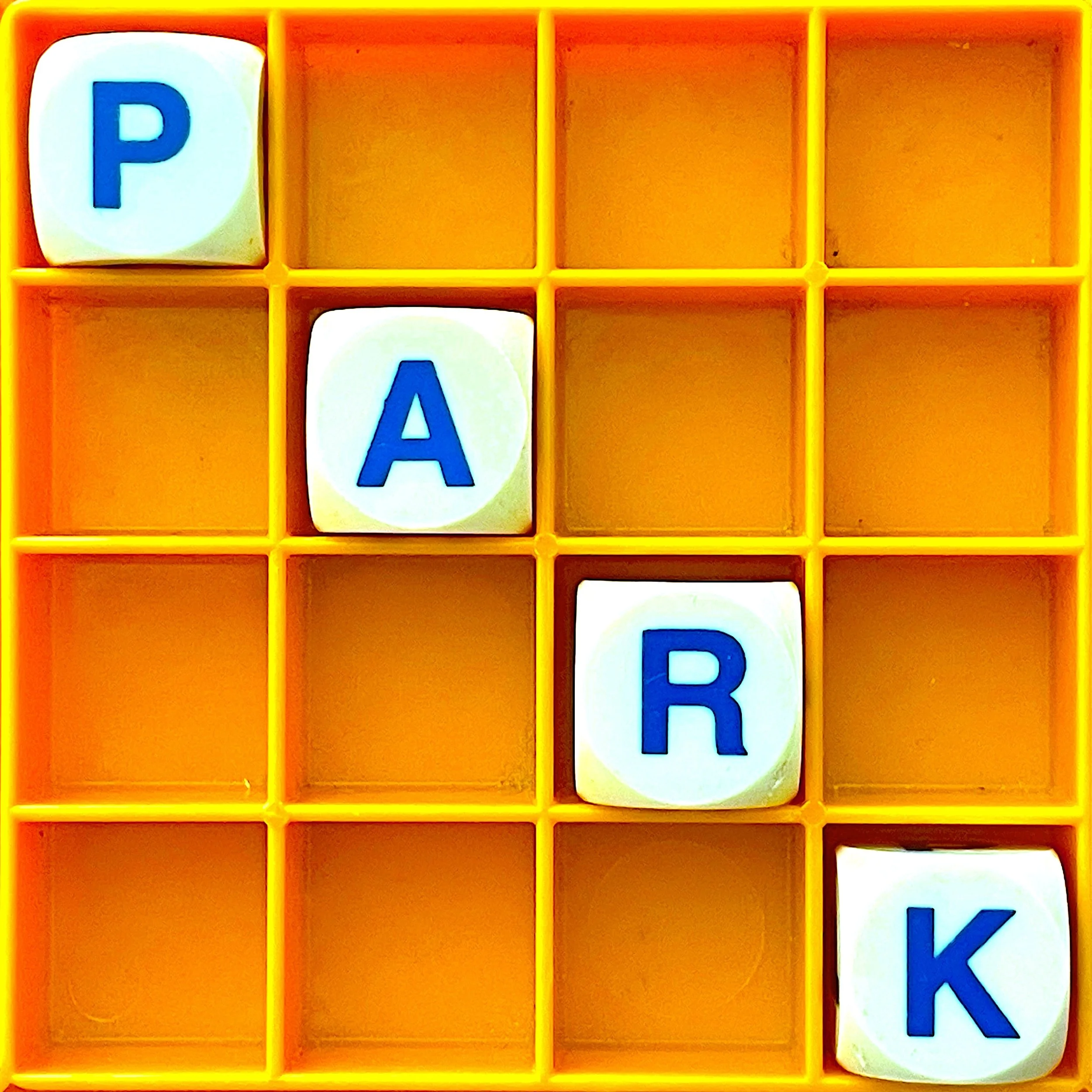
Allusionist 212. Four Letter Words: Park transcript

July 8, 2025 The Allusionist

HZ: What is a park? 

JUSTIN McELROY: I think ultimately a park is… and it's funny because people sometimes debate: should there be grass, should there be trees? Should there be a playground? Does it need to be a certain size? A park can be anything, that's part of the wonderful flexibility of how we use public spaces. I think, fundamentally, so long as it's a public space that people can hang out in and do a variety of activities, then you got yourself a park.

HZ: Even if those activities aren't hunting? You'll accept?

JUSTIN McELROY: I'll accept, because we're no longer in 17th century Britain. But I traveled the world for the last year before coming back to Vancouver. And every country, every city has different things that they think is an ideal park, and you can see that shape the set-up. But that ability to be different things, I think, is the shining example for what makes them universal. 

HZ: Vancouver is a bit imbalanced because it has a lot of little parks and then one massive park at Stanley Park.

JUSTIN McELROY: And Stanley Park is the best park in the city. It might be the best urban park in the world, when you consider just how big it is, the range of things you can do. 

HZ: Yeah, they filmed Twilight there.

JUSTIN McELROY: Ha! The amazing views that you have of the mountains and the ocean and the city, that you can jog, that you can bike, that you can walk, that you can see all different sorts of gardens and playgrounds: it's absolutely phenomenal, and an absolute jewel. And it's fun to contrast that with the other 242 parks. They can't all be winners, but they're all doing something.

Read more
In transcript Tags society, culture, words, language, history, vocabulary, four letter words, Vancouver, Indigenous Canadians, parks, land, public space, Justin McElroy, Canada, British Columbia, BC, trout, leisure, outside, outdoors, play, nature, plants, trees, eponyms, cities, city, urban, CRAB Park, ports, houselessness, Dude Chilling Park, art, sculpture, Guelph Park, John Hendry Park, Trout Lake, Sun Hop Park, Choklit Park, Stanley Park, names, Viktor Briestensky, fipple
Allusionist Patreon
Featured
Allusionist 233. Phobia

'Phobia' gets used for anything from a mild aversion to a debilitating anxiety response to various forms of bigotry. Deboki Chakravarti and Sam Jones of the podcast Tiny Matters join to consider the term from its comedic origins with one of the founding fathers of the USA, via rabies and Greek deities, to its role in their lives today.

CONTENT NOTE: we’re not trying to stoke anyone’s phobias, but we do discuss some common phobia-inducers, including snakes, germs and small holes, and there’s a brief mention of tarantulas. There’s also talk about OCD and rabies.

Read more →
Allusionist 232. Vega

What do you call yourself if you're a part-time vegetarian? What petty linguistic things would you change? And what do you do if people gripe at you if you say that you are bi or pan? To answer these questions from the Allusionist mailbag are esteemed alumsionists: Hrishikesh Hirway and Samin Nosrat of Home Cooking podcast; academic and author Alex Ketchum; lexicographer Kory Stamper; and linguist Lauren Gawne of Lingthusiasm podcast.

Read more →
Tranquillusionist: cheesy cheesybobs

This is the Tranquillusionist, in which I, Helen Zaltzman, say a series of words to relax your mind, replace a hectic interior monologue, maybe lull you to sleep, hopefully quell the mental uproar just for a little while.

Today: nicknames for woodlice AKA rolypoly bugs AKA slaters AKA all these other things; and a list of cheeses from Great Britain and Ireland.

Read more →
78AF926C-7878-4567-A87F-13CFF415B647_1_105_c.jpeg
sorry lads, we're getting bad ads

TL;DR version:

  • For the show's financial survival (hopefully), over the next few weeks I'm having to switch on programmatic advertisements. This means, for the first time in the show's nearly 12-year existence, you may be subjected to ads that are not voiced, scripted and individually approved by me.

  • If you would prefer to listen to the show without ads in it, patreonise the show at the Gravy, Wedge or Check tiers, which include the perk of an ad-free RSS feed.

Click through to read the rest of the post about why I’m doing this thing I don’t want to do.

Read more →
Allusionist 231. Lingthusionist

“Linguistics and language is such a good mechanism for being curious,” says Lauren Gawne, linguistics prof, author of the book Gesture, and cohost of the podcast Lingthusiasm. I'm in vacation mode (although not on actual vacation alas), so today's episode is a fun chat with our nice pal about making language podcasts, the firey digestive punishments for linguistics researchers, working in reality television, and cute tame nouns versus scary intimidating verbs.

Read more →
Allusionist 230. Draculae part 4: Transformation

Throughout the Draculae miniseries, about the Swedish and Icelandic translations of Dracula that played fast and loose with the original text, I've been wondering a couple of questions: why are cover versions of songs and remakes of films so normal and acceptable, whereas cover versions in book form cause such a stir? And do these Scandinavian Draculae count as fan fiction? And if not, why not? Fansplaining.com's Elizabeth Minkel explains what fan fiction can mean.

Read more →
Allusionist 229. Draculae part 3: Hunting Down the Count

Many mysteries accompany the revelations that Powers of Darkness, the Icelandic and Swedish versions of Dracula, are not direct translations of Bram Stoker's original, but stories that significantly differ in character names, plot and runtime. Like: did Bram Stoker write it himself, to publish some raunchy content that British censors would forbid? Was Powers of Darkness based on his early drafts? And did he really not copyright Dracula in the USA was that a deliberate ruse? Welllll... brace yourself for ole thrill-destroyer Zaltzman to pop your balloons of excitement.

Read more →
queer playlist
Read more →
Allusionist 228. Draculae part 2: Surprises in the Vaults

Happy World Dracula Day to all who celebrate!

This is the second episode of the Draculae miniseries, about a literary mystery which came to me via a meme: “Someone translated Dracula into Icelandic, and it took over 100 years for anyone to point out he just made a fanfic rewrite of what he wanted the story to be.”

In Draculae part 2, Ásgeir Jónsson explains how he got that Icelandic adaptation of Dracula back into print, to little fanfare - but then Dutch scholar Hans Corneel de Roos set about making an English translation. Following that: like me, Will Trimble also got meme-struck, and that propelled him to get a translation of the Swedish version that begat the Icelandic one.

Before listening to this, check out the first episode of the Draculae miniseries explaining the three versions of Dracula: Dracula published by Bram Stoker in 1897; the Icelandic version Makt Myrkranna by newspaper editor Valdimar Ásmundsson, serialised in his newspaper Fyallkonan in 1900-1901; and the Swedish version Mörkrets makter by an author known only as A—e, and serialised in a couple of Swedish newspapers 1899-1900.

Read more →
Allusionist 227. Draculae part 1: Enter the Castle

A literary mystery came to me via a meme.

Read more →
Allusionist 226. Suburbia

"The word ‘suburbia’ sort of evokes a very fixed idea of a place that is identikit, that all suburbs are the same, that within the suburb everything is the same, that all people are the same, all experiences are the same," says social historian and author John Grindrod. "I think it has this kind of flattening-out facility, that word, that isn't true."

Read more →
Allusionist 225. Hues

You know what's an absolutely pesky kind of word to define in a dictionary? Colour names. A passel of lexicographers spent years - decades, even - trying different ways to describe colours in words for Webster's Third International Dictionary. It was such a huge, complicated effort that it took twelve years for former Merriam-Webster lexicographer Kory Stamper to write a book about it.

Read more →
Allusionist 224. Cosmic Hairball

Pack your oxygen tank, we're going up to space. There’s a lot of etymology up there.

Read more →
Allusionist 223. Bonus 2025
Read more →
Allusionist 222. A Christmas Carol

Today, we read the novelisation of The Muppet Christmas Carol, also known as the 1843 festive lit hit A Christmas Carol by Charles Dickens.

Read more →
Creative Commons Licence
The Allusionist by Helen Zaltzman is licensed under a Creative Commons Attribution-NonCommercial-NoDerivatives 4.0 International License.